The Drum · Weekly AI news, freeSubscribe →

Share
A new American Nurses Association position statement reframes exhaustion on the hospital floor as a shared burden, arguing that scheduling, staffing and culture, not individual grit, determine whether nurses and patients stay safe.
Picture a nurse eleven hours into a shift that was supposed to end three hours ago. Her judgment is slower. Her hands are less steady. The patient in bed four needs a medication double-checked, and she is the one checking it.
This scenario plays out across American hospitals every day, and it is not, according to the American Nurses Association, simply a matter of that nurse needing to try harder or sleep better on her own time. In a newly released position statement, the group's first update on nurse fatigue since 2014, the ANA argues that exhaustion among nurses is a public health issue that belongs to everyone in the system: the nurse, yes, but also the hospital that scheduled her, the culture that discouraged her from speaking up, and the policies that made overtime feel unavoidable.
"Fatigue isn't a matter of willpower. It's a systems problem, and it requires systemic solutions," said Brad Goettl, D.N.P., chief nursing officer of the American Nurses Enterprise, in a statement accompanying the release.
That framing matters. For years, fatigue in nursing has often been treated the way we treat a headache: something an individual should manage with better habits, more sleep, maybe a cup of coffee. The ANA's statement pushes back hard on that idea, recasting fatigue as something closer to a workplace hazard, like poor air quality or faulty equipment, that requires structural fixes rather than personal resolve.
The numbers behind this shift are hard to ignore. Between 75% and 80% of nurses reported moderate to high fatigue in a 2021 survey cited in the statement. That is not a small subset of an exhausted workforce. That is most of it.
The consequences ripple outward in predictable, well-documented ways. Fatigued nurses make more medical errors. Their cognitive function suffers, and their vigilance drops at exactly the moments patients need it most. Patient satisfaction scores fall. Burnout climbs, and so does turnover, a costly problem for hospitals already struggling to keep beds staffed.
Beyond the clinical setting, the toll follows nurses home. The statement points to increased workplace injuries ranging from overexertion and needlesticks to drowsy driving accidents on the commute home after a brutal shift. Chronic fatigue also raises the risk of long-term health issues and worsens mental health. It erodes what the statement calls "work-life harmony," a phrase that gestures at something simpler: a life outside the hospital that a nurse actually has energy for.
There are legal stakes too. Fatigued nurses face a heightened risk of legal action, job loss or even losing their nursing license entirely, a professional death sentence for someone who has spent years training for the work.
Hospitals feel the financial sting as well. Absenteeism means scrambling for supplemental staff. Errors invite legal liability and regulatory penalties. Turnover, the statement notes, can cost a hospital tens to hundreds of thousands of dollars per departing worker. Fatigue, in other words, is not just an ethical problem. It is a balance-sheet problem too.
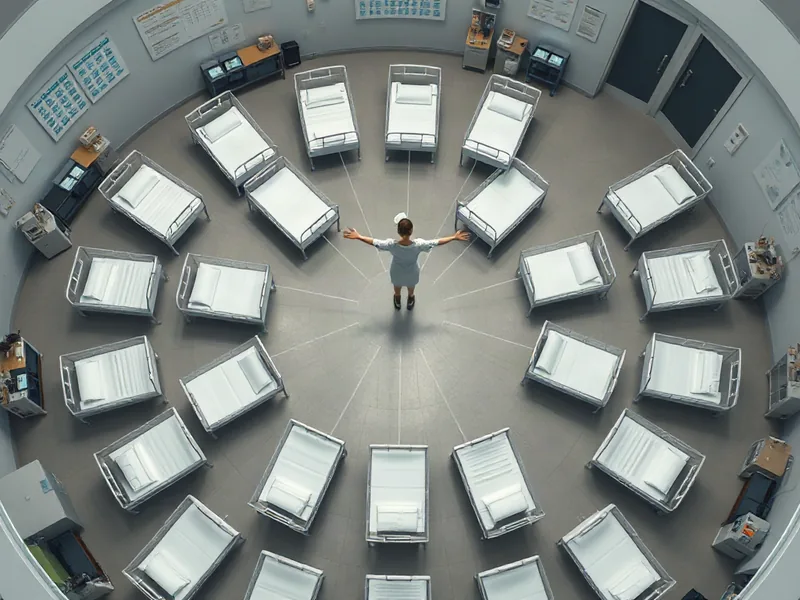
None of this lets individual nurses entirely off the hook, and the ANA is careful not to suggest otherwise. The statement encourages nurses to build healthy sleep habits, stay attuned to their own alertness, and take personal responsibility for showing up rested and ready. Some state nursing boards even consider voluntarily working excessive additional hours grounds for disciplinary action, a reminder that self-monitoring still carries real weight.
But there is a hard limit to what personal responsibility can fix. "While personal health behaviors are important, self-care cannot compensate for unsafe staffing, chronic overtime or misaligned scheduling systems," the statement warns. Think of it like asking someone to eat healthier while working in a food desert. Good intentions only go so far when the environment around them refuses to cooperate.
That is why the bulk of the ANA's recommendations land squarely on employers. Hospitals should limit excessive and consecutive scheduled hours, the statement urges, and build in adequate recovery time between shifts. Predictability matters too. A nurse who knows her schedule two weeks out can plan sleep, meals and family time around it. One whose shifts shift constantly cannot.
Technology gets a nod here as well. The statement describes AI-based scheduling tools as "a promising solution" that can juggle variables like fatigue risk, shift length limits and individual preference requests more effectively than a human trying to build a schedule by hand. It is a modest but notable acknowledgment that some fatigue-related problems might be solved not by asking nurses to push through, but by building smarter systems around them from the start.
Culture is the other half of the equation. The ANA calls on employers to foster workplaces where nurses can report fatigue without fear of retaliation or professional penalty. That might mean peer support programs, designated break areas where a nurse can actually rest during a shift, or simply keeping staffing levels high enough that one person's exhaustion does not cascade into everyone else's overtime.
Goettl framed the stakes plainly. "When nurses are routinely scheduled in ways that don't allow for adequate rest and recovery, patients, nurses, and entire care teams bear the consequences," he said. "ANA's position statement makes clear that addressing fatigue is a non-negotiable safety responsibility, and it provides a roadmap for employers to build safer schedules, stronger staffing practices, and a culture where raising fatigue concerns is supported, not penalized."
Nursing schools have a role too, the ANA suggests, by weaving fatigue education into coursework and leadership training so that the next generation of nurses, and the people who will one day manage them, understand the stakes before they clock in for their first overnight shift.
It is worth being clear about what this statement does not cover. The ANA notes that its recommendations address acute and chronic fatigue tied specifically to work demands. Moral fatigue, compassion fatigue and broader burnout, distinct but related struggles that many nurses also carry, sit outside its scope.
A tired nurse is not a personal failing. She is often the predictable output of a system that asked too much for too long. The ANA's statement is a call to stop treating exhaustion as an individual character test and start treating it as what the data says it is: a structural hazard with structural fixes. For an industry already short on nurses and long on burnout, that shift in framing might be one of the more consequential ideas to come out of healthcare policy this year, not because it is radical, but because it is overdue.
Tags
Original Sources
ANA: Individuals, employers share responsibility in tackling nurse fatigue
↗ https://www.fiercehealthcare.com/providers/ana-individuals-employers-share-responsibility-tackling-nurse-fatigue
About the author
Amara's entry point into AI was an epidemiology role at a London research hospital, where she spent five years studying how digital health tools reached — or conspicuously failed to reach — underserved communities. Watching early algorithmic systems in healthcare quietly entrench existing inequalities, she redirected her career toward the systemic consequences of AI at scale. She covers AI through an unflinching lens: who benefits, who bears the cost, and what evidence actually says versus what the press release claims. Her writing is calm and precise, but she doesn't mistake balance for neutrality.
More from The Steward →This Week's Edition
4 September 2026
24 articles
Related Articles

Anthropic's Own Workforce Data Shows AI Is Already Reshaping Who Gets Hired
Job Market & Society · 5 min

Relational Intelligence: The Workplace Skill Nobody Is Teaching, and Why AI Can't Replace It
Job Market & Society · 6 min

xAI Launches Grok Bot, an Autonomous Agent That Logs Into Your Tools and Does the Work
Products & Applications · 5 min
Related Articles
Anthropic's Own Workforce Data Shows AI Is Already Reshaping Who Gets Hired
Job Market & Society · 5 min
Relational Intelligence: The Workplace Skill Nobody Is Teaching, and Why AI Can't Replace It
Job Market & Society · 6 min
xAI Launches Grok Bot, an Autonomous Agent That Logs Into Your Tools and Does the Work
Products & Applications · 5 min
More Stories
© 2026 Cedar & Bloom. All rights reserved.
