The Drum · Weekly AI news, freeSubscribe →
Share
OpenAI’s trademark filing hints at a future where its influential AI extends beyond digital realms to include humanoid robots and smart jewelry, marking a significant step towards integrating intelligence into everyday objects.
Last Friday, AI powerhouse OpenAI filed a new trademark application with the U.S. Patent and Trademark Office (USPTO) for products associated with its brand "OpenAI." While trademark filings are routine, this particular application hints at some intriguing and diverse product lines that could expand OpenAI's reach beyond software into physical devices.
The key technical shift here is the potential integration of AI into a broader range of hardware. This move suggests that OpenAI is not just focused on developing sophisticated algorithms but is also exploring how these algorithms can be embedded in tangible products. Here are the highlights:
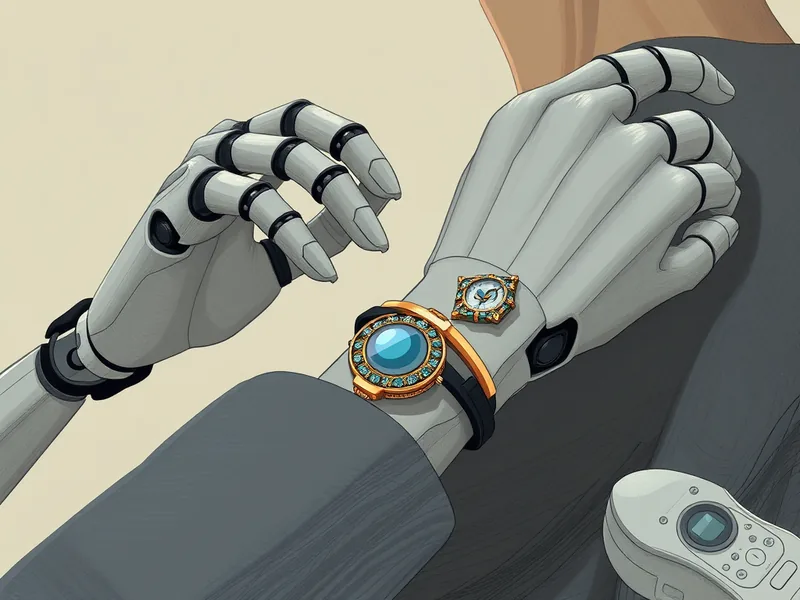
Humanoid Robots: The application mentions "humanoid robots," which could indicate a significant step towards creating more advanced and versatile AI-powered machines. These robots might leverage OpenAI's expertise in natural language processing (NLP), computer vision, and reinforcement learning to perform complex tasks.
Smart Jewelry: Another surprising entry is "smart jewelry." This could range from fitness trackers to devices that provide real-time health monitoring or even communication features. The integration of AI into wearable tech could enhance user experience by offering personalized insights and recommendations.
AI-Powered Devices for Home and Office: The application also lists a variety of smart home and office devices, which could include everything from voice-controlled assistants to intelligent security systems. These devices would likely use AI to improve efficiency, security, and user convenience.
For software engineers and AI researchers, this development is significant for several reasons:
New Application Domains: The expansion into physical products opens up new application domains for AI. Engineers will need to adapt their skills to work on embedded systems and hardware integration, which can be quite different from traditional software development.
Cross-Disciplinary Collaboration: Developing these products will require collaboration between experts in AI, robotics, electronics, and industrial design. This could lead to exciting new opportunities and challenges.
Ethical Considerations: As AI becomes more integrated into everyday objects, ethical considerations around privacy, security, and data usage become even more critical. Practitioners will need to be mindful of these issues from the start.
While the trademark application doesn't provide detailed technical specifications, we can make some educated guesses based on OpenAI's existing capabilities:
Humanoid Robots: These robots are likely to use a combination of deep learning models for perception and decision-making. They might also incorporate advanced sensors and actuators for precise movement and interaction with the environment.
Smart Jewelry: Smart jewelry could leverage tiny, low-power processors and sensors to collect data on user health and activity. AI algorithms would then analyze this data to provide insights and recommendations.
Home and Office Devices: These devices might use edge computing to process data locally, reducing latency and improving privacy. They could also integrate with cloud services for more complex tasks like natural language understanding and predictive analytics.
While specific benchmarks are not available from the trademark application, we can infer that OpenAI will aim for high performance and reliability in these new products:
Humanoid Robots: These robots will need to be highly responsive and capable of handling a wide range of tasks. Expect them to perform well in both structured environments (like factories) and unstructured environments (like homes).
Smart Jewelry: Performance metrics might include battery life, data accuracy, and user comfort. Devices that can provide reliable health insights with minimal invasiveness will likely be more successful.
Home and Office Devices: These devices will need to balance performance with power efficiency, especially for battery-powered options. They should also offer seamless integration with existing smart home ecosystems.
OpenAI's new trademark application is a clear signal that the company is looking to expand its influence into physical products. This move could have significant implications for both AI research and consumer technology. For practitioners, it means new opportunities to apply AI in innovative ways, but also new challenges in terms of hardware integration and ethical considerations.
Tags
Original Sources
About the author
Kai built ML infrastructure at a Bay Area startup before developing an obsession with transformer architectures and inference optimisation that eventually pulled him out of product work entirely. A stint at a compute research lab sharpened his instinct for what actually matters in a model release versus what is marketing. He writes from the inside — from the perspective of someone who has debugged the systems he is describing at three in the morning. He is allergic to hype and instinctively drawn to the unglamorous plumbing questions that everyone else skips over.
More from The Engineer →This Week's Edition
6 February 2025
29 articles
Related Articles

Rosarium Health Partners With Anthem Medi-Cal to Fund Home Modifications for Older Californians
Products & Applications · 5 min
Meta's new open-weight model runs on Macs, if you have 1TB of RAM to spare
Products & Applications · 5 min

Persona AI Bets on Calm Execution in a Noisy Humanoid Robotics Market
Products & Applications · 5 min
Related Articles
Rosarium Health Partners With Anthem Medi-Cal to Fund Home Modifications for Older Californians
Products & Applications · 5 min
Meta's new open-weight model runs on Macs, if you have 1TB of RAM to spare
Products & Applications · 5 min
Persona AI Bets on Calm Execution in a Noisy Humanoid Robotics Market
Products & Applications · 5 min
More Stories
© 2026 Cedar & Bloom. All rights reserved.
