The Drum · Weekly AI news, freeSubscribe →

Share
A new study backed by OpenEvidence suggests that specialized AI tools outperform general-purpose language models in clinical settings, raising questions about the future of health tech.
In a world where artificial intelligence (AI) is increasingly integrated into healthcare, a recent study backed by OpenEvidence has sparked a significant debate. The research challenges the effectiveness of large language models (LLMs) like those from Google and Anthropic, suggesting that specialized AI tools designed for healthcare can provide better outcomes for patients. This finding could have far-reaching implications for how we approach health tech in clinical settings.
The study, which was published just a few weeks after a high-profile paper that praised the capabilities of LLMs in healthcare, highlights the ongoing tension between general-purpose and domain-specific AI solutions. While LLMs are powerful tools capable of handling a wide range of tasks, they may not always be the best choice when it comes to specialized fields like medicine.
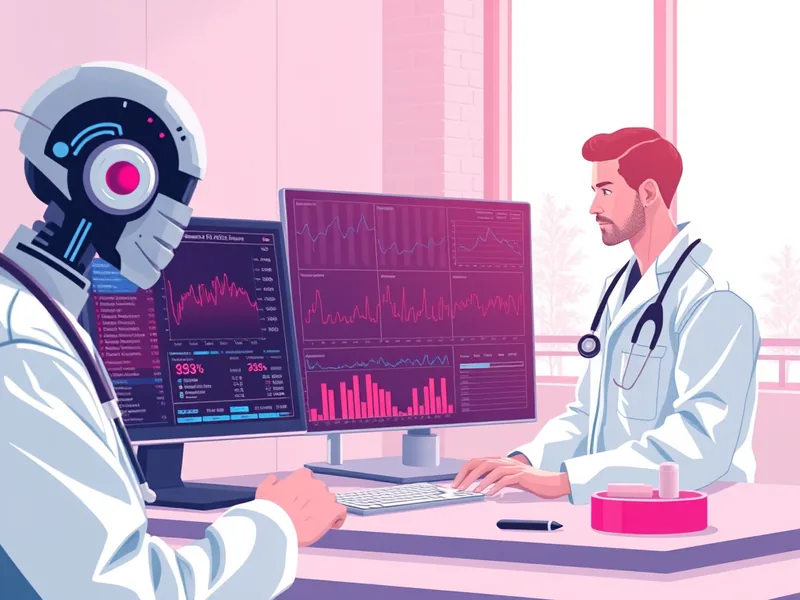
The OpenEvidence study focused on comparing the performance of LLMs with specialized AI tools in various clinical scenarios. Researchers evaluated these models based on their ability to accurately interpret medical data, provide diagnostic recommendations, and offer treatment plans. The results were striking: specialized AI tools consistently outperformed LLMs in terms of accuracy and patient outcomes.
One of the key reasons for this difference is that specialized AI tools are trained on vast amounts of domain-specific data, including clinical trial results, patient records, and medical literature. This focused training allows these models to better understand the nuances of healthcare, leading to more reliable and actionable insights. In contrast, LLMs, while impressive in their versatility, may lack the depth of knowledge required for complex medical decision-making.
The study also highlighted the importance of transparency and explainability in AI-driven healthcare. Specialized AI tools often provide clear explanations for their recommendations, which is crucial for building trust with both patients and healthcare providers. This transparency can lead to more informed decision-making and better patient outcomes.
The implications of this study are significant for both the development and deployment of health tech solutions. If specialized AI tools consistently outperform LLMs in clinical settings, it could shift the focus of research and investment towards these domain-specific models. This shift could lead to more effective and reliable healthcare technologies, ultimately benefiting patients by improving diagnosis accuracy and treatment effectiveness.
However, this also raises important questions about the broader role of AI in healthcare. While specialized tools may offer better performance, they can be more expensive to develop and maintain compared to general-purpose LLMs. There is a need for robust regulatory frameworks to ensure that these AI tools are safe and effective before they are widely adopted.
The debate between general-purpose and domain-specific AI in healthcare is far from over. As the field continues to evolve, it will be crucial to balance innovation with patient safety and ethical considerations. The OpenEvidence study serves as a reminder that while AI holds great promise for transforming healthcare, it must be developed and used responsibly to truly benefit patients and the broader healthcare system.
Tags
Original Sources
OpenEvidence backs study that finds it beats LLMs
↗ https://www.statnews.com/2026/07/09/openevidence-backs-study-that-finds-it-beats-llms-health-tech
About the author
Amara's entry point into AI was an epidemiology role at a London research hospital, where she spent five years studying how digital health tools reached — or conspicuously failed to reach — underserved communities. Watching early algorithmic systems in healthcare quietly entrench existing inequalities, she redirected her career toward the systemic consequences of AI at scale. She covers AI through an unflinching lens: who benefits, who bears the cost, and what evidence actually says versus what the press release claims. Her writing is calm and precise, but she doesn't mistake balance for neutrality.
More from The Steward →This Week's Edition
13 July 2026
34 articles
Related Articles

Arboretum LifeSciences Raises $30M to Turn Genetic Tests Into Drug Deals
Health & Science · 6 min

AI Tool Trained on Tumor Images Could Help Doctors Decide Who Needs Abiraterone for Prostate Cancer
Health & Science · 6 min

AI Can Spot Cognitive Decline Earlier. Health Systems Still Have to Catch the Patient on the Other Side
Health & Science · 6 min
Related Articles
Arboretum LifeSciences Raises $30M to Turn Genetic Tests Into Drug Deals
Health & Science · 6 min
AI Tool Trained on Tumor Images Could Help Doctors Decide Who Needs Abiraterone for Prostate Cancer
Health & Science · 6 min
AI Can Spot Cognitive Decline Earlier. Health Systems Still Have to Catch the Patient on the Other Side
Health & Science · 6 min
More Stories
© 2026 Cedar & Bloom. All rights reserved.
