The Drum · Weekly AI news, freeSubscribe →

Share
By embedding AI directly into clinical workflows, Optum Health aims to streamline chart review and enhance patient care, reducing the administrative load on healthcare providers.
For years, one of the biggest frustrations for physicians has been navigating sprawling electronic health records (EHRs) long after clinic hours. At Optum Health, leaders are leveraging artificial intelligence (AI) to alleviate this burden. The health system recently piloted an AI-driven chart summarization tool designed to help clinicians quickly orient themselves to a patient before appointments.
"We see technology not simply as a tool for efficiency, but as an enabler of more connected, coordinated, and personalized care," said Racquel Moore, vice president of EMR platform and product strategy at Optum Health. By embedding AI directly into clinical workflows, Moore believes care teams can identify patient needs earlier, reduce friction during visits, and improve access to care.
The pilot focused specifically on chart review, one of the most time-consuming parts of clinical preparation. The AI capability generated summaries intended to help clinicians quickly understand a patient's history before entering the exam room. Here’s how it works:
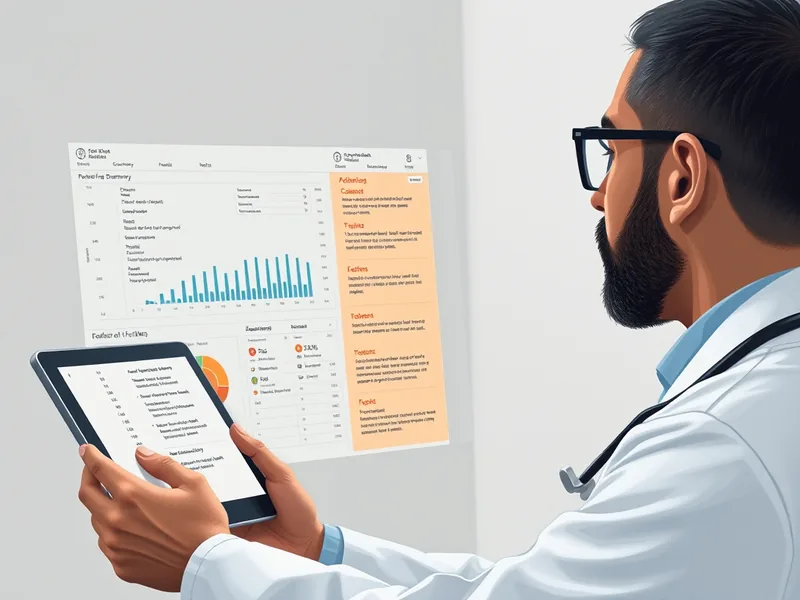
According to Moore, the feedback from clinicians has been positive. "The summaries help them get up to speed faster, allowing more time for patient interaction and less time spent sifting through records," she said.
The success of this pilot underscores the potential for AI in healthcare. As Moore noted, "This is just the beginning. We are committed to exploring more ways to integrate AI into our clinical workflows to further enhance patient outcomes."
Optum Health’s approach highlights a practical application of AI that addresses real-world challenges faced by healthcare providers. By focusing on user experience and clinician feedback, they are paving the way for more effective and efficient healthcare delivery.
Tags
Original Sources
Inside Optum Health's push to make AI practical for clinicians
↗ https://www.healthcareitnews.com/news/inside-optum-healths-push-make-ai-practical-clinicians
About the author
Kai built ML infrastructure at a Bay Area startup before developing an obsession with transformer architectures and inference optimisation that eventually pulled him out of product work entirely. A stint at a compute research lab sharpened his instinct for what actually matters in a model release versus what is marketing. He writes from the inside — from the perspective of someone who has debugged the systems he is describing at three in the morning. He is allergic to hype and instinctively drawn to the unglamorous plumbing questions that everyone else skips over.
More from The Engineer →This Week's Edition
3 June 2026
29 articles
Related Articles

Rosarium Health Partners With Anthem Medi-Cal to Fund Home Modifications for Older Californians
Products & Applications · 5 min

Meta's new open-weight model runs on Macs, if you have 1TB of RAM to spare
Products & Applications · 5 min

Persona AI Bets on Calm Execution in a Noisy Humanoid Robotics Market
Products & Applications · 5 min
Related Articles
Rosarium Health Partners With Anthem Medi-Cal to Fund Home Modifications for Older Californians
Products & Applications · 5 min
Meta's new open-weight model runs on Macs, if you have 1TB of RAM to spare
Products & Applications · 5 min
Persona AI Bets on Calm Execution in a Noisy Humanoid Robotics Market
Products & Applications · 5 min
More Stories
© 2026 Cedar & Bloom. All rights reserved.
