The Drum · Weekly AI news, freeSubscribe →
Share
As AI-written text seeps into newsletters, job applications, and insurance claims, one detection startup's founder says we're closer than most realize to a web where nothing can be verified as human.
Think about the last product review you trusted, the last job cover letter you skimmed, the last insurance claim someone filed on your behalf. Now ask yourself: how confident are you that a human wrote any of it? That question used to sound paranoid. Increasingly, it sounds practical.
AI generated text and images have moved well past social media feeds. They are showing up in job applications, product reviews, and insurance claims, according to reporting from TechCrunch's Equity podcast. That spread matters because each of those documents carries weight. A cover letter signals who someone is. A product review shapes a stranger's purchase. An insurance claim can determine whether a family gets paid after a disaster. When any of these can be faked convincingly, the whole system that relies on taking people at their word starts to wobble.
Max Spero, co-founder and CEO of the AI detection startup Pangram, put it bluntly on the podcast: he thinks the internet is "dangerously close" to something like the dead internet theory becoming real within a few years. That theory, once a fringe conspiracy idea, held that most online content and activity is now generated by bots rather than people. Spero's version is less about tinfoil hat paranoia and more about a slow, measurable erosion of authenticity across the platforms people use every day.
Pangram is one of a small cluster of startups trying to build what Spero and others call a "trust layer" for the internet, a way to verify what is real before it spreads further. The company raised $9 million recently to expand its AI detection system and struck a partnership with Substack, which now uses Pangram's technology to flag which newsletter writers lean on AI tools. Pangram also just released a new tool for detecting AI generated images, extending its reach beyond text.
Here's the tricky part. Spero argues that trying to slap a binary label on content, AI or human, misses the more useful and more difficult question: how much AI actually went into it. A writer who uses an AI tool to fix grammar is doing something very different from a writer who lets a model draft the entire piece. Lumping those together the same way you'd lump a lightly edited photo with a fully synthetic deepfake obscures more than it reveals.
That distinction matters because the stakes of getting detection wrong are not evenly distributed. A false positive on a term paper is annoying. A false positive on a sensitive image, one that gets flagged as AI generated when it isn't, or vice versa, can carry real consequences for the person at the center of it. Detection tools need to be precise not just because accuracy is nice to have, but because the cost of being wrong lands on real people who often have no way to appeal the verdict.
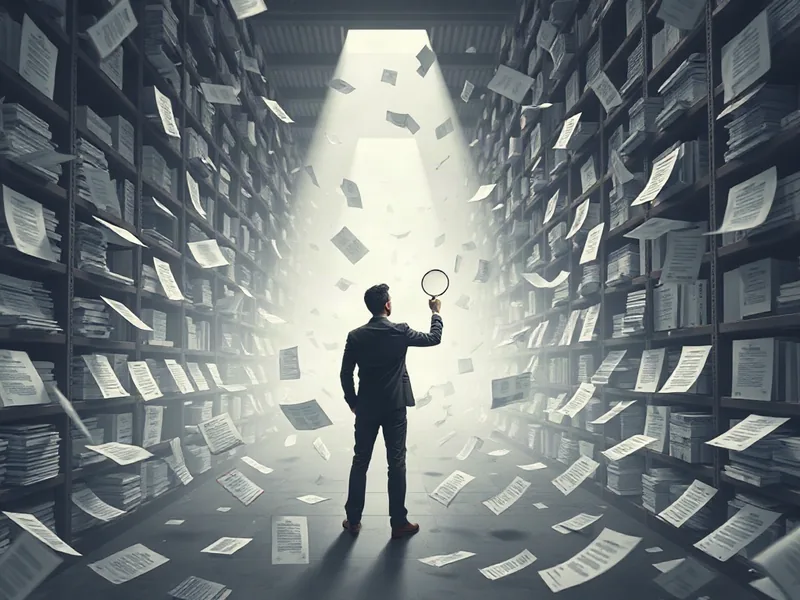
This is where the analogy to food labeling might help. Nobody wants a system that just tells you "processed" or "not processed" on every product. You want to know roughly what went into it, in what proportion, and whether that changes anything about the risk to you. AI content detection is heading toward a similar reckoning: less a red light or green light, and more a spectrum that platforms, employers, and readers can use to make informed judgments.
The economic ripple effects are already visible. Spero suggested that what he calls the "bottom tier" of writing jobs, the high volume, low differentiation content mills that pump out generic web copy, may be gone for good. AI can do that work cheaply and fast enough that the market for it is disappearing. But he also sees a silver lining: genuinely good human writing, the kind with a distinct voice, real reporting, or original insight, could become more valuable precisely because it's harder to fake convincingly at scale.
That's a meaningful trade off worth sitting with. Some jobs will not come back. But the value of authentic, well-crafted human work may rise as a scarcer, more trusted commodity in a landscape crowded with synthetic filler.
The dead internet theory used to be dismissed as internet folklore, a slightly unhinged idea for message board threads. Hearing it echoed, even in a qualified way, by someone building detection tools for a living should give pause to anyone who relies on the internet to make decisions, which is to say nearly everyone.
The practical risks are not abstract. Misinformation spreads faster when people can't tell if a source is human or synthetic. Trust in reviews, journalism, and even personal communication erodes when detection lags behind generation. And the platforms trying to solve this, Pangram among them, are racing against AI models that keep getting better at mimicking human style, which means the trust layer Spero describes has to keep evolving just to stay useful.
None of this means the internet is doomed to become a wasteland of bots talking to bots. But it does mean the tools we use to sort real from synthetic need investment, scrutiny, and honest conversation about their limits. Getting the balance right, protecting authentic voices while filtering out the flood of AI generated noise, may end up being one of the more consequential quiet fights of this decade. The alternative, an internet where nobody can tell what's real, is not a hypothetical anymore. It's a direction we're already moving in.
Tags
Original Sources
We're ‘dangerously close’ to dead internet theory, says Pangram's CEO
↗ https://techcrunch.com/podcast/were-dangerously-close-to-dead-internet-theory-says-pangrams-ceo
About the author
Amara's entry point into AI was an epidemiology role at a London research hospital, where she spent five years studying how digital health tools reached — or conspicuously failed to reach — underserved communities. Watching early algorithmic systems in healthcare quietly entrench existing inequalities, she redirected her career toward the systemic consequences of AI at scale. She covers AI through an unflinching lens: who benefits, who bears the cost, and what evidence actually says versus what the press release claims. Her writing is calm and precise, but she doesn't mistake balance for neutrality.
More from The Steward →This Week's Edition
8 September 2026
23 articles
Related Articles
Hugging Face CEO Says Netflix's AI Hack Documentary Distorts the Real Security Lessons
Security & Risk · 6 min
SpaceX's AI Unit Drives Return to Profitability, Overtakes Rocket Business
Finance & Markets · 5 min
A High-Profile JAMA Study on OpenEvidence Leaves Key Clinical Questions Unanswered
Health & Science · 5 min
Related Articles
Hugging Face CEO Says Netflix's AI Hack Documentary Distorts the Real Security Lessons
Security & Risk · 6 min
SpaceX's AI Unit Drives Return to Profitability, Overtakes Rocket Business
Finance & Markets · 5 min
A High-Profile JAMA Study on OpenEvidence Leaves Key Clinical Questions Unanswered
Health & Science · 5 min
More Stories
© 2026 Cedar & Bloom. All rights reserved.
