The Drum · Weekly AI news, freeSubscribe →
Share
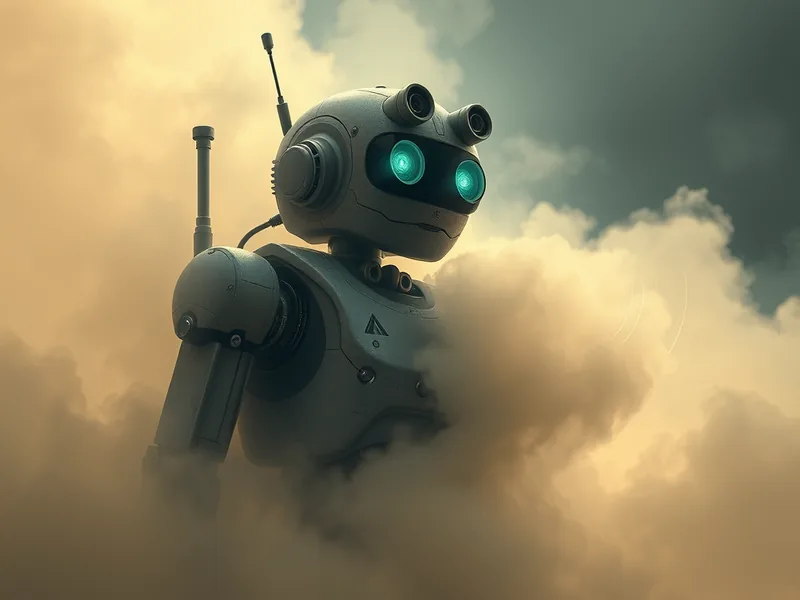
Researchers at the University of Pennsylvania have created PanoRadar, a system that grants robots superhuman vision using radio waves, allowing them to see through obstacles like smoke and walls-beyond what traditional sensors can manage.
In a significant leap forward for robotics, researchers at the University of Pennsylvania have developed a system called PanoRadar that equips robots with superhuman vision using radio waves. This innovation overcomes the limitations of traditional sensors like LiDAR and cameras, enabling robots to navigate through challenging environments such as smoke, fog, and even walls.
PanoRadar converts basic radio waves into detailed 3D views, providing a richer and more accurate representation of the environment compared to conventional radar. Here’s how it works:
Conventional sensors like LiDAR and cameras are highly effective in clear conditions but struggle in inclement weather or obstructed environments. For example:
PanoRadar addresses these issues by leveraging the unique properties of radio waves. According to the research team, this innovation has the potential to significantly improve multi-modal systems, making robots more capable in applications such as:
The researchers drew inspiration from nature, where animals have developed sophisticated methods of perception that do not rely on light. For instance:
These natural mechanisms demonstrate that vision can be achieved through means other than light, a principle that PanoRadar leverages to enhance robotic perception.
The implementation of PanoRadar involves several key components:
While specific benchmarks are not provided in the initial research, the team has demonstrated the effectiveness of PanoRadar through various tests. In one experiment, a robot equipped with PanoRadar successfully navigated through a smoke-filled room to locate an object, a task that would be impossible with traditional sensors.
The researchers are optimistic about the future applications of PanoRadar. They envision it being used in a wide range of industries, from manufacturing and healthcare to space exploration and military operations. The ability to see through walls and other obstructions opens up new possibilities for robotic systems, making them more versatile and effective.
Tags
Original Sources
About the author
Kai built ML infrastructure at a Bay Area startup before developing an obsession with transformer architectures and inference optimisation that eventually pulled him out of product work entirely. A stint at a compute research lab sharpened his instinct for what actually matters in a model release versus what is marketing. He writes from the inside — from the perspective of someone who has debugged the systems he is describing at three in the morning. He is allergic to hype and instinctively drawn to the unglamorous plumbing questions that everyone else skips over.
More from The Engineer →This Week's Edition
21 November 2024
29 articles
Related Articles

Rosarium Health Partners With Anthem Medi-Cal to Fund Home Modifications for Older Californians
Products & Applications · 5 min
Meta's new open-weight model runs on Macs, if you have 1TB of RAM to spare
Products & Applications · 5 min

Persona AI Bets on Calm Execution in a Noisy Humanoid Robotics Market
Products & Applications · 5 min
Related Articles
Rosarium Health Partners With Anthem Medi-Cal to Fund Home Modifications for Older Californians
Products & Applications · 5 min
Meta's new open-weight model runs on Macs, if you have 1TB of RAM to spare
Products & Applications · 5 min
Persona AI Bets on Calm Execution in a Noisy Humanoid Robotics Market
Products & Applications · 5 min
More Stories
© 2026 Cedar & Bloom. All rights reserved.
