The Drum · Weekly AI news, freeSubscribe →

Share
For the millions of people wrestling with drinking, anxiety and compulsive gambling all at once, care has always come in disconnected pieces. Pelago's new platform bets that a single record can change that.
Anyone who has watched a loved one struggle with both a drinking problem and crushing anxiety knows how fragmented the health system can feel. One provider treats the substance use. Another handles the depression screening. A third might get called in if compulsive gambling enters the picture. Patients end up managing their own care coordination, often while barely able to manage their symptoms.
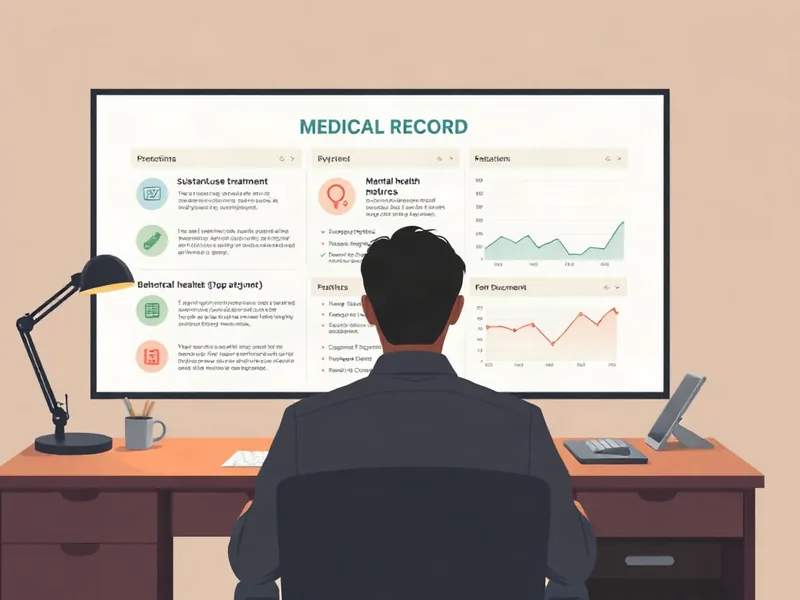
Pelago, a New York City-based virtual substance use care provider, is trying to close that gap. On Tuesday at the Behavioral Health Tech conference in Nashville, the company launched the Pelago Behavioral Health Platform, a system designed to unify substance use, mental health and behavioral addiction care under a single contract and a single member record.
Pelago already treats a wide range of conditions. That includes substance use like drinking or misuse of prescription pain medication, mental health struggles like stress and anxiety, and behavioral addictions such as gambling or gaming. The company works with both employers and payers, meaning its customers are often the businesses and insurers footing the bill for employee or member care, not just the patients themselves.
The new platform is meant to solve a problem that shows up constantly in Pelago's own patient data. About half of the company's patients battle co-occurring depression and anxiety alongside whatever substance use or behavioral issue brought them into care, according to Dr. Yusuf Sherwani, Pelago's CEO and co-founder. Treating those conditions in silos, through separate systems and separate clinical teams, has long been one of behavioral health's quiet inefficiencies. A single record lets clinicians see the whole picture at once, rather than piecing it together from scattered referrals.
Every patient entering the system starts with Sona, Pelago's clinical AI tool. Think of Sona as a front door that does more than greet visitors. It conducts a clinical assessment right away, figures out what kind of care a person actually needs, and then routes them toward the right level of support.
"It's a voice experience which is really designed to do a clinical assessment and triage people into the right care pathway," Sherwani said in an interview. Patients with lower acuity needs can continue working with Sona directly, moving through what Sherwani described as a clinically valid cognitive behavioral therapy program, essentially a structured way of identifying and reshaping unhelpful thought patterns, delivered through conversation rather than a workbook.
For patients who score high enough on standard screening tools, specifically the PHQ-9 for depression and the GAD-7 for anxiety, the path looks different. Those patients can choose to speak with a human clinician from Pelago's care team. Even then, Sona doesn't disappear. It continues working alongside the clinician, supporting the ongoing treatment rather than stepping aside entirely.
Pelago introduced Sona earlier this summer, and the company has already gathered some early evidence of its impact. Two observational studies examined more than 9,000 member conversations with the tool. Patients in those studies reported 20% to 25% fewer poor mental health days each month. That's a meaningful signal, though it's worth remembering these are observational studies rather than randomized trials, meaning they show correlation with improvement rather than definitive proof that Sona alone caused it.
The timing of this launch isn't accidental. Behavioral health spending has been climbing steadily, and it's become a genuine budget concern for employers trying to offer competitive benefits without watching costs spiral. Sherwani argues that Pelago's tiered approach, sending low-acuity cases to AI-supported self-guided care and reserving human clinicians for higher-acuity needs, can help bend that cost curve without sacrificing quality.
"Our goal two to three years from today is that we've been able to maintain and even improve access to behavioral health, but we've been able to do so in a way that we've actually made mental health cost deflationary in the same way that we've done in substance use care," Sherwani said. He framed the ambition plainly: give everyone access to mental health support, but do it in a way that's sustainable and actually reduces the overall burden on the healthcare system, rather than just shifting costs around.
That ambition sits inside a broader conversation happening across the digital health industry right now. Employers are increasingly skeptical of point solutions, the single-purpose apps and platforms that treat one narrow slice of a person's health. A worker dealing with anxiety, heavy drinking and a gambling habit shouldn't need three separate logins, three separate intake forms, and three care teams that never talk to each other. Consolidation, when done thoughtfully, can reduce friction for patients and administrative overhead for the employers and payers footing the bill.
The real test for Pelago's platform won't be how elegant the technology sounds in a press release. It will be whether patients actually experience smoother, more responsive care, and whether employers see the cost relief Sherwani is promising. Co-occurring conditions are common, not rare, and a health system that keeps treating them as separate problems is setting patients up to fall through the cracks.
There's also a bigger question worth sitting with. AI tools like Sona are increasingly being trusted to make first-line clinical judgments, deciding who needs a human clinician and who can proceed with self-guided support. That's a meaningful responsibility to hand to software, even software built on validated screening instruments like the PHQ-9 and GAD-7. The early data on reduced poor mental health days is encouraging, but behavioral health outcomes take time to reveal themselves fully, and vulnerable patients deserve careful, ongoing scrutiny of how well these triage decisions hold up outside of a controlled study.
For now, Pelago is betting that unifying care and smartly deploying AI can do what fragmented systems and rising costs have failed to do: make good behavioral health care both accessible and financially sustainable. Whether that bet pays off will depend less on the platform's architecture and more on what happens to the people using it, month after month, long after the launch headlines fade.
Tags
Original Sources
Pelago Unveils New Behavioral Health Platform for Substance Use, Mental Health and Behavioral Addiction Care - MedCity News
↗ https://medcitynews.com/2026/09/pelago-unveils-new-behavioral-health-platform-for-substance-use-mental-health-and-behavioral-addiction-care
About the author
Amara's entry point into AI was an epidemiology role at a London research hospital, where she spent five years studying how digital health tools reached — or conspicuously failed to reach — underserved communities. Watching early algorithmic systems in healthcare quietly entrench existing inequalities, she redirected her career toward the systemic consequences of AI at scale. She covers AI through an unflinching lens: who benefits, who bears the cost, and what evidence actually says versus what the press release claims. Her writing is calm and precise, but she doesn't mistake balance for neutrality.
More from The Steward →This Week's Edition
23 September 2026
29 articles
Related Articles

Oracle Health Brings Its Clinical AI Agent to Nurses, Betting on Embedded Design Over Standalone Tools
Products & Applications · 5 min

HealthEx Plugs Patient Records Into Meta's Muse AI as TEFCA Network Adds Two More QHINs
Products & Applications · 6 min

ABBYY repackages decades-old OCR engine as a self-hosted preprocessor for LLM pipelines
Products & Applications · 5 min
Related Articles
Oracle Health Brings Its Clinical AI Agent to Nurses, Betting on Embedded Design Over Standalone Tools
Products & Applications · 5 min
HealthEx Plugs Patient Records Into Meta's Muse AI as TEFCA Network Adds Two More QHINs
Products & Applications · 6 min
ABBYY repackages decades-old OCR engine as a self-hosted preprocessor for LLM pipelines
Products & Applications · 5 min
More Stories
© 2026 Cedar & Bloom. All rights reserved.
