The Drum · Weekly AI news, freeSubscribe →
Share
Cosite interference between antennas on ships, aircraft, and vehicles is notoriously expensive to fix after the fact. A new prediction approach aims to catch coupling problems in simulation, long before hardware gets built.
If you've ever worked near RF hardware, you know the nightmare scenario: two antennas, mounted a few meters apart on the same platform, start bleeding energy into each other the moment you power them up. That's cosite interference, and on electrically large platforms like ships, aircraft, or armored vehicles, it's one of the most persistent and costly problems in electromagnetic compatibility (EMC) engineering.
The core issue is scale. When a platform is "electrically large," meaning its dimensions span many wavelengths of the signals it's transmitting, traditional full-wave electromagnetic simulation gets brutally expensive. You're trying to model coupling between antennas that might be dozens or hundreds of wavelengths apart, across a structure with complex geometry: hulls, wings, turrets, whatever. The computational cost scales fast, and engineers historically haven't had a great way around it.
That's the gap this research targets: an efficient and accurate method for predicting cosite isolation, meaning how well-isolated two co-located antennas actually are from each other, without needing to build and test physical hardware first.
Here's the practical problem with building first and testing later. If you discover after fabrication that two antennas are coupling too strongly, unwanted signal energy leaking from one system into another, your options are all bad:
Every one of those fixes is expensive, and some aren't even possible late in a program. That's why predictive modeling before the build phase matters so much in this domain. Get an accurate isolation prediction early, and you can adjust antenna placement, orientation, or shielding strategy on paper, where changes are cheap.
The technical challenge is that "accurate" and "efficient" tend to pull in opposite directions in EM simulation. Full-wave methods, methods that solve Maxwell's equations directly across the whole structure, give you high fidelity but don't scale well to electrically large problems. Simplified or asymptotic methods scale better but can miss coupling paths that matter, especially in the near field or around complex scattering geometry.
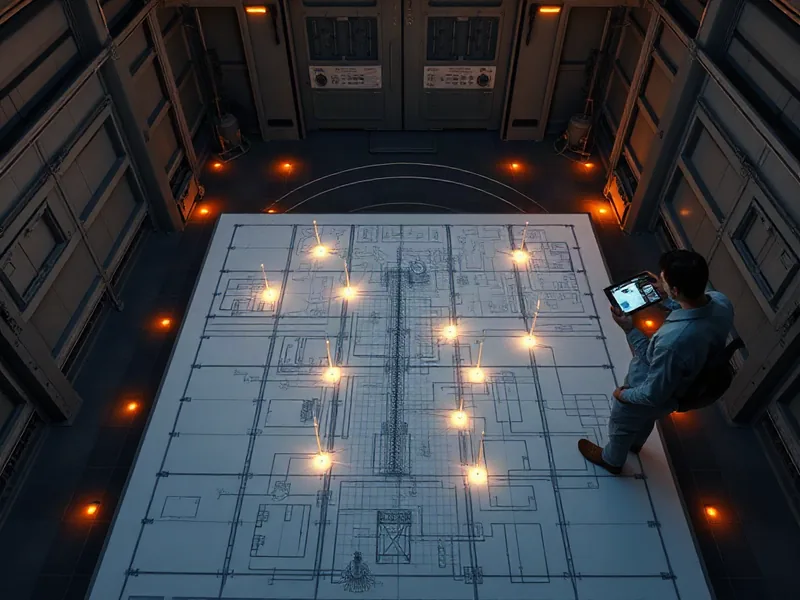
The approach described in this work is aimed squarely at that tradeoff: getting isolation predictions that are accurate enough to trust for engineering decisions, but fast enough to actually run on large, complex platforms without a supercomputer cluster tied up for days.
This matters beyond the immediate hardware question too. Cosite isolation predictions feed directly into signal processing decisions further down the chain: how much filtering you need, what dynamic range your receivers require, whether you need active cancellation techniques to handle residual coupling. Get the isolation number wrong early, and those downstream engineering decisions inherit the error.
It's worth noting this is a well-established subfield within EMC and antenna engineering, not a brand-new problem. Platform isolation and antenna coupling prediction have been active research areas for decades, particularly in defense and aerospace contexts where multiple RF systems, radar, comms, EW, GPS, often have to coexist on a single hull or fuselage with minimal separation. What's notable here is the specific emphasis on electrically large platforms, where the computational cost of brute-force simulation has historically forced engineers into compromises on either accuracy or turnaround time.
The big picture: as platforms get more crowded with RF systems, cosite interference isn't going away, it's getting worse. Modern ships, aircraft, and vehicles are packing in more antennas for more simultaneous functions: communications, radar, navigation, electronic warfare, sensor networks. Every added antenna is another potential coupling path.
The unglamorous truth about EMC work is that it rarely makes headlines, but it's the difference between a platform that works reliably in the field and one that gets quietly reworked (at significant cost) after the fact. Efficient, accurate prediction tools for problems like cosite isolation are exactly the kind of infrastructure improvement that doesn't show up in a press release but saves programs real money and time. If you're working anywhere near RF system integration on complex platforms, this is a space worth keeping an eye on.
Tags
Original Sources
Efficient and Accurate Prediction of Cosite Isolation on Large Platforms - Wiley Science and Engineering Content Hub
↗ https://spectrum.ieee.org/predict-antenna-coupling-on-electrically-largeplatforms-before-building-hardware
About the author
Kai built ML infrastructure at a Bay Area startup before developing an obsession with transformer architectures and inference optimisation that eventually pulled him out of product work entirely. A stint at a compute research lab sharpened his instinct for what actually matters in a model release versus what is marketing. He writes from the inside — from the perspective of someone who has debugged the systems he is describing at three in the morning. He is allergic to hype and instinctively drawn to the unglamorous plumbing questions that everyone else skips over.
More from The Engineer →This Week's Edition
6 September 2026
24 articles
Related Articles

Tether Evo's New Research Tackles BCI's Cross-Subject Problem Across Speech, Vision, and Music
Models & Research · 6 min
xAI Launches Grok Bot, an Autonomous Agent That Logs Into Your Tools and Does the Work
Products & Applications · 5 min

German Bishops Back Child-Friendly AI Standards, Citing Papal Call on Human Dignity
Policy & Regulation · 5 min
Related Articles
Tether Evo's New Research Tackles BCI's Cross-Subject Problem Across Speech, Vision, and Music
Models & Research · 6 min
xAI Launches Grok Bot, an Autonomous Agent That Logs Into Your Tools and Does the Work
Products & Applications · 5 min
German Bishops Back Child-Friendly AI Standards, Citing Papal Call on Human Dignity
Policy & Regulation · 5 min
More Stories
© 2026 Cedar & Bloom. All rights reserved.
