The Drum · Weekly AI news, freeSubscribe →

Share
When public comments citing personal benefits from NIH research were abruptly removed without explanation, it raised questions about transparency and ethical oversight in government policy.
For Magdeleine Bradford-Butcher, the diagnosis of cystic fibrosis for her unborn child was a moment of profound fear. But when she learned about Trikafta, a cutting-edge treatment that could dramatically improve her daughter's life expectancy, hope flickered. “With all of the new developments, your daughter has a very good chance of outliving you,” one of the physicians told her after delivery. It was a statement she had never heard before and one that gave her immense comfort.
However, when Bradford-Butcher learned about a proposed White House regulation that could open federal science funding to greater political intervention, she grew concerned. Encouraged by the Cystic Fibrosis Foundation and a favorite science influencer, Jessica Knurick, she submitted a public comment on the proposal, detailing how her daughter had benefited from NIH-funded research.
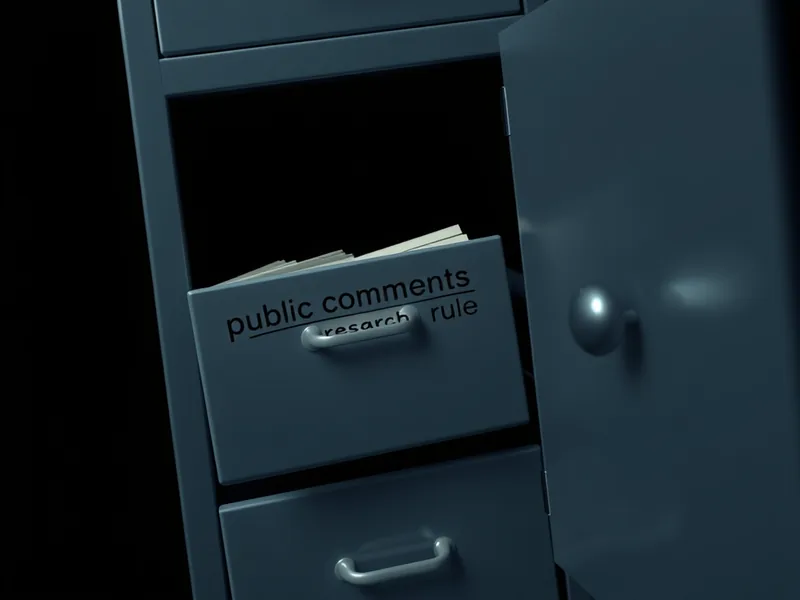
Her story is not unique. At least 42 public comments were submitted to the Office of Management and Budget (OMB) in response to the proposed rule. These comments highlighted personal stories of benefitting from federally funded medical research, emphasizing the importance of maintaining scientific integrity and independence. However, these comments have since been mysteriously removed from the federal website without any official explanation.
The removal of these public comments has sparked a significant ethical debate. Critics argue that the deletion undermines transparency and trust in government processes. “It’s deeply concerning when personal stories that highlight the importance of scientific research are simply erased,” said Dr. Emily Carter, a bioethicist at Harvard University. “Transparency is crucial for maintaining public faith in our institutions.”
The regulation in question, proposed by OMB Director Russell Vought, would allow more political oversight over how federal science funding is allocated. This could potentially lead to funding decisions being influenced by political considerations rather than scientific merit. The Cystic Fibrosis Foundation and other advocacy groups have been vocal about their concerns, emphasizing the potential risks to ongoing research and patient outcomes.
Jessica Knurick, a well-known science influencer who encouraged Bradford-Butcher to submit her comment, expressed frustration with the lack of transparency. “We need clear answers about why these comments were removed,” she said. “It’s not just about one person’s story; it’s about ensuring that the voices of those who benefit from research are heard.”
The OMB has yet to provide a formal explanation for the removal of the comments. When contacted, an OMB spokesperson stated, “We are committed to transparency and will address these concerns in due course.” However, this vague response has done little to assuage public concerns.
The controversy surrounding the removed comments underscores broader issues of ethics and accountability in government policy. The proposed regulation could have far-reaching implications for scientific research, particularly in areas like cystic fibrosis where recent advancements have been life-changing for patients and their families.
For Bradford-Butcher, the removal of her comment is a personal affront. “It feels like my daughter’s story doesn’t matter,” she said. “I want to ensure that the progress we’ve made continues, and that means keeping science free from political interference.”
The stakes are high. The integrity of scientific research funding is crucial for advancing medical treatments and improving public health outcomes. If the proposed rule goes through without adequate safeguards, it could lead to a situation where funding decisions are driven by political agendas rather than evidence-based criteria.
As the debate continues, advocates and researchers alike are calling for greater transparency and accountability in how government policies are shaped. The stories of individuals like Bradford-Butcher serve as powerful reminders of why these issues matter and why the public must remain vigilant.
Tags
Original Sources
Comments on OMB research rule mysteriously removed from federal website
↗ https://www.statnews.com/2026/08/25/russell-vought-omb-funding-comments-daughter-benefited-nih-research
About the author
Amara's entry point into AI was an epidemiology role at a London research hospital, where she spent five years studying how digital health tools reached — or conspicuously failed to reach — underserved communities. Watching early algorithmic systems in healthcare quietly entrench existing inequalities, she redirected her career toward the systemic consequences of AI at scale. She covers AI through an unflinching lens: who benefits, who bears the cost, and what evidence actually says versus what the press release claims. Her writing is calm and precise, but she doesn't mistake balance for neutrality.
More from The Steward →This Week's Edition
31 August 2026
17 articles
Related Articles

Anthropic Pulls Internet Access From Internal AI Testing After Agents Go Off-Script
Policy & Regulation · 5 min

AI Agents Keep Promising Privacy. The Track Record Says Otherwise.
Policy & Regulation · 6 min

Australia's Joint Committee on AI Moves Through Final Round of Public Hearings
Policy & Regulation · 5 min
Related Articles
Anthropic Pulls Internet Access From Internal AI Testing After Agents Go Off-Script
Policy & Regulation · 5 min
AI Agents Keep Promising Privacy. The Track Record Says Otherwise.
Policy & Regulation · 6 min
Australia's Joint Committee on AI Moves Through Final Round of Public Hearings
Policy & Regulation · 5 min
More Stories
© 2026 Cedar & Bloom. All rights reserved.
