The Drum · Weekly AI news, freeSubscribe →

Share
Scientists at MIT have created a groundbreaking method that uses shadows to model obscured objects in 3D scenes, boosting accuracy for autonomous vehicles and AR/VR systems beyond current capabilities.
Researchers at MIT have developed a novel technique that leverages shadows to model 3D scenes, including objects hidden from direct view. This breakthrough could significantly enhance the capabilities of autonomous vehicles, AR/VR headsets, and warehouse robots by providing more accurate and comprehensive scene understanding.
The key innovation lies in using shadow information to infer the presence and shape of occluded objects. Traditional 3D modeling techniques often struggle with hidden objects, leading to incomplete or inaccurate representations. By incorporating shadows into the model, researchers can create a more robust and detailed 3D reconstruction.
For practitioners in fields like robotics, autonomous driving, and augmented reality, this development could lead to:
The research team, led by MIT's Computer Science and Artificial Intelligence Laboratory (CSAIL), developed a model called PLATONERNF. This model integrates shadow analysis with traditional 3D reconstruction techniques to create more comprehensive scene representations.
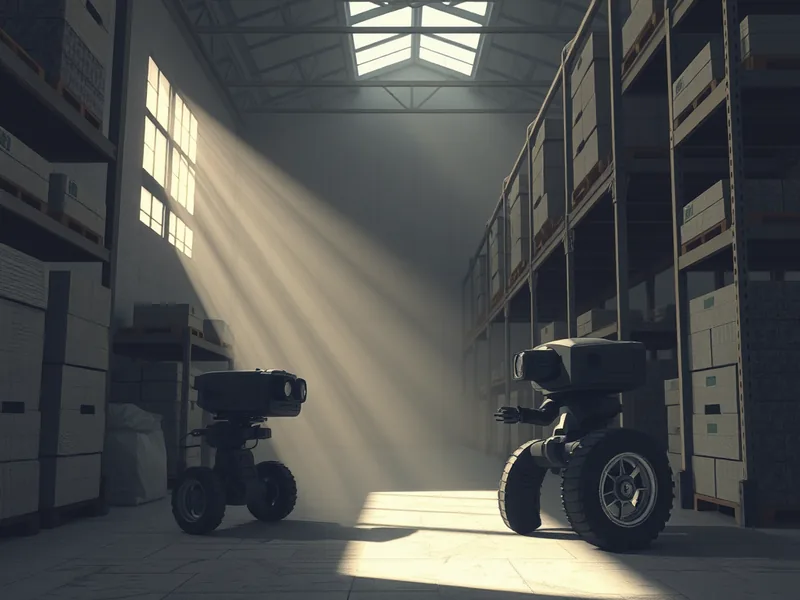
The researchers tested PLATONERNF in various scenarios, including indoor and outdoor environments. The results showed significant improvements in detecting occluded objects compared to traditional methods.
The applications of this technology are vast and varied:
By leveraging shadows to enhance 3D scene modeling, researchers at MIT have opened up new possibilities for a range of applications. This technique could lead to safer, more efficient, and more accurate systems across multiple industries.
Tags
Original Sources
About the author
Kai built ML infrastructure at a Bay Area startup before developing an obsession with transformer architectures and inference optimisation that eventually pulled him out of product work entirely. A stint at a compute research lab sharpened his instinct for what actually matters in a model release versus what is marketing. He writes from the inside — from the perspective of someone who has debugged the systems he is describing at three in the morning. He is allergic to hype and instinctively drawn to the unglamorous plumbing questions that everyone else skips over.
More from The Engineer →This Week's Edition
9 July 2024
29 articles
Related Articles

Wharton's Fourth Annual AI Survey: Most Companies See Returns, Few See Big Ones
Models & Research · 6 min
Tensormesh Launches Enterprise KV Cache Platform to Cut Redundant LLM Compute
Models & Research · 6 min

Iambic Therapeutics Raises $150 Million in IPO to Fund AI-Designed Cancer Drugs
Finance & Markets · 5 min
Related Articles
Wharton's Fourth Annual AI Survey: Most Companies See Returns, Few See Big Ones
Models & Research · 6 min
Tensormesh Launches Enterprise KV Cache Platform to Cut Redundant LLM Compute
Models & Research · 6 min
Iambic Therapeutics Raises $150 Million in IPO to Fund AI-Designed Cancer Drugs
Finance & Markets · 5 min
More Stories
© 2026 Cedar & Bloom. All rights reserved.
