The Drum · Weekly AI news, freeSubscribe →
Share
Exploring the intricate workings of the o20k_base tokenizer used in GPT-4o and GPT-5, this article reveals how tokenization impacts cost, accuracy, multilingual support, and even hallucination rates.
In the world of large language models, the tokenizer is often an underappreciated but crucial component. Before any model like GPT-5 "understands" your input, it first passes through a tokenizer that converts raw text into a sequence of integer IDs. This process has significant implications for cost, accuracy, multilingual performance, and even hallucination rates. In this article, we’ll dive deep into the o200k_base tokenizer used by GPT-4o, GPT-5, and other variants.
Before we get into the nitty-gritty, let's acknowledge a few limitations:
OpenAI’s tokenizer library, tiktoken, is fully open source. The vocabulary files are hosted on Azure with hardcoded SHA-256 hashes for integrity verification. This transparency allows us to dissect and understand how GPT models process input at the token level.
One of the most interesting aspects of the o200k_base tokenizer is that some well-known brands and platforms are represented as single tokens. For example:
This design decision can have several implications:
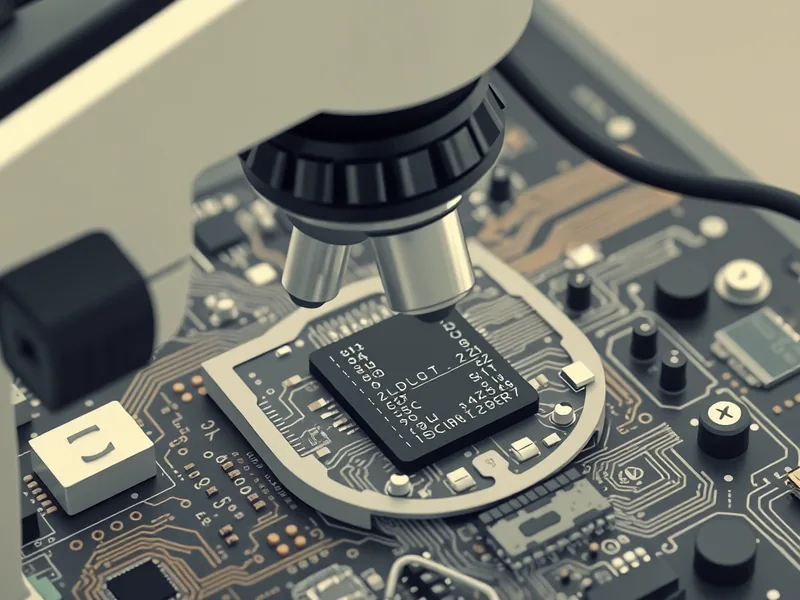
The rank of tokens in BPE does not directly correspond to their frequency in the training corpus. This means that while more frequent tokens might appear higher in the ranking, it's not a one-to-one relationship. Understanding this helps in optimizing tokenization strategies without overfitting to common words.
BPE is a subword tokenization method that splits words into smaller units based on frequency. The o200k_base tokenizer uses BPE with a vocabulary size of approximately 200,000 tokens. Here’s how it works:
This method balances the trade-off between having a large vocabulary (which can capture more context) and a small vocabulary (which is more efficient).
The tiktoken library ensures the integrity of its vocabulary files by using SHA-256 hashes. This means that any tampering with the files will be detected, ensuring that the tokenizer operates as intended.
While specific benchmarks are not provided in the source material, understanding the tokenizer’s architecture can help in optimizing performance:
The o20
Tags
Original Sources
About the author
Kai built ML infrastructure at a Bay Area startup before developing an obsession with transformer architectures and inference optimisation that eventually pulled him out of product work entirely. A stint at a compute research lab sharpened his instinct for what actually matters in a model release versus what is marketing. He writes from the inside — from the perspective of someone who has debugged the systems he is describing at three in the morning. He is allergic to hype and instinctively drawn to the unglamorous plumbing questions that everyone else skips over.
More from The Engineer →This Week's Edition
16 February 2026
29 articles
Related Articles

Wharton's Fourth Annual AI Survey: Most Companies See Returns, Few See Big Ones
Models & Research · 6 min
Tensormesh Launches Enterprise KV Cache Platform to Cut Redundant LLM Compute
Models & Research · 6 min

Iambic Therapeutics Raises $150 Million in IPO to Fund AI-Designed Cancer Drugs
Finance & Markets · 5 min
Related Articles
Wharton's Fourth Annual AI Survey: Most Companies See Returns, Few See Big Ones
Models & Research · 6 min
Tensormesh Launches Enterprise KV Cache Platform to Cut Redundant LLM Compute
Models & Research · 6 min
Iambic Therapeutics Raises $150 Million in IPO to Fund AI-Designed Cancer Drugs
Finance & Markets · 5 min
More Stories
© 2026 Cedar & Bloom. All rights reserved.
