The Drum · Weekly AI news, freeSubscribe →

Share
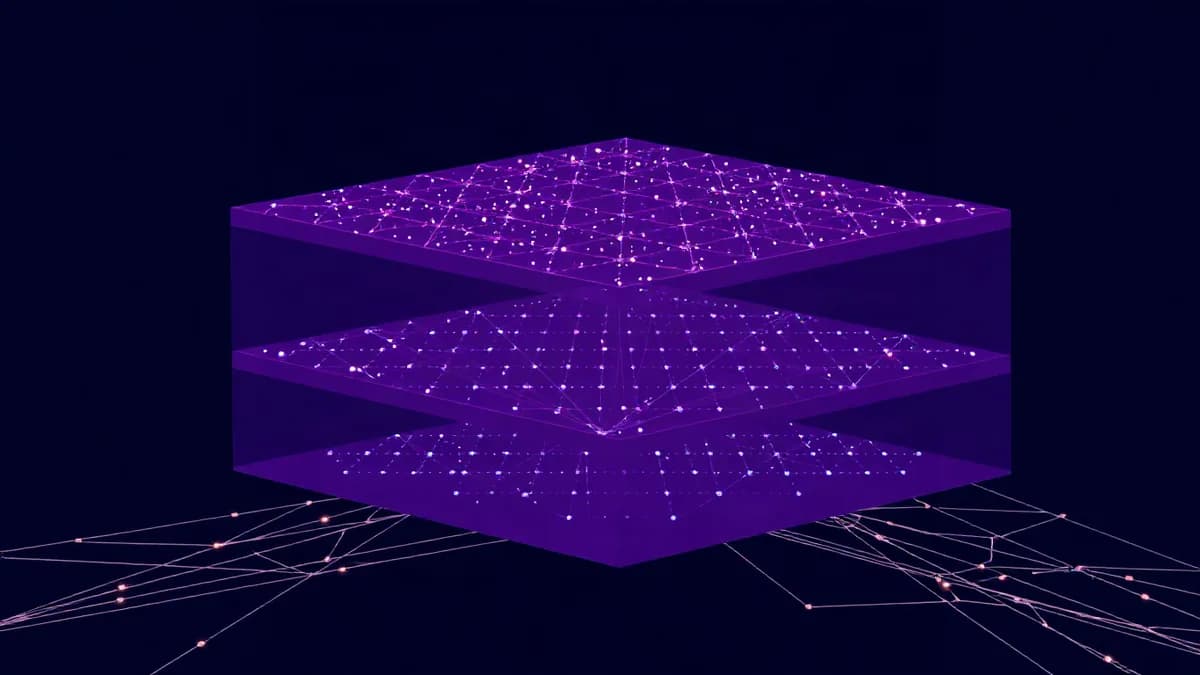
Sakana AI's new Neural Attention Memory Models (NAMMs) address transformers' memory limitations by mimicking human cognition, enhancing efficiency and enabling seamless knowledge transfer across various domains.
At Sakana AI, we're on a mission to push the boundaries of artificial intelligence by drawing inspiration from nature. Our latest breakthrough, detailed in our paper An Evolved Universal Transformer Memory, introduces Neural Attention Memory Models (NAMMs), a revolutionary memory system for transformers inspired by human cognitive processes.
Transformers are powerful but have a critical limitation: they store and process all past inputs indiscriminately. This can lead to inefficiencies and performance degradation, especially during extended tasks. NAMMs address this by selectively retaining and pruning information, much like how human memory works.
A New Kind of Memory:
Supercharged Results:
Cross-Domain Mastery:

Architecture:
Training Process:
Benchmarks:
For AI researchers and practitioners, NAMMs offer several key benefits:
Sakana AI's Neural Attention Memory Models represent a significant step forward in transformer technology. By mimicking human memory, NAMMs enable smarter, more efficient, and more adaptable models. With the release of our full training code on GitHub and the new dataset ChouBun, we invite the community to explore and build upon this exciting research.
Tags
Original Sources
About the author
Kai built ML infrastructure at a Bay Area startup before developing an obsession with transformer architectures and inference optimisation that eventually pulled him out of product work entirely. A stint at a compute research lab sharpened his instinct for what actually matters in a model release versus what is marketing. He writes from the inside — from the perspective of someone who has debugged the systems he is describing at three in the morning. He is allergic to hype and instinctively drawn to the unglamorous plumbing questions that everyone else skips over.
More from The Engineer →This Week's Edition
11 December 2024
29 articles
Related Articles

Wharton's Fourth Annual AI Survey: Most Companies See Returns, Few See Big Ones
Models & Research · 6 min
Tensormesh Launches Enterprise KV Cache Platform to Cut Redundant LLM Compute
Models & Research · 6 min

Iambic Therapeutics Raises $150 Million in IPO to Fund AI-Designed Cancer Drugs
Finance & Markets · 5 min
Related Articles
Wharton's Fourth Annual AI Survey: Most Companies See Returns, Few See Big Ones
Models & Research · 6 min
Tensormesh Launches Enterprise KV Cache Platform to Cut Redundant LLM Compute
Models & Research · 6 min
Iambic Therapeutics Raises $150 Million in IPO to Fund AI-Designed Cancer Drugs
Finance & Markets · 5 min
More Stories
© 2026 Cedar & Bloom. All rights reserved.
