The Drum · Weekly AI news, freeSubscribe →

Share
The study reveals that just 5% of self-driving cars can eliminate traffic jams and enhance overall road efficiency, thanks to advanced AI algorithms that optimize their behavior in mixed traffic conditions.
Robotic vehicles (or "robocars") are poised to revolutionize traffic management, even when they share the road with human-driven cars. A recent study by a team of computer scientists, including myself, has demonstrated that just a small percentage of autonomous vehicles can significantly improve traffic efficiency, safety, and energy consumption.
In a world where urban congestion is a major issue, autonomous vehicles offer a promising solution. Unlike traditional traffic management systems, which often rely on static rules and infrastructure, robocars can dynamically adapt to changing conditions in real-time. This dynamic adaptation is crucial for managing mixed traffic environments, where human drivers and autonomous vehicles coexist.
To test our hypothesis, we used reinforcement learning (RL), a type of machine learning where an agent learns to make decisions by maximizing cumulative rewards through trial and error. In our simulation:
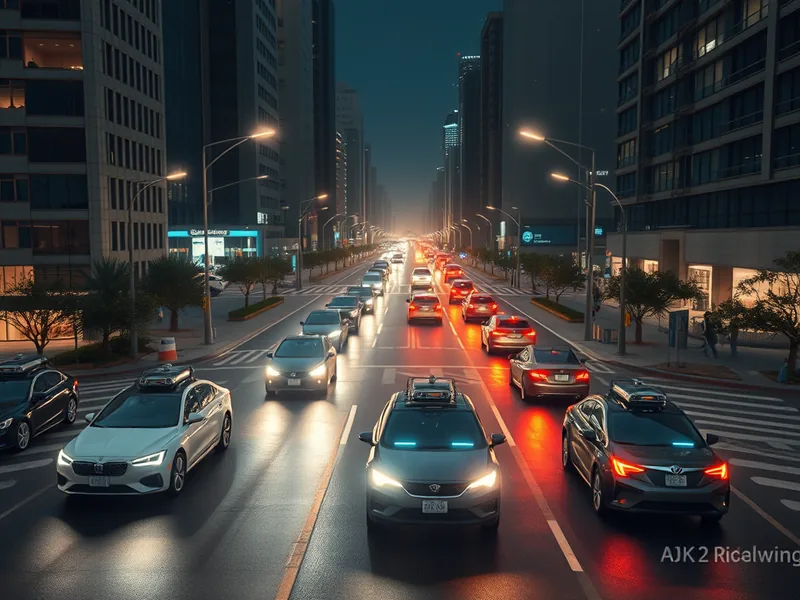
Our simulations showed that even with just 5% of the vehicles being robocars, traffic efficiency improved significantly. Key metrics included:
While the transition to fully autonomous traffic may take decades, our findings suggest that the benefits of robocars can be realized much sooner. Cities can start integrating small fleets of autonomous vehicles into their existing traffic systems to see immediate improvements.
The integration of autonomous vehicles into mixed traffic environments holds significant potential for improving urban mobility. By leveraging advanced AI algorithms, even a small number of robocars can make a big difference in reducing congestion, enhancing safety, and optimizing energy use. As we continue to refine these technologies, the future of transportation looks brighter than ever.
Tags
Original Sources
About the author
Kai built ML infrastructure at a Bay Area startup before developing an obsession with transformer architectures and inference optimisation that eventually pulled him out of product work entirely. A stint at a compute research lab sharpened his instinct for what actually matters in a model release versus what is marketing. He writes from the inside — from the perspective of someone who has debugged the systems he is describing at three in the morning. He is allergic to hype and instinctively drawn to the unglamorous plumbing questions that everyone else skips over.
More from The Engineer →This Week's Edition
14 August 2024
29 articles
Related Articles

Rosarium Health Partners With Anthem Medi-Cal to Fund Home Modifications for Older Californians
Products & Applications · 5 min

Meta's new open-weight model runs on Macs, if you have 1TB of RAM to spare
Products & Applications · 5 min

Persona AI Bets on Calm Execution in a Noisy Humanoid Robotics Market
Products & Applications · 5 min
Related Articles
Rosarium Health Partners With Anthem Medi-Cal to Fund Home Modifications for Older Californians
Products & Applications · 5 min
Meta's new open-weight model runs on Macs, if you have 1TB of RAM to spare
Products & Applications · 5 min
Persona AI Bets on Calm Execution in a Noisy Humanoid Robotics Market
Products & Applications · 5 min
More Stories
© 2026 Cedar & Bloom. All rights reserved.
