The Drum · Weekly AI news, freeSubscribe →
Share
As operating systems build AI agents that can see everything on your screen, Signal is quietly redrawing the line between convenience and privacy, one disabled screenshot at a time.
Imagine telling a friend something deeply personal, only to learn that a silent assistant living inside your phone was taking notes the whole time. That's roughly the scenario Signal says it's trying to prevent.
The encrypted messaging app announced Friday that it's restricting users' ability to take screenshots within its Android and iOS apps. The change follows a similar move Signal made on Windows, where screenshot blocking has been the default setting for some time. Now that same protection is coming to the phones most people carry everywhere, the devices that hold our most candid conversations.
This isn't about stopping nosy friends from capturing an embarrassing text. Signal president Meredith Whittaker framed the decision as a response to something far bigger: the rise of agentic AI baked directly into our operating systems. In a blog post, she called it an "existential threat" to the kind of privacy Signal was built to guarantee.
To understand the stakes, it helps to think about what "agentic AI" actually does. These are not simple chatbots waiting for you to type a question. They're assistants designed to act on your behalf, often by watching your screen, reading your notifications, and reaching into other apps to complete tasks for you. Microsoft, Google, and Apple have all been racing to build these capabilities into Windows, Android, and macOS/iOS.
That's where the trouble starts. An AI agent that can "see" your screen to help you book a flight can, technically, also see your Signal messages the moment they're displayed. Whittaker argues that this kind of system-level access undermines something Signal has spent over a decade trying to build: a guarantee that only the people in a conversation can read it.
"Now, in service of AI agentic capabilities, your sensitive data is being captured, stored, and made accessible to whatever local database or remote server an OS-level AI agent is using at that moment," Whittaker wrote. Once that happens, she said, the data is "outside of Signal's control" and the privacy of everyone in that conversation is at risk, not just the one person whose phone took the screenshot.
Think of it like a locked diary. Signal's encryption is the lock, strong enough that even Signal itself can't read your messages. But if the AI assistant living on your phone has a master key to the room where the diary sits, open on your desk, the lock on the diary itself stops mattering much. The content is visible the second it's displayed on screen, encryption or not.
That's a genuinely new kind of threat model for end-to-end encrypted apps. Traditional security conversations have focused on whether someone can intercept a message in transit or crack the encryption protecting it at rest. Screen-reading AI agents sidestep all of that. They don't need to break any code. They just need to look.
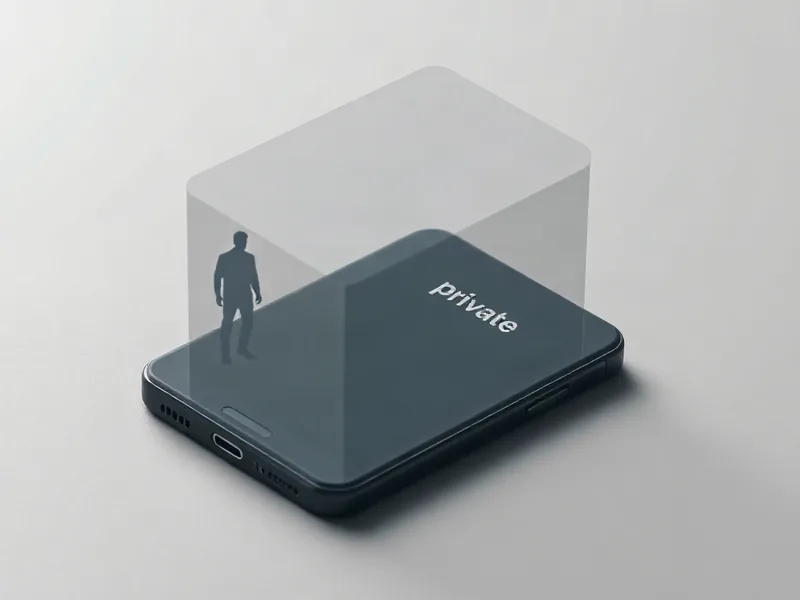
Blocking screenshots is Signal's attempt to make that kind of looking harder, or at least less convenient, on mobile devices. It won't stop a determined bad actor, but it raises friction against the casual, automated, always-on surveillance that agentic AI threatens to normalize.
Users retain control here, which matters. Signal is letting people disable the restriction if they want to. Whittaker was candid about what that tradeoff means: turning it off "will break our privacy guarantees." It's a blunt warning, and a refreshingly honest one. Rather than quietly weakening protections for everyone, Signal is putting the choice, and the consequences, directly in front of users.
Whittaker also didn't pretend this fixes everything. She acknowledged the screenshot restriction is "incomplete" and doesn't address "other more sneaky ways AI agents could potentially access application data." That's a meaningful admission from the leader of one of the most trusted privacy tools in the world. Screenshots are just one door. There may be others.
What those other doors look like isn't entirely clear yet, and that ambiguity is part of what makes this moment unsettling. Accessibility features that let software read screen content for users with disabilities, clipboard access, background processes that index app data for search, any of these could theoretically become vectors for the same kind of exposure. Operating system makers haven't published detailed technical breakdowns of exactly how their AI agents access on-screen information, which leaves privacy-focused developers like Signal reacting to a moving target.
For the roughly billions of people who rely on encrypted messaging, from journalists protecting sources to domestic abuse survivors coordinating safety plans to ordinary families discussing medical news, this fight over screenshots is really a fight over who gets to see our most sensitive conversations by default. Encryption was supposed to settle that question. Agentic AI is reopening it.
Signal's move is a signal, no pun intended, that the company sees operating system vendors as the next major front in the privacy wars, not just governments or hackers. When the infrastructure your phone runs on is designed to be helpful by constantly observing and acting on your behalf, privacy tools built on top of that infrastructure face a structural problem they can't fully solve alone.
That doesn't mean the fight is lost. But it does mean users deserve clear, honest tradeoffs, the kind Whittaker offered when she warned that disabling screenshot protection breaks Signal's guarantees. Expect more of these blunt disclosures as AI agents get deeper access to our devices, and expect privacy-focused companies to keep playing defense against features designed, with good intentions, to make our phones more helpful and, almost as a side effect, more watchful.
Tags
Original Sources
Signal restricts mobile screenshots as it confronts ‘existential threat’ of AI surveillance | TechCrunch
↗ https://techcrunch.com/2026/11/21/signal-restricts-mobile-screenshots-as-it-confronts-existential-threat-of-ai-surveillance
About the author
Amara's entry point into AI was an epidemiology role at a London research hospital, where she spent five years studying how digital health tools reached — or conspicuously failed to reach — underserved communities. Watching early algorithmic systems in healthcare quietly entrench existing inequalities, she redirected her career toward the systemic consequences of AI at scale. She covers AI through an unflinching lens: who benefits, who bears the cost, and what evidence actually says versus what the press release claims. Her writing is calm and precise, but she doesn't mistake balance for neutrality.
More from The Steward →This Week's Edition
22 November 2026
10 articles
Related Articles
Related Articles
More Stories
© 2026 Cedar & Bloom. All rights reserved.