The Drum · Weekly AI news, freeSubscribe →

Share
Cosite interference between antennas on ships, aircraft, and vehicles has long been a build-it-and-see problem. New simulation approaches aim to predict coupling accurately enough to catch RF conflicts before hardware ever leaves the shop.
If you've ever worked on a platform with more than a couple of antennas crammed onto it, you know the pain of cosite interference. Put two transmitters close enough together, on a ship's mast, an aircraft fuselage, a vehicle roof, and they'll couple energy into each other whether you want them to or not. That coupling can desensitize receivers, generate spurious signals, or just flat out block a channel you need. The traditional fix has been expensive: build it, test it on a range, find the problem, and iterate. On an "electrically large" platform, one whose dimensions span many wavelengths at the frequencies in question, that iteration loop gets brutal.
The core engineering challenge here is scale. Electromagnetic simulation tools that work fine for a single antenna or a small assembly start to choke when you throw an entire ship hull or aircraft skin into the mesh. The computational cost of full-wave methods (techniques like the Method of Moments or Finite-Difference Time-Domain that solve Maxwell's equations directly across a 3D mesh) scales poorly with electrical size. Mesh a 200-meter destroyer at X-band frequencies and you're looking at a problem with billions of unknowns. That's not a weekend simulation, that's a supercomputer job, and even then accuracy tends to degrade as approximations get introduced to make it tractable.
That's the backdrop for why cosite isolation prediction, estimating how much signal leaks from one antenna to another across a large platform, has become its own subfield rather than just a corner case of general EM simulation. Engineers need methods that scale to real platform sizes without giving up on accuracy, because a prediction that's off by a few dB can mean the difference between a system that works in the field and one that doesn't.
The physics here isn't exotic. Two antennas separated by some distance and geometry will always have some level of mutual coupling, governed by the same near-field and far-field radiation behavior you'd study in any antenna course. What changes is the computational burden of modeling that coupling accurately when the "geometry" in question is an entire vehicle hull, wing structure, or superstructure with dozens of antennas scattered across it.
A few things make this hard in practice:
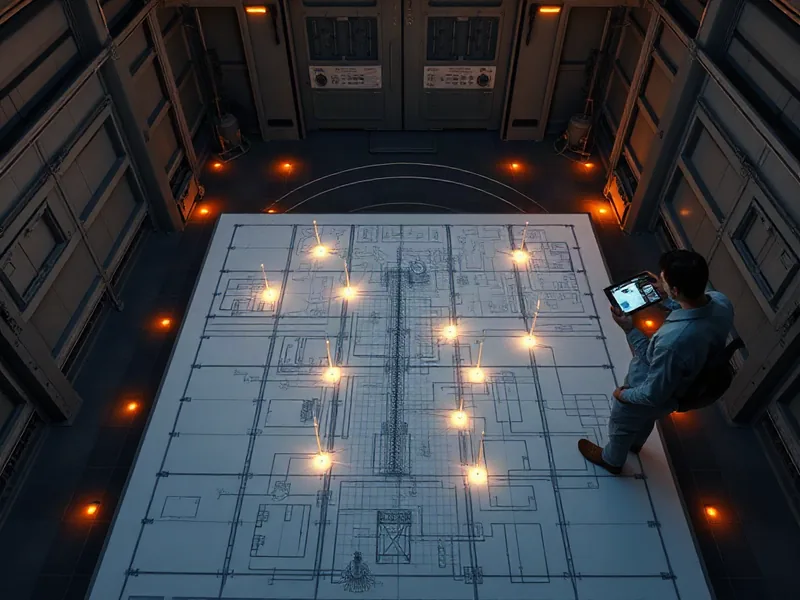
This hybrid approach is where a lot of the recent progress in cosite prediction work is happening. The idea is to get the accuracy of full-wave physics where it counts, near the antennas, without paying the computational tax of applying it to an entire hull or fuselage. For a platform integrator, that's the difference between a simulation that finishes overnight and one that never finishes at all.
None of this is purely academic. Isolation requirements on defense and aerospace platforms are typically spelled out in hard numbers, so many dB of isolation between specific antenna pairs across specific frequency bands. Miss that target and you either redesign antenna placement (expensive and slow once metal has been cut) or accept degraded receiver sensitivity in the field. Being able to predict coupling accurately during the design phase, before committing to a physical layout, shifts that cost curve dramatically. It's the same logic that's driven simulation-first workflows in chip design and structural engineering for decades: the earlier you catch a problem, the cheaper it is to fix.
There's also a practical tie-in to signal processing here. Even with good antenna placement, some residual coupling is often unavoidable given real-world constraints on where antennas can physically go. Knowing the predicted coupling characteristics ahead of time lets engineers design filtering, isolation circuitry, or adaptive cancellation schemes around the actual expected interference profile, rather than guessing and tuning after the fact on a test range. That's a meaningfully different engineering workflow than the trial-and-error approach that's dominated this space for years.
The push toward accurate, efficient cosite isolation prediction on electrically large platforms reflects a broader trend in RF and antenna engineering: simulation tools maturing to the point where they can replace, or at least drastically reduce, physical prototyping and range testing. Full-wave methods remain the gold standard for accuracy but don't scale to platform-sized problems on their own. Hybrid methods that pair asymptotic techniques for the large-scale structure with full-wave rigor near the antennas appear to be the practical path forward, letting engineers get usable isolation predictions without needing a supercomputer or a finished hardware build. For anyone doing platform integration work, ships, aircraft, ground vehicles, this kind of simulation capability isn't a nice-to-have. It's what determines whether you catch an interference problem in a CAD model or on a test range with a very expensive piece of hardware sitting in front of you.
Tags
Original Sources
Efficient and Accurate Prediction of Cosite Isolation on Large Platforms - Wiley Science and Engineering Content Hub
↗ https://spectrum.ieee.org/predict-antenna-coupling-on-electrically-largeplatforms-before-building-hardware
About the author
Kai built ML infrastructure at a Bay Area startup before developing an obsession with transformer architectures and inference optimisation that eventually pulled him out of product work entirely. A stint at a compute research lab sharpened his instinct for what actually matters in a model release versus what is marketing. He writes from the inside — from the perspective of someone who has debugged the systems he is describing at three in the morning. He is allergic to hype and instinctively drawn to the unglamorous plumbing questions that everyone else skips over.
More from The Engineer →This Week's Edition
6 September 2026
24 articles
Related Articles

Tether Evo's New Research Tackles BCI's Cross-Subject Problem Across Speech, Vision, and Music
Models & Research · 6 min

xAI Launches Grok Bot, an Autonomous Agent That Logs Into Your Tools and Does the Work
Products & Applications · 5 min

German Bishops Back Child-Friendly AI Standards, Citing Papal Call on Human Dignity
Policy & Regulation · 5 min
Related Articles
Tether Evo's New Research Tackles BCI's Cross-Subject Problem Across Speech, Vision, and Music
Models & Research · 6 min
xAI Launches Grok Bot, an Autonomous Agent That Logs Into Your Tools and Does the Work
Products & Applications · 5 min
German Bishops Back Child-Friendly AI Standards, Citing Papal Call on Human Dignity
Policy & Regulation · 5 min
More Stories
© 2026 Cedar & Bloom. All rights reserved.
