The Drum · Weekly AI news, freeSubscribe →

Share
Fable's SIM-1 simulation uses cutting-edge AI to recreate the tense boardroom drama surrounding Sam Altman’s ousting and return at OpenAI, revealing the intricate power plays behind closed doors.
In a fascinating blend of real-world drama and cutting-edge simulation, Fable, a game and AI simulation company, has built an AI-driven "war game" to explore the behind-the-scenes dynamics of Sam Altman's return to OpenAI. This multi-agent competition, dubbed SIM-1, aims to shed light on the complex decision-making processes that unfolded during those crucial five days when Altman was temporarily removed as CEO and then reinstated.
The SIM-1 framework leverages advanced AI models to simulate a rich, multi-agent environment. Key features include:
The SIM-1 framework ran 20 simulations of the OpenAI boardroom crisis, yielding some intriguing results:
Edward Saatchi, Fable's CEO, highlighted the significance of these results:
"It’s interesting to find out just how unlikely it was that Sam did return. That’s why people run war games in D.C. and beyond. How likely was it that a particular event happened? Then you can base decisions around that. This scenario showed that 16 out of 20 times, Sam did not return."
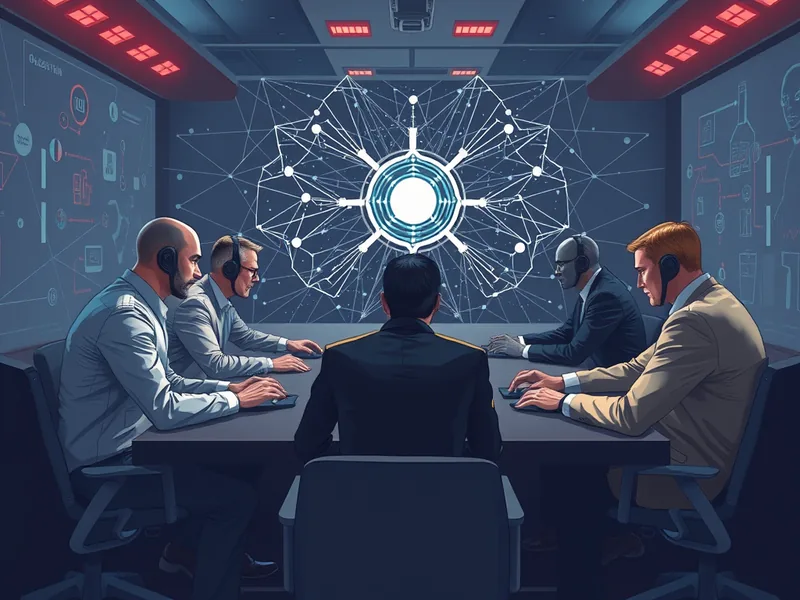
The simulation also revealed the hidden tactics and interactions among key players, including:
Joshua Johnson, CEO of Tree, an AI startup that partnered with Fable on this research, emphasized the broader implications:
"Simulations offer a completely new way to explore AI decision making in rich environments, including in war game situations where predicting possible outcomes can be invaluable. These aren’t simply chatbots. These AIs need to sleep and eat, and to balance many different physical, mental, and emotional goals."
The SIM-1 framework demonstrates the potential of multi-agent simulations in understanding complex human interactions and decision-making processes. By simulating real-world scenarios, researchers and practitioners can gain valuable insights into how different decisions and tactics might influence outcomes.
While the results of the OpenAI boardroom simulation are intriguing, they also highlight the unpredictability of such high-stakes situations. The low probability of Sam Altman's return underscores the importance of strategic decision-making and the role of external influences in shaping organizational dynamics.
As AI continues to evolve, simulations like SIM-1 will play a crucial role in understanding and predicting human behavior in complex environments.
Tags
Original Sources
About the author
Kai built ML infrastructure at a Bay Area startup before developing an obsession with transformer architectures and inference optimisation that eventually pulled him out of product work entirely. A stint at a compute research lab sharpened his instinct for what actually matters in a model release versus what is marketing. He writes from the inside — from the perspective of someone who has debugged the systems he is describing at three in the morning. He is allergic to hype and instinctively drawn to the unglamorous plumbing questions that everyone else skips over.
More from The Engineer →This Week's Edition
25 November 2024
24 articles
Related Articles

Tether Evo's New Research Tackles BCI's Cross-Subject Problem Across Speech, Vision, and Music
Models & Research · 6 min

xAI Launches Grok Bot, an Autonomous Agent That Logs Into Your Tools and Does the Work
Products & Applications · 5 min

German Bishops Back Child-Friendly AI Standards, Citing Papal Call on Human Dignity
Policy & Regulation · 5 min
Related Articles
Tether Evo's New Research Tackles BCI's Cross-Subject Problem Across Speech, Vision, and Music
Models & Research · 6 min
xAI Launches Grok Bot, an Autonomous Agent That Logs Into Your Tools and Does the Work
Products & Applications · 5 min
German Bishops Back Child-Friendly AI Standards, Citing Papal Call on Human Dignity
Policy & Regulation · 5 min
More Stories
© 2026 Cedar & Bloom. All rights reserved.
