The Drum · Weekly AI news, freeSubscribe →

Share
Skip-DiT stabilizes and accelerates Diffusion Transformers by integrating Long-Skip-Connections and spectral constraints, enhancing feature stability and output quality during cached inference.
Diffusion Transformers (DiT) have become a go-to architecture for high-quality image and video generation, but they often suffer from dynamic feature instability during cached inference. This instability can lead to error amplification and degraded output quality. A new approach, Skip-DiT, addresses these issues by introducing Long-Skip-Connections (LSCs) and spectral constraints. In this article, we'll dive into the technical details of Skip-DiT, its architecture, and how it improves both training and inference efficiency.
Skip-DiT is a variant of DiT that incorporates LSCs to stabilize feature dynamics during generation tasks. The key changes include:
For practitioners, Skip-DiT offers several significant benefits:
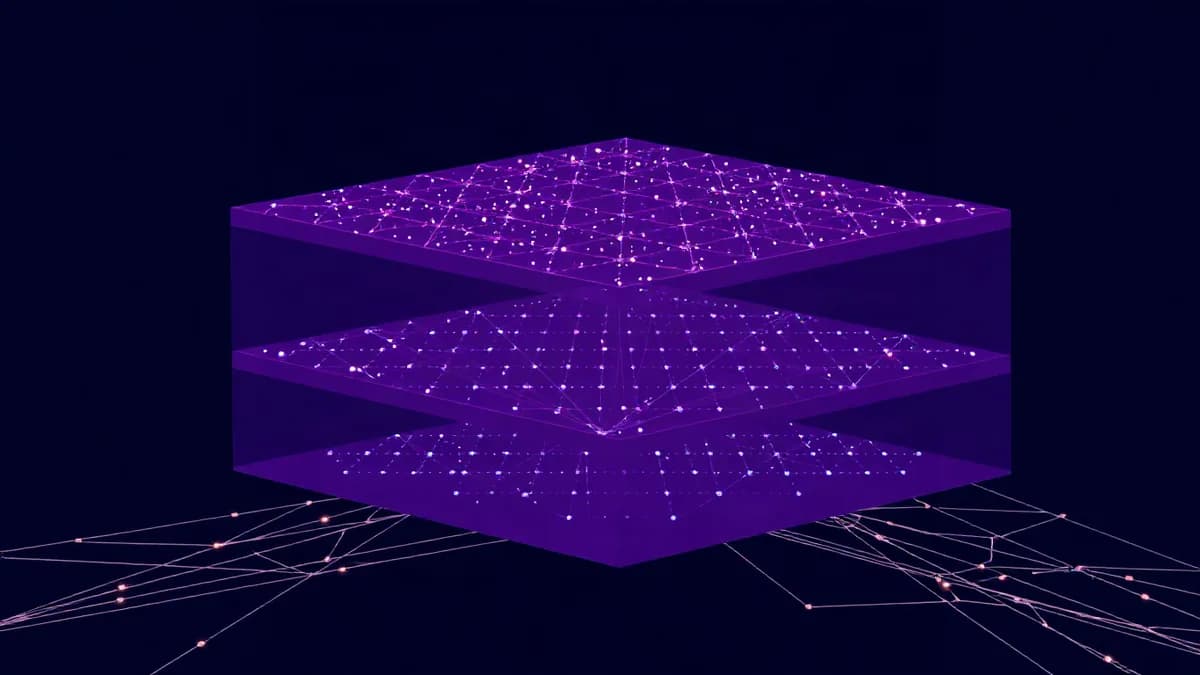
Skip-DiT modifies the vanilla DiT architecture by adding long-skip-connections between shallow and deep layers:

Training Efficiency:
Inference Performance:
Extensive experiments on image and video generation tasks show that Skip-DiT outperforms existing DiT caching methods across various quantitative metrics:
Video Generation:
Skip-DiT represents a significant step forward in stabilizing and accelerating diffusion transformers. By incorporating long-skip-connections and spectral constraints, it addresses the inherent instability of DiT models during cached inference, leading to faster training, efficient inference, and high-quality outputs. For developers working on image and video generation tasks, Skip-DiT is a promising approach that combines stability and efficiency.
Tags
Original Sources
About the author
Kai built ML infrastructure at a Bay Area startup before developing an obsession with transformer architectures and inference optimisation that eventually pulled him out of product work entirely. A stint at a compute research lab sharpened his instinct for what actually matters in a model release versus what is marketing. He writes from the inside — from the perspective of someone who has debugged the systems he is describing at three in the morning. He is allergic to hype and instinctively drawn to the unglamorous plumbing questions that everyone else skips over.
More from The Engineer →This Week's Edition
25 December 2024
29 articles
Related Articles

Wharton's Fourth Annual AI Survey: Most Companies See Returns, Few See Big Ones
Models & Research · 6 min
Tensormesh Launches Enterprise KV Cache Platform to Cut Redundant LLM Compute
Models & Research · 6 min

Iambic Therapeutics Raises $150 Million in IPO to Fund AI-Designed Cancer Drugs
Finance & Markets · 5 min
Related Articles
Wharton's Fourth Annual AI Survey: Most Companies See Returns, Few See Big Ones
Models & Research · 6 min
Tensormesh Launches Enterprise KV Cache Platform to Cut Redundant LLM Compute
Models & Research · 6 min
Iambic Therapeutics Raises $150 Million in IPO to Fund AI-Designed Cancer Drugs
Finance & Markets · 5 min
More Stories
© 2026 Cedar & Bloom. All rights reserved.
