The Drum · Weekly AI news, freeSubscribe →
Share
As Elon Musk prepares to take SpaceX public, investors face a high-stakes gamble on a company merging space exploration with artificial intelligence, valued at over $1 trillion.
Elon Musk’s SpaceX is set to become the biggest initial public offering (IPO) in history, with a valuation of more than $1.25 trillion. The merger of SpaceX and XAI into SpaceXAI in February 2026 has created a behemoth that aims to revolutionize both space exploration and artificial intelligence. However, the company's financials raise significant concerns, with nearly $5 billion in losses reported last year. This IPO is not just a bet on technology; it’s a high-stakes gamble on Musk's vision and leadership.
The SpaceX IPO represents more than just another tech giant entering the public market. It symbolizes the convergence of two cutting-edge industries: space exploration and artificial intelligence. The company's ambitious goals, such as establishing a permanent human presence on Mars and developing advanced AI systems, have captured the imagination of investors and the general public alike.
However, the financial risks are substantial. SpaceX reported nearly $5 billion in losses in 2025, raising questions about its profitability and sustainability. Despite these challenges, Musk's track record of innovation and disruption continues to attract significant investment interest. The IPO could set a new standard for valuing companies with ambitious long-term goals but uncertain short-term financials.
The broader market implications are also significant. SpaceXAI's valuation is based on the potential future value of its technologies, rather than current earnings or revenue streams. This approach mirrors the speculative nature of many high-profile tech IPOs in recent years, where investor enthusiasm often outpaces financial fundamentals.
For investors, the SpaceX IPO presents a unique opportunity and a significant risk. The company's valuation is driven by its potential to transform multiple industries, but this potential comes with substantial uncertainty. Here are key points for investors to consider:
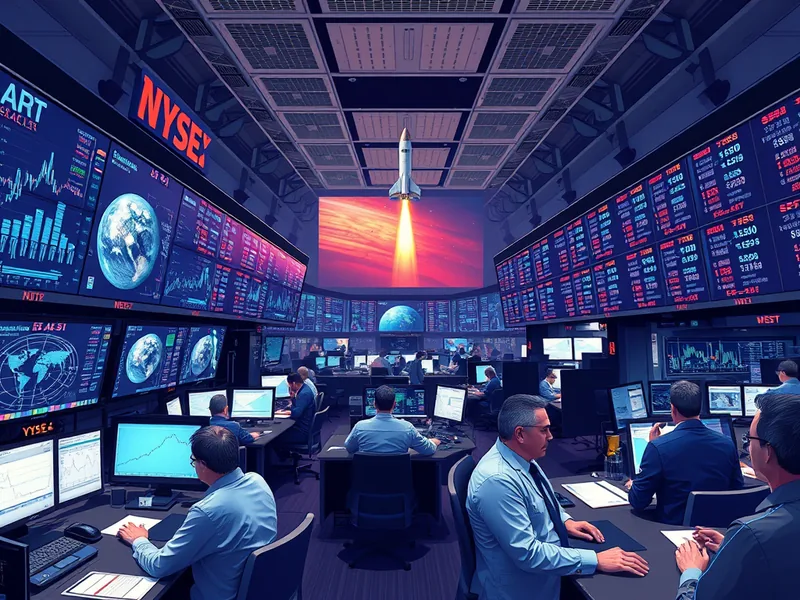
Valuation: At over $1.25 trillion, SpaceXAI's valuation is unprecedented. This high valuation is based on the company’s long-term vision and technological capabilities, rather than current financial performance. Investors should carefully evaluate whether they believe in Musk's ability to deliver on these ambitious goals.
Financial Performance: The nearly $5 billion loss reported last year highlights the company's current financial challenges. While SpaceX has made significant strides in space exploration, the path to profitability remains unclear. Investors must weigh the potential for future success against the risk of continued losses.
Market Competition: SpaceXAI will face intense competition in both the space and AI sectors. Companies like Blue Origin, Virgin Galactic, and a host of AI startups are also vying for market share. SpaceX's ability to maintain its competitive edge will be crucial for long-term success.
Regulatory Environment: The regulatory landscape for space exploration and AI is complex and evolving. Changes in regulations could significantly impact the company’s operations and profitability. Investors should monitor regulatory developments closely.
Leadership: Elon Musk's leadership style has been both a driving force behind SpaceX's achievements and a source of controversy. His ability to inspire and innovate is unparalleled, but his management practices have also raised concerns. Investors must consider how these factors might influence the company’s future trajectory.
The SpaceX IPO offers investors a chance to participate in a groundbreaking venture with the potential to reshape multiple industries. However, this opportunity comes with significant risks, including high valuations, financial losses, and intense competition. Investors should approach this IPO with a clear understanding of both the potential rewards and the inherent challenges.
Tags
Original Sources
The SpaceX IPO is great for Elon Musk and terrible for you
↗ https://www.theverge.com/ai-artificial-intelligence/940001/elon-musk-spacex-ipo-ai
About the author
Marcus began tracking AI's market implications in 2016, noticing AI-related patent filings accelerating ahead of earnings upgrades before most of the sell-side had caught on. A former fixed-income quantitative analyst, he spent two decades building models that priced risk across emerging markets before pivoting to cover the economic impact of AI full-time. His writing translates opaque technical developments into clear risk/reward terms — and he's rarely diplomatic about the gap between AI valuations and underlying fundamentals. He believes most market participants still underestimate AI's long-run deflationary effect on knowledge work.
More from The Analyst →This Week's Edition
8 June 2026
18 articles
Related Articles
Related Articles
More Stories
© 2026 Cedar & Bloom. All rights reserved.