The Drum · Weekly AI news, freeSubscribe →
Share
Splatter Image slashes the time needed for 3D reconstruction to near-real-time speeds, using Gaussian Splatting to outperform existing methods while cutting training times significantly.
The team from the Visual Geometry Group at the University of Oxford, led by Stanislaw Szymanowicz, Christian Rupprecht, and Andrea Vedaldi, has introduced a groundbreaking method for single- and few-view 3D reconstruction called Splatter Image. This approach not only achieves state-of-the-art (SOTA) results but also does so at an unprecedented speed-reconstructing objects at 38 FPS and rendering them at 588 FPS. Moreover, it can be trained on a single GPU in just 7 days.
Gaussian Splatting: The core of Splatter Image is Gaussian Splatting, a technique that has recently gained attention for its real-time rendering capabilities and fast training times. Gaussian Splatting represents objects as a collection of colored 3D Gaussians, which can be rendered quickly using specialized algorithms.
Monocular Reconstruction: For the first time, Gaussian Splatting is applied to monocular (single-view) reconstruction. This means that Splatter Image can generate a 3D model from just one input image, making it highly versatile and efficient.
2D Image-to-Image Network: The method uses a neural network to map the input image to a "Splatter Image," which is essentially an image where each pixel corresponds to a 3D Gaussian. This design allows for fast and parallel processing, contributing to its high frame rates.
Input Image Processing:
Gaussian Splatting Rendering:
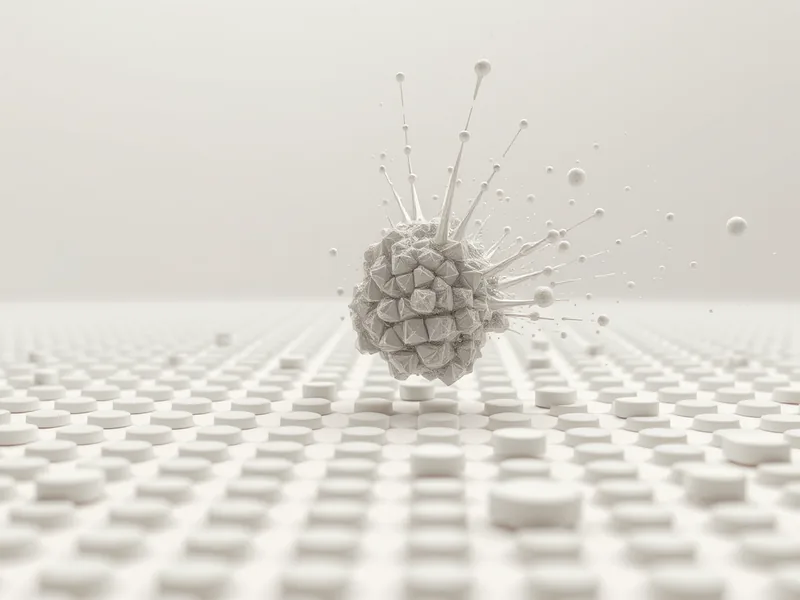
The efficiency and accuracy of Splatter Image make it suitable for a wide range of applications:
Splatter Image represents a significant advancement in the field of 3D reconstruction. By combining Gaussian Splatting with a simple yet effective neural network design, it achieves state-of-the-art results while maintaining high efficiency and speed. Whether you're working on real-time applications or need to reconstruct objects from limited views, Splatter Image is a powerful tool worth exploring.
Tags
Original Sources
↗ https://szymanowiczs.github.io/splatter-image?utm_source=tldrai
About the author
Kai built ML infrastructure at a Bay Area startup before developing an obsession with transformer architectures and inference optimisation that eventually pulled him out of product work entirely. A stint at a compute research lab sharpened his instinct for what actually matters in a model release versus what is marketing. He writes from the inside — from the perspective of someone who has debugged the systems he is describing at three in the morning. He is allergic to hype and instinctively drawn to the unglamorous plumbing questions that everyone else skips over.
More from The Engineer →This Week's Edition
22 December 2023
24 articles
Related Articles
Tether Evo's New Research Tackles BCI's Cross-Subject Problem Across Speech, Vision, and Music
Models & Research · 6 min
xAI Launches Grok Bot, an Autonomous Agent That Logs Into Your Tools and Does the Work
Products & Applications · 5 min
German Bishops Back Child-Friendly AI Standards, Citing Papal Call on Human Dignity
Policy & Regulation · 5 min
Related Articles
Tether Evo's New Research Tackles BCI's Cross-Subject Problem Across Speech, Vision, and Music
Models & Research · 6 min
xAI Launches Grok Bot, an Autonomous Agent That Logs Into Your Tools and Does the Work
Products & Applications · 5 min
German Bishops Back Child-Friendly AI Standards, Citing Papal Call on Human Dignity
Policy & Regulation · 5 min
More Stories
© 2026 Cedar & Bloom. All rights reserved.
