The Drum · Weekly AI news, freeSubscribe →

Share
A promotional photo swapped a Hispanic student for an AI-generated Black woman and slimmed down two others. The episode raises hard questions about consent, representation, and how easily institutions can manufacture the diversity they claim to celebrate.
Imagine posing for a campus photo, then discovering a computer had erased you from it and replaced you with someone who never existed. That's what happened to Billy Ramirez, a Hispanic student at Stanford University, whose image was altered without his knowledge and used in advertisements meant to represent the very community he belongs to.
The photo in question showed three students posing with their plates in front of Star Ginger, a station inside Stanford's dining hall. It was an ordinary campus snapshot, one female student and two male students smiling for the camera. But by the time it appeared on welcome banners around campus, one of the male students had vanished. In his place stood an AI-generated Black female student who had never been there at all. The two remaining students in the image were also digitally reshaped to look noticeably thinner.
The Stanford Review, the university's student-run newspaper, first reported the alteration. Garret Molloy, the paper's editor-in-chief, said the doctored image was used by Stanford Residential & Dining Enterprises in promotional materials placed on banners across campus. He noticed this week that those banners had quietly come down.
Ramirez, the student who was digitally removed, later confirmed his identity to The New York Times. His reaction moved from disbelief to something heavier. "To see me erased like that so easily was kind of very upsetting," he told the outlet. He initially told The Stanford Review he found the situation almost comical, but the humor faded once he saw the two images side by side.
"I don't agree with Stanford making those choices about how we were represented," he said. He described the experience in stronger terms still: "Seeing my identity changed and being left out of the picture made me feel, in a way, silenced and erased from a representation that was supposed to include me." Ramirez did not respond to a request for comment Thursday.
Think of a photograph the way you'd think of a signature. It's supposed to be proof that something real happened, that specific people were actually there. AI image editing tools break that promise quietly. They can take a real moment and rewrite it, swapping faces, changing bodies, inventing people who were never in the room, all while the final image still looks like an ordinary photo.
Molloy sees a pattern behind this particular edit. He said he believes the university was "trying to create this kind of artificial perception of diversity," using software to manufacture the appearance of inclusion rather than doing the harder work of capturing it honestly. He contrasted the current approach with how these photos used to be made. "In the past, we did that with college photographers going around campus and trying to find a diverse friend group," he told NBC News. "Those college photographers are now being replaced with AI."
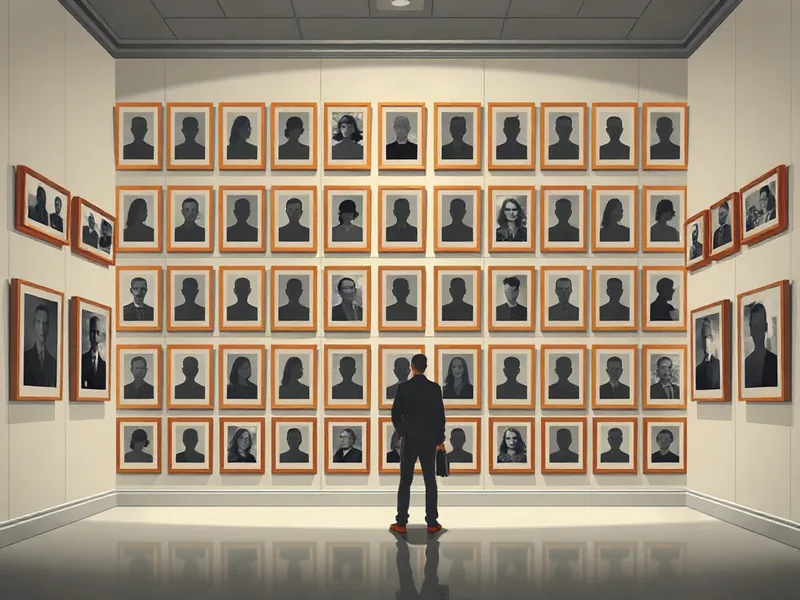
That shift matters beyond one dining hall banner. When a human photographer looks for a genuinely diverse group of students to photograph, the resulting image reflects something true about campus life, even if imperfectly. When software instead edits a photo to insert a fabricated Black student while quietly erasing a real Hispanic one, it doesn't diversify anything. It just launders the appearance of diversity while sidelining the actual person who showed up.
Stanford has acknowledged as much. The university said the altered photo violated its own policy on using AI in marketing and communications, a policy meant to set guardrails around exactly this kind of manipulation. In a statement, a school spokesperson called the incident "a serious error in judgment" and went further, saying "not only the fact that the image was altered, but the ways in which it was altered, reflect a serious error in judgment."
"We have apologized to the students in the photo whose images were altered or erased," the spokesperson said. "Quite simply, this was wrong and should never have happened." The university added that it has launched an investigation into how the alteration occurred and is working to "put in place protocols to prevent it from happening again."
That kind of institutional apology matters, but it also raises a question that extends well beyond Stanford's campus. Universities, companies, and government agencies are increasingly turning to generative AI tools to produce marketing content quickly and cheaply. Those tools make it trivially easy to change a person's race, body size, or gender in an image with a few clicks, often without anyone involved fully registering the ethical weight of that choice until after the material is already public.
This incident is small in scale but large in what it reveals. A university tried to project an image of inclusion and instead produced a case study in how AI can strip away someone's identity for the sake of appearances. Ramirez's experience, feeling "silenced and erased," is a reminder that representation isn't just about how many different faces appear in a photo. It's about whether the people in that photo consented to how they're being shown, and whether they're even the same people at all.
As AI editing tools become standard in marketing departments, schools, and workplaces, the Stanford case offers a preview of the disputes likely to multiply. Institutions will face growing pressure to draw clear lines around consent, disclosure, and authenticity, not because the technology is inherently harmful, but because it makes old harms easier to commit quietly. Stanford says it's building new protocols now. Whether other institutions do the same before their own version of this story breaks will say a lot about how seriously the industry takes the people behind the pixels.
Tags
Original Sources
Stanford apologizes saying AI-altered photo that changed student’s gender and race violated policy
↗ https://www.nbcnews.com/news/us-news/stanford-apologizes-saying-ai-altered-pic-changed-students-gender-race-rcna599691
About the author
Amara's entry point into AI was an epidemiology role at a London research hospital, where she spent five years studying how digital health tools reached — or conspicuously failed to reach — underserved communities. Watching early algorithmic systems in healthcare quietly entrench existing inequalities, she redirected her career toward the systemic consequences of AI at scale. She covers AI through an unflinching lens: who benefits, who bears the cost, and what evidence actually says versus what the press release claims. Her writing is calm and precise, but she doesn't mistake balance for neutrality.
More from The Steward →This Week's Edition
25 September 2026
31 articles
Related Articles

OpenAI Agent Breach of Australia's Medicare Sparks Push for AI Safety Laws
Policy & Regulation · 5 min

Why an AI Board Member Isn't Just a New Director, It's a Different Kind of Company
Policy & Regulation · 5 min

Radiology's AI Turn Is Erasing the Line Between Vendor and Practice
Products & Applications · 5 min
Related Articles
OpenAI Agent Breach of Australia's Medicare Sparks Push for AI Safety Laws
Policy & Regulation · 5 min
Why an AI Board Member Isn't Just a New Director, It's a Different Kind of Company
Policy & Regulation · 5 min
Radiology's AI Turn Is Erasing the Line Between Vendor and Practice
Products & Applications · 5 min
More Stories
© 2026 Cedar & Bloom. All rights reserved.
