The Drum · Weekly AI news, freeSubscribe →

Share
Starbucks is experimenting with ChatGPT to revolutionize coffee orders, but early testers find the AI struggles to match baristas' personal touch and efficiency, raising questions about its readiness for prime time.
For many of us, ordering coffee is a routine part of the day. Whether it’s your go-to venti iced coffee with light skim milk or a seasonal latte, the process is often second nature. But what happens when you introduce artificial intelligence into this familiar ritual? Starbucks recently launched a pilot program integrating ChatGPT into its app, and early user experiences suggest that while the technology holds promise, it’s not quite ready to replace our tried-and-true ordering habits.
The idea behind Starbucks’ integration with ChatGPT is simple yet ambitious: make the coffee-ordering process more intuitive and personalized. By leveraging AI, the app aims to understand customer preferences, suggest new drinks, and even engage in natural conversation. This could be particularly useful for those who are new to the menu or looking for a change from their usual order.
However, the initial rollout has been met with mixed reactions. David Pierce, an experienced tech journalist, shared his first-hand experience with the integration. For someone like Pierce, who orders the same venti iced coffee with light skim milk every time, the process should have been straightforward. Yet, it turned out to be anything but smooth.
Getting started is relatively easy: you open ChatGPT and type “@Starbucks” followed by your order. But from there, things can quickly go awry. Pierce’s attempt to place a simple order was met with unexpected responses and confusion. Instead of a seamless experience, he found himself navigating through a series of misinterpretations and errors.
The core issue lies in the AI's ability to understand natural language and context. While ChatGPT is advanced, it still struggles with the nuances of human conversation, especially when it comes to specific menu items and variations. For example, “light skim milk” might be interpreted differently by the AI compared to how a barista would understand it.
Moreover, the app’s integration isn’t yet optimized for efficiency. What should have been a quick four-tap process in the regular Starbucks app turned into a lengthy back-and-forth with the chatbot. This not only extends the ordering time but also introduces frustration and uncertainty.
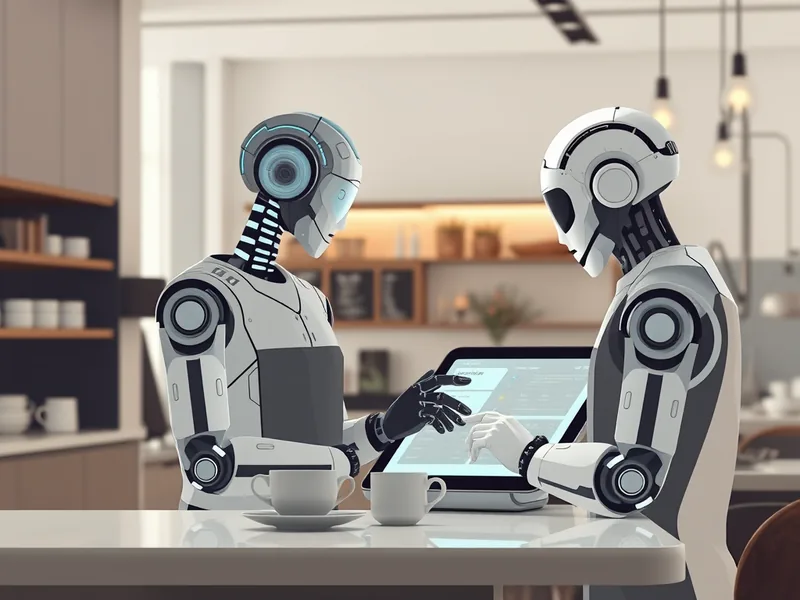
While the current implementation may leave much to be desired, it’s important to consider the broader implications of AI in customer service. If successfully refined, such technology could revolutionize how we interact with businesses. For instance, it could:
For Starbucks to realize the full potential of this integration, several steps need to be taken:
While Starbucks’ foray into AI-powered coffee ordering is a step in an exciting direction, it’s clear that there are significant challenges to overcome. For now, sticking with the tried-and-true methods might be the best bet for most customers. However, as the technology evolves and improves, we may see a future where AI enhances our daily coffee rituals rather than complicates them.
Tags
Original Sources
About the author
Amara's entry point into AI was an epidemiology role at a London research hospital, where she spent five years studying how digital health tools reached — or conspicuously failed to reach — underserved communities. Watching early algorithmic systems in healthcare quietly entrench existing inequalities, she redirected her career toward the systemic consequences of AI at scale. She covers AI through an unflinching lens: who benefits, who bears the cost, and what evidence actually says versus what the press release claims. Her writing is calm and precise, but she doesn't mistake balance for neutrality.
More from The Steward →This Week's Edition
25 April 2026
29 articles
Related Articles

Rosarium Health Partners With Anthem Medi-Cal to Fund Home Modifications for Older Californians
Products & Applications · 5 min

Meta's new open-weight model runs on Macs, if you have 1TB of RAM to spare
Products & Applications · 5 min

Persona AI Bets on Calm Execution in a Noisy Humanoid Robotics Market
Products & Applications · 5 min
Related Articles
Rosarium Health Partners With Anthem Medi-Cal to Fund Home Modifications for Older Californians
Products & Applications · 5 min
Meta's new open-weight model runs on Macs, if you have 1TB of RAM to spare
Products & Applications · 5 min
Persona AI Bets on Calm Execution in a Noisy Humanoid Robotics Market
Products & Applications · 5 min
More Stories
© 2026 Cedar & Bloom. All rights reserved.
