The Drum · Weekly AI news, freeSubscribe →

Share
Gina Hinojosa says Texans need rules to shield them from the rapid spread of data centers into rural areas, setting up a potential clash with the tech industry and the Trump administration's growth agenda.
For the people of rural Texas, the arrival of a data center can feel less like economic opportunity and more like an uninvited guest that drains the water, strains the power grid, and never quite explains why it's there. That tension is now at the center of a political reckoning in the state, after Governor-elect Gina Hinojosa said Thursday that Texas will pass laws to protect residents from the unchecked growth of these massive computing facilities.
"Data centers have moved into mostly rural communities, and there are no rules and laws to protect Texans," Hinojosa, a Democrat who defeated Republican incumbent Greg Abbott in Tuesday's election, told CNN. "We will have laws to protect Texans, and we need to stop what we are doing with data centers until we have those protections."
It's worth pausing on what a data center actually is, because the term can sound abstract until you understand its footprint. Think of it as a warehouse full of computers that power everything from streaming video to AI chatbots. These facilities need enormous amounts of electricity to run and water to keep from overheating, which is exactly why they've become a flashpoint in communities that never signed up to host them.
Texas has spent the past several years becoming one of the world's premier destinations for data center construction. The reasons are straightforward: abundant energy supplies, inexpensive land, and a business-friendly regulatory climate that has welcomed developers with few questions asked. That welcome mat is now being pulled back, at least partially, as the incoming governor signals a shift toward community input and oversight.
Hinojosa said residents deserve "a seat at the table" when decisions are made about whether and how data centers operate in their areas. That's a modest-sounding demand, but it represents a real departure from the hands-off approach that has defined Texas's courtship of the tech industry. For families living near proposed sites, it could mean the difference between being informed bystanders and having genuine input into projects that reshape their local economy, water supply, and skyline.
The stakes here extend well beyond Texas. President Donald Trump's administration has made data center expansion a national priority, framing it as essential to maintaining American leadership in artificial intelligence. But that federal enthusiasm is running up against growing public unease. Across the country, residents have raised concerns about electricity demand, water consumption, the impact on local wildlife, and restricted access to public lands near proposed sites.
Abbott himself, despite his broader support for business expansion, had already begun to pump the brakes. He became one of the first Republican governors in the country to halt new data center connections to the state's electric grid, and he ordered a comprehensive audit of existing projects. That move suggests the concerns Hinojosa is now amplifying were already bubbling up within Texas's own political establishment, regardless of party.
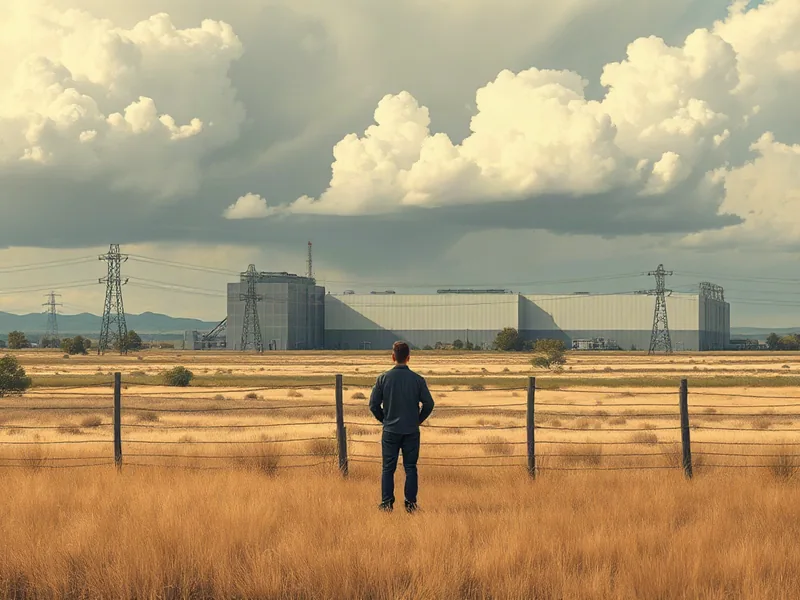
Hinojosa's win has rattled the data center industry, largely because she campaigned on a pledge to pause new projects altogether. That's a notable shift in tone for a state that has marketed itself as the easiest place in America to build. Developers who had assumed smooth sailing in Texas may now face a more deliberate, and potentially slower, approval process.
The political backdrop adds another layer of complexity. Billionaire Elon Musk backed Abbott in the race and poured $158 million into promoting Texas Republican Senate candidate Ken Paxton, according to Musk's own account. Musk's companies, including SpaceX and Tesla, are headquartered in Texas, and he's also planning a chipmaking venture in the state. Hinojosa, for her part, said Texas can maintain a strong working relationship with Musk and his companies, but on her administration's terms, not necessarily his.
That distinction matters because of a specific and unresolved controversy. In October, Texas Monthly reported that the state had been discussing selling Boca Chica State Park to SpaceX, citing sources familiar with the talks. During her Thursday news conference, Hinojosa said she had spoken with the executive director of the Texas Parks and Wildlife Commission to request that no action be taken on that sale while the transition from Abbott's administration to her own is underway. SpaceX did not immediately respond to a request for comment from Reuters.
The land sale question is a useful illustration of the broader dilemma facing Texas and, frankly, every state wrestling with the AI boom. Public parks, water systems, and electric grids were not designed with the needs of massive computing infrastructure in mind. When a company with the scale and political weight of SpaceX enters the picture, the normal checks that might slow down a smaller developer can start to look fragile.
This isn't just a Texas story, even though Texas happens to be the current testing ground. States across the country are grappling with how to balance the economic promise of AI infrastructure against the very real costs borne by the communities hosting it. Jobs and tax revenue are real benefits. So are strained aquifers, spiking electricity bills, and the sense that rural residents are being asked to absorb risks that mostly benefit distant shareholders and tech companies.
Hinojosa's promise to pause new projects until protections are in place offers a test case for whether state governments can slow down fast-moving industries without driving investment elsewhere. It also raises a harder question that no single law can fully answer: who gets to decide what a community is willing to trade for growth, and who bears the cost when that bargain turns out to be a bad one. The coming legislative session in Austin will tell us a great deal about which way that balance tips, not just for Texas, but for every state watching closely from the sidelines.
Tags
Original Sources
Texas governor-elect says state will have laws to shield citizens from data centers
↗ https://www.reuters.com/world/us/texas-governor-elect-says-state-will-have-laws-shield-citizens-data-centers-2026-11-06
About the author
Amara's entry point into AI was an epidemiology role at a London research hospital, where she spent five years studying how digital health tools reached — or conspicuously failed to reach — underserved communities. Watching early algorithmic systems in healthcare quietly entrench existing inequalities, she redirected her career toward the systemic consequences of AI at scale. She covers AI through an unflinching lens: who benefits, who bears the cost, and what evidence actually says versus what the press release claims. Her writing is calm and precise, but she doesn't mistake balance for neutrality.
More from The Steward →This Week's Edition
6 November 2026
28 articles
Related Articles
Related Articles
More Stories
© 2026 Cedar & Bloom. All rights reserved.