The Drum · Weekly AI news, freeSubscribe →

Share
Ambitious 2035 targets for electric vehicles assume a mineral supply chain that doesn't exist yet. Building it takes decades, not deadlines, and that mismatch could quietly undermine climate policy's biggest bet.
Picture a family in a mid-sized American city trying to plan for the next decade. They've heard the promises: by 2035, gas-powered cars will be phased out, replaced by electric vehicles that don't spew carbon into the air their kids breathe. It's a hopeful vision. But hope isn't the same as infrastructure, and infrastructure isn't the same as minerals in the ground.
That gap, between political ambition and physical reality, sits at the heart of a growing debate over the electric vehicle transition. Executive orders and state mandates can set a deadline. They cannot, on their own, conjure the lithium, cobalt, nickel, and copper that batteries and charging networks actually require. And the process of getting those materials out of the earth and into a supply chain takes far longer than most policy timelines allow for.
Consider the numbers. Opening a new mine outside the United States takes an average of 17 years, according to industry estimates cited in discussions of the transition. Inside the US, permitting hurdles make the process even slower, sometimes prohibitively so. That's not a bureaucratic quirk. It's a reflection of how mining actually works: geological surveys, environmental review, community consultation, financing, construction. Each step takes years, and skipping steps tends to create the kind of environmental and social harm the EV transition is supposed to help avoid.
Now stack that timeline against the ambition. A widely cited target calls for a dramatic shift toward electric vehicles by 2035, which would require an order-of-magnitude increase in mineral extraction compared with today's supply. Think of it like trying to build a new highway system for a city that's already grown ten times larger than its roads can handle. You can announce the highway. You still have to pour the concrete, and concrete takes time to cure.
This isn't an argument against electric vehicles. It's a case for being honest about what the transition demands. EVs remain, by most measures, cleaner over their lifetime than gasoline-powered cars, even accounting for the emissions tied to battery production and mining. The public health case is real: fewer tailpipe emissions mean less asthma-triggering particulate matter in urban air, and less of the ozone-forming pollution that worsens with every hot summer.
But the mineral question complicates the clean story in ways that deserve honest scrutiny rather than dismissal. Vaclav Smil, the energy researcher whose book "How the World Really Works" has become a touchstone for skeptics of rapid green-energy timelines, argues that the physical constraints of mining, refining, and manufacturing don't bend to political will. Signing an order does not accelerate geology. It doesn't speed up the years-long process of securing permits, building processing plants, or negotiating with the communities and countries where these minerals are actually found.
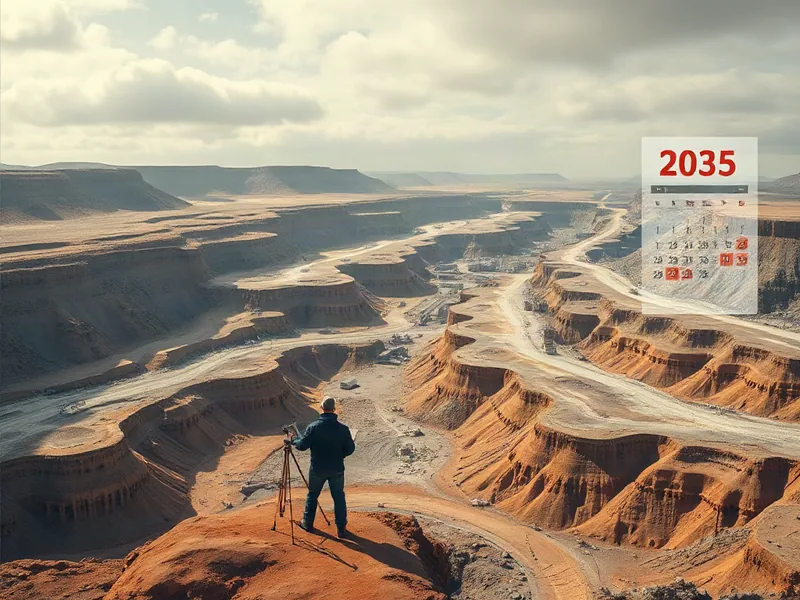
That reality has ripple effects far beyond the mining site itself. A shortage of battery-grade minerals could push prices higher, making EVs less affordable for the middle-income buyers who need the incentive most. It could also intensify geopolitical friction, since much of the world's cobalt and rare earth processing is concentrated in a small number of countries, leaving supply chains vulnerable to disruption. And it raises uncomfortable questions about where the mining happens and who bears the environmental cost, since much of the current cobalt supply comes from regions with limited labor protections and significant ecological strain.
None of this means the 2035 target is worthless as a goal. Targets can still shape investment, spur innovation in battery chemistry, and push automakers to plan further ahead than they otherwise would. Recycling technology is improving, and some manufacturers are exploring battery designs that rely less heavily on the most constrained minerals, like cobalt. Solid-state batteries and sodium-ion alternatives are in various stages of development, offering a possible path around some of the supply bottleneck.
But a target divorced from the physical timeline of mineral supply risks becoming aspirational rather than actionable. Policymakers who set aggressive deadlines without addressing permitting reform, mining investment, and recycling infrastructure are, in effect, promising a bridge without funding the foundation. The gap between announcement and delivery becomes the public's problem, not the policymaker's, and it shows up as higher car prices, delayed rollouts, or supply chain scrambles that undercut public trust in the broader climate agenda.
There's a reasonable middle path here. It involves treating mineral supply as a first-order policy concern, not an afterthought. That means streamlining environmentally sound permitting domestically, investing in recycling and material recovery at scale, and diversifying international supply relationships so no single country or company controls too much of the pipeline. It also means being transparent with the public about timelines, rather than letting a 2035 date create expectations that mining realities can't support.
The stakes go beyond car sales figures. Climate policy only works if the public trusts it, and trust erodes quickly when promised timelines collide with physical limits. If EV targets slip because the mineral supply chain wasn't built out in time, that failure gets read, fairly or not, as evidence that the whole climate transition is unworkable. That's a dangerous narrative to hand to skeptics, especially when the underlying technology, the vehicles themselves, works and delivers real public health benefits.
Getting the sequencing right matters just as much as getting the destination right. Setting a deadline is the easy part. Building the mines, refineries, recycling plants, and supply chains to actually meet it is the harder, slower, and far more important work. The families waiting for affordable, reliable electric vehicles deserve a transition plan that reckons honestly with geology, not just politics.
Tags
Original Sources
The EV Transition Explained
↗ https://spectrum.ieee.org/the-ev-transition-explained-2658797681/the-ev-transition-explained?itm_source=summaries&itm_medium=ieee-spectrum&itm_campaign=summary-the-ev-transition-explained&itm_content=summary-reduce
About the author
Amara's entry point into AI was an epidemiology role at a London research hospital, where she spent five years studying how digital health tools reached — or conspicuously failed to reach — underserved communities. Watching early algorithmic systems in healthcare quietly entrench existing inequalities, she redirected her career toward the systemic consequences of AI at scale. She covers AI through an unflinching lens: who benefits, who bears the cost, and what evidence actually says versus what the press release claims. Her writing is calm and precise, but she doesn't mistake balance for neutrality.
More from The Steward →This Week's Edition
3 September 2026
29 articles
Related Articles

States Race to Write the Rules for AI Sandboxes in Health Care, and Lobbyists Are Racing Right Alongside Them
Policy & Regulation · 5 min

DOJ Moves to Reward Health Care Companies That Report Their Own Fraud
Policy & Regulation · 5 min

As US Intelligence Sharing Wavers, Ukrainians Lose Precious Minutes Against Russian Missiles
Policy & Regulation · 6 min
Related Articles
States Race to Write the Rules for AI Sandboxes in Health Care, and Lobbyists Are Racing Right Alongside Them
Policy & Regulation · 5 min
DOJ Moves to Reward Health Care Companies That Report Their Own Fraud
Policy & Regulation · 5 min
As US Intelligence Sharing Wavers, Ukrainians Lose Precious Minutes Against Russian Missiles
Policy & Regulation · 6 min
More Stories
© 2026 Cedar & Bloom. All rights reserved.
