The Drum · Weekly AI news, freeSubscribe →

Share
As AI integrates into everyday life, experts like Alice Albrecht advocate for boosting human intelligence over creating risky superintelligent machines, suggesting a smarter approach to our digital future.
In a world where artificial intelligence (AI) is rapidly becoming a part of daily life, the question on everyone's mind is whether we can create an AI that surpasses human cognitive abilities-what experts call superintelligence. But as 2023 saw AI go mainstream, it’s time to consider a different path: augmenting human intelligence rather than building something entirely new and potentially uncontrollable.
Alice Albrecht, a machine learning researcher with nearly a decade of experience and a Ph.D. in cognitive neuroscience from Yale, argues that enhancing our own capabilities might be the smarter choice. As the founder of re:collect, an organization dedicated to augmenting human intelligence with AI, Alice brings both optimism and realism to this debate.
Imagine a future where doctors can diagnose diseases more accurately and quickly because they have AI tools that enhance their knowledge and decision-making skills. Envision teachers who can tailor lessons to each student’s learning style, thanks to AI that helps them understand individual needs better. Or picture engineers designing safer, more efficient infrastructure with the help of AI that processes vast amounts of data in real-time.
These are not just theoretical benefits; they represent tangible improvements in healthcare, education, and public safety. By augmenting human intelligence, we can leverage our unique strengths-empathy, creativity, and moral judgment-while amplifying them with the precision and speed of AI.
Building a superintelligent AI is like trying to create a new species from scratch. It’s an ambitious goal, but one that comes with significant risks. Superintelligence could make decisions beyond our understanding or control, potentially leading to unintended consequences. On the other hand, augmenting human intelligence is more like enhancing an existing species, which is both safer and more aligned with our values.
Think of augmentation as a symbiotic relationship between humans and AI. Just as a bicycle extends our ability to travel faster and farther, AI can extend our cognitive abilities. For example, a doctor using an augmented intelligence system might input patient symptoms and receive a list of potential diagnoses along with the latest research on treatment options. The doctor’s expertise remains central, but it is amplified by the AI’s data processing capabilities.
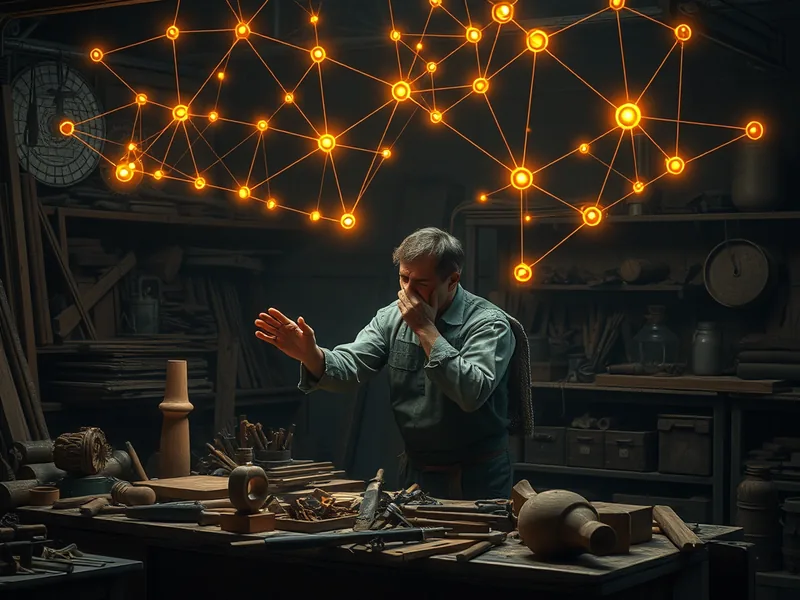
The long-term consequences of augmenting human intelligence are promising but require careful consideration. As we integrate AI into our lives, we must ensure that it enhances rather than replaces human capabilities. This means developing robust ethical frameworks, protecting data privacy, and fostering a culture of transparency and accountability.
Alice Albrecht’s vision is not about replacing humans with machines but about creating a future where humans and AI work together seamlessly. By focusing on augmentation, we can build a society that leverages the best of both worlds-human empathy and creativity combined with the precision and speed of AI.
As 2024 unfolds, let’s consider the path of augmentation as a way to enhance our collective intelligence and address some of the most pressing challenges facing our world.
Tags
Original Sources
About the author
Amara's entry point into AI was an epidemiology role at a London research hospital, where she spent five years studying how digital health tools reached — or conspicuously failed to reach — underserved communities. Watching early algorithmic systems in healthcare quietly entrench existing inequalities, she redirected her career toward the systemic consequences of AI at scale. She covers AI through an unflinching lens: who benefits, who bears the cost, and what evidence actually says versus what the press release claims. Her writing is calm and precise, but she doesn't mistake balance for neutrality.
More from The Steward →This Week's Edition
15 January 2024
29 articles
Related Articles

Ottawa Expands AI Funding for Northern Ontario Businesses, Aims to Close the Regional Tech Gap
Job Market & Society · 6 min

AI Is Lowering the Cost of Starting a Business. It's Not Lowering the Cost of Running One.
Job Market & Society · 6 min

Iambic Therapeutics Raises $150 Million in IPO to Fund AI-Designed Cancer Drugs
Finance & Markets · 5 min
Related Articles
Ottawa Expands AI Funding for Northern Ontario Businesses, Aims to Close the Regional Tech Gap
Job Market & Society · 6 min
AI Is Lowering the Cost of Starting a Business. It's Not Lowering the Cost of Running One.
Job Market & Society · 6 min
Iambic Therapeutics Raises $150 Million in IPO to Fund AI-Designed Cancer Drugs
Finance & Markets · 5 min
More Stories
© 2026 Cedar & Bloom. All rights reserved.
