The Drum · Weekly AI news, freeSubscribe →

Share
Tao uses the transformative effect of cars on cities to illustrate how AI and formalization are reshaping mathematics, bringing efficiency while posing challenges like information overload and loss of intuitive understanding.
In a recent post, renowned mathematician Terence Tao (@tao@mathstodon.xyz) drew an insightful analogy between the impact of automobiles on urban planning and the influence of AI and formalization on mathematics. This comparison highlights how new technologies can reshape existing infrastructures and practices, often with both positive and negative consequences.
Before cars, city streets were narrow and designed for pedestrians, horses, and carriages. When automobiles arrived, they brought unprecedented speed and power but also congestion and safety issues. Over time, cities adapted by building new roads, railways, and freeways to accommodate these vehicles, leading to significant changes in urban landscapes and lifestyles.
However, the initial focus on making cars faster and more efficient did not solve all problems. Urban sprawl, environmental degradation, and traffic congestion became major concerns. It was only through thoughtful urban planning and the development of social and legal rules that cities managed to balance the benefits of automobiles with the needs of pedestrians.
In this analogy, the narrow pre-automotive roads represent the existing infrastructure of mathematics:
These elements are designed primarily for human use, with limited computer assistance. They form a social network that supports the mathematical community's activities and progress.
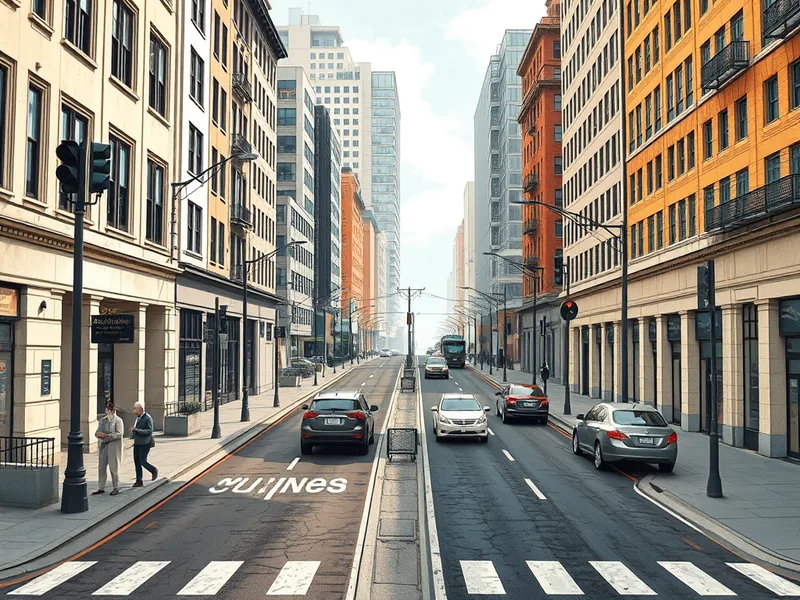
AI and formalization tools (like proof assistants) are like automobiles in this analogy. They offer significant advantages:
However, these tools also introduce challenges:
Just as cities had to build new infrastructure and establish rules for traffic management, the mathematical community needs to adapt to the integration of AI and formalization:
Terence Tao's analogy underscores that while AI and formalization offer exciting opportunities for mathematics, they also require careful planning and adaptation. By learning from the lessons of urban development, the mathematical community can leverage these tools effectively while preserving the integrity and inclusivity of its practices.
Tags
Original Sources
About the author
Kai built ML infrastructure at a Bay Area startup before developing an obsession with transformer architectures and inference optimisation that eventually pulled him out of product work entirely. A stint at a compute research lab sharpened his instinct for what actually matters in a model release versus what is marketing. He writes from the inside — from the perspective of someone who has debugged the systems he is describing at three in the morning. He is allergic to hype and instinctively drawn to the unglamorous plumbing questions that everyone else skips over.
More from The Engineer →This Week's Edition
20 March 2026
29 articles
Related Articles

Wharton's Fourth Annual AI Survey: Most Companies See Returns, Few See Big Ones
Models & Research · 6 min

Tensormesh Launches Enterprise KV Cache Platform to Cut Redundant LLM Compute
Models & Research · 6 min

Iambic Therapeutics Raises $150 Million in IPO to Fund AI-Designed Cancer Drugs
Finance & Markets · 5 min
Related Articles
Wharton's Fourth Annual AI Survey: Most Companies See Returns, Few See Big Ones
Models & Research · 6 min
Tensormesh Launches Enterprise KV Cache Platform to Cut Redundant LLM Compute
Models & Research · 6 min
Iambic Therapeutics Raises $150 Million in IPO to Fund AI-Designed Cancer Drugs
Finance & Markets · 5 min
More Stories
© 2026 Cedar & Bloom. All rights reserved.
