The Drum · Weekly AI news, freeSubscribe →

Share
As AI's capabilities expand, the belief that it will only enhance human roles rather than replace them crumbles, leaving millions of workers facing uncertain futures and societal shifts they did not foresee.
The idea that artificial intelligence (AI) will merely augment our jobs without ever replacing them is a comforting but dangerous myth. This notion, often peddled at academic and corporate conferences, overlooks the profound impact AI has already had on various industries and the significant changes it will continue to bring.
Imagine you're a police officer, health worker, construction laborer, or delivery driver. These are real people doing essential jobs that keep our society functioning. Yet, when discussions about the "Future of Work" take place in high-profile settings, they often focus on white-collar office workers who can telecommute and use advanced technology. This narrow perspective excludes a vast segment of the workforce.
During my keynotes and talks with groups like national police forces, military personnel, health services, tax authorities, and lawyers, I've seen firsthand how these professionals are open to integrating specific technologies for specific purposes. They understand that technology can enhance their work, but they also recognize its potential to replace certain tasks.
At a recent conference, a self-proclaimed "futurist" presented a rosy picture of the future where AI would only augment human abilities. The presentation was peppered with buzzwords like creativity, critical thinking, collaboration, and communication-terms often used in discussions about 21st-century skills. However, these concepts were not substantiated by any concrete analysis or evidence.
The speaker boldly claimed that AI would never take jobs but only "augment" roles. This view is not only simplistic but also dangerously misleading.
We have historical precedents that show how technology has already replaced human jobs:
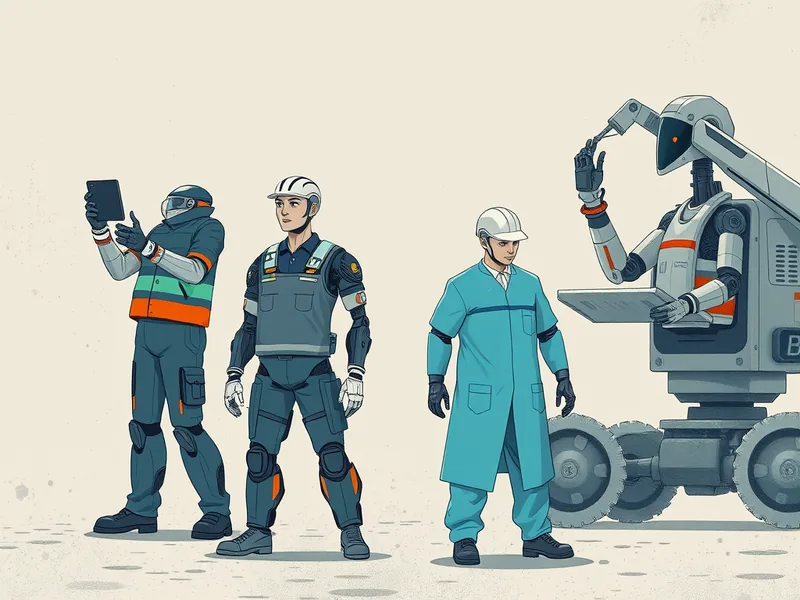
The impact of AI is not just a future possibility; it's happening now. Educational companies, for instance, have already realized substantial productivity gains through AI and have laid off thousands of employees. The idea that AI will not replace jobs is not only unrealistic but also harmful if it leads to complacency among workers and policymakers.
Major technological shifts have always led to job losses, and there's no reason to believe this time will be different. While AI can certainly augment human capabilities in many areas, it will also automate tasks that are currently performed by humans. This is not a call for panic but a plea for realism and preparedness.
Instead of clinging to the myth of pure augmentation, we need to:
The future is not a binary choice between augmentation and replacement. It's a complex landscape where both will coexist, and our ability to navigate this change will determine our success and well-being.
Tags
Original Sources
↗ https://donaldclarkplanb.blogspot.com/2024/02/this-is-why-idea-that-ai-will-just.html?utm_source=tldrai
About the author
Amara's entry point into AI was an epidemiology role at a London research hospital, where she spent five years studying how digital health tools reached — or conspicuously failed to reach — underserved communities. Watching early algorithmic systems in healthcare quietly entrench existing inequalities, she redirected her career toward the systemic consequences of AI at scale. She covers AI through an unflinching lens: who benefits, who bears the cost, and what evidence actually says versus what the press release claims. Her writing is calm and precise, but she doesn't mistake balance for neutrality.
More from The Steward →This Week's Edition
22 February 2024
24 articles
Related Articles

Anthropic's Own Workforce Data Shows AI Is Already Reshaping Who Gets Hired
Job Market & Society · 5 min

Relational Intelligence: The Workplace Skill Nobody Is Teaching, and Why AI Can't Replace It
Job Market & Society · 6 min

xAI Launches Grok Bot, an Autonomous Agent That Logs Into Your Tools and Does the Work
Products & Applications · 5 min
Related Articles
Anthropic's Own Workforce Data Shows AI Is Already Reshaping Who Gets Hired
Job Market & Society · 5 min
Relational Intelligence: The Workplace Skill Nobody Is Teaching, and Why AI Can't Replace It
Job Market & Society · 6 min
xAI Launches Grok Bot, an Autonomous Agent That Logs Into Your Tools and Does the Work
Products & Applications · 5 min
More Stories
© 2026 Cedar & Bloom. All rights reserved.
