The Drum · Weekly AI news, freeSubscribe →
Share
Theia revolutionizes robot learning by distilling knowledge from multiple vision models, enhancing visual understanding and performance in diverse tasks without the need for extensive retraining.
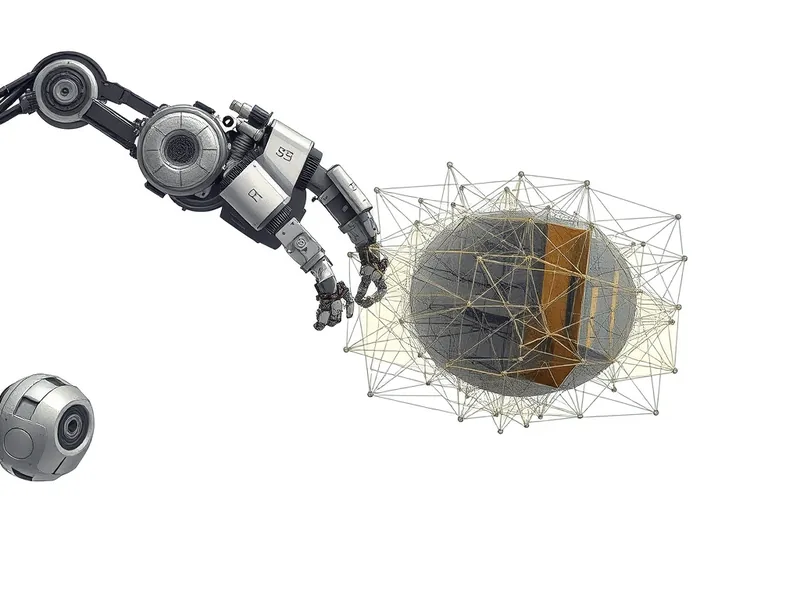
In a significant advancement in robotics, researchers have introduced Theia, a vision foundation model designed to distill knowledge from multiple off-the-shelf vision models. This approach aims to improve the performance of robot learning tasks by leveraging rich visual representations that capture diverse visual knowledge. The paper, titled "Theia: Distilling Diverse Vision Foundation Models for Robot Learning," was recently published in arXiv and presented at CoRL 2024.
The core innovation in Theia is its distillation process. Instead of training a single model on a specific task, Theia aggregates knowledge from multiple pre-trained vision foundation models (VFM) that have been trained on various visual tasks such as classification, segmentation, and object detection. This aggregation results in a more versatile and robust model for downstream robot learning tasks.
Theia's architecture is designed to efficiently integrate multiple VFM. Here’s a breakdown of the key components:
Theia was evaluated on several benchmarks, including robotic manipulation tasks and navigation. Here are some key findings:
For practitioners in robotics and machine learning, Theia represents a significant step forward in leveraging pre-trained models for downstream tasks. By distilling knowledge from diverse VFM, Theia can provide richer visual representations that enhance the performance of robot learning policies. This approach not only improves efficiency but also opens up new possibilities for more complex and dynamic robotic applications.
Theia's innovative use of model distillation to combine the strengths of multiple vision foundation models is a promising development in robotics. With its ability to achieve high performance with less data and smaller models, Theia could become a valuable tool for researchers and engineers working on advanced robot learning tasks.
Tags
Original Sources
About the author
Kai built ML infrastructure at a Bay Area startup before developing an obsession with transformer architectures and inference optimisation that eventually pulled him out of product work entirely. A stint at a compute research lab sharpened his instinct for what actually matters in a model release versus what is marketing. He writes from the inside — from the perspective of someone who has debugged the systems he is describing at three in the morning. He is allergic to hype and instinctively drawn to the unglamorous plumbing questions that everyone else skips over.
More from The Engineer →This Week's Edition
31 July 2024
29 articles
Related Articles
Wharton's Fourth Annual AI Survey: Most Companies See Returns, Few See Big Ones
Models & Research · 6 min
Tensormesh Launches Enterprise KV Cache Platform to Cut Redundant LLM Compute
Models & Research · 6 min

Iambic Therapeutics Raises $150 Million in IPO to Fund AI-Designed Cancer Drugs
Finance & Markets · 5 min
Related Articles
Wharton's Fourth Annual AI Survey: Most Companies See Returns, Few See Big Ones
Models & Research · 6 min
Tensormesh Launches Enterprise KV Cache Platform to Cut Redundant LLM Compute
Models & Research · 6 min
Iambic Therapeutics Raises $150 Million in IPO to Fund AI-Designed Cancer Drugs
Finance & Markets · 5 min
More Stories
© 2026 Cedar & Bloom. All rights reserved.
