The Drum · Weekly AI news, freeSubscribe →

Share
Researchers unveil TREAD, a method that slashes the computational overhead in training diffusion models from scratch, making high-quality visual content generation more efficient and accessible.
Diffusion models have become a go-to choice for generating high-quality visual content. However, these models are notorious for their inefficiency in sample usage and the high computational costs associated with training. This has led to various methods being developed to optimize finetuning, inference, and personalization, but training from scratch remains a significant bottleneck.
A new paper titled "TREAD: Token Routing for Efficient Architecture-agnostic Diffusion Training" by Felix Krause, Timy Phan, Ming Gui, Stefan Andreas Baumann, Vincent Tao Hu, and Björn Ommer introduces an innovative approach to address these challenges. TREAD stands out by improving both training efficiency and generative performance simultaneously without requiring architectural changes or additional parameters.
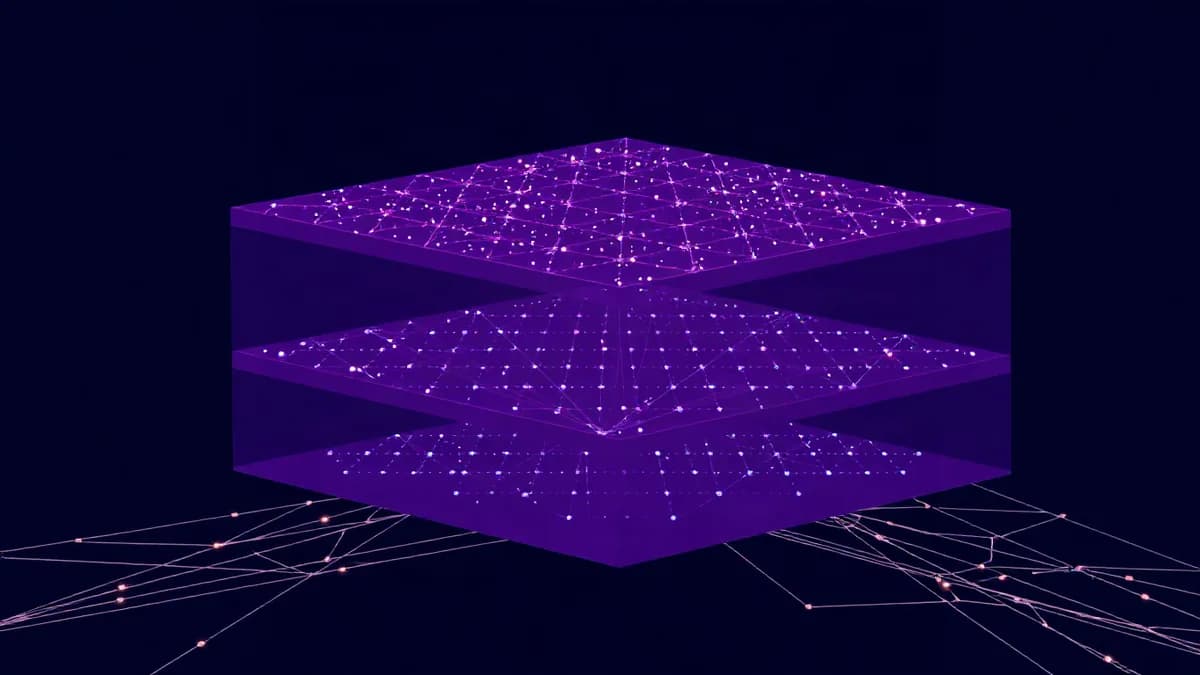
TREAD introduces a novel mechanism called token routing, which efficiently transports randomly selected tokens from early layers to deeper layers within the model. This method is architecture-agnostic, meaning it can be applied to various models, including transformers and state-space models, without any modifications.
The benefits of TREAD are significant for practitioners in the field of computer vision and generative modeling:

The authors of TREAD evaluated their method on the ImageNet-256 dataset for class-conditional synthesis. Here are some key results:
These results demonstrate that TREAD not only accelerates training but also produces high-quality images, outperforming DiT without any architectural changes.
To implement TREAD, the following steps are crucial:
TREAD represents a significant advancement in the field of diffusion models by addressing the twin challenges of computational efficiency and generative performance. Its architecture-agnostic nature and lack of additional parameters make it a versatile and lightweight solution that can be easily integrated into existing workflows. For practitioners, this means faster training times and better results, which are crucial for advancing research and applications in computer vision.
Tags
Original Sources
About the author
Kai built ML infrastructure at a Bay Area startup before developing an obsession with transformer architectures and inference optimisation that eventually pulled him out of product work entirely. A stint at a compute research lab sharpened his instinct for what actually matters in a model release versus what is marketing. He writes from the inside — from the perspective of someone who has debugged the systems he is describing at three in the morning. He is allergic to hype and instinctively drawn to the unglamorous plumbing questions that everyone else skips over.
More from The Engineer →This Week's Edition
23 January 2025
29 articles
Related Articles

Wharton's Fourth Annual AI Survey: Most Companies See Returns, Few See Big Ones
Models & Research · 6 min
Tensormesh Launches Enterprise KV Cache Platform to Cut Redundant LLM Compute
Models & Research · 6 min

Iambic Therapeutics Raises $150 Million in IPO to Fund AI-Designed Cancer Drugs
Finance & Markets · 5 min
Related Articles
Wharton's Fourth Annual AI Survey: Most Companies See Returns, Few See Big Ones
Models & Research · 6 min
Tensormesh Launches Enterprise KV Cache Platform to Cut Redundant LLM Compute
Models & Research · 6 min
Iambic Therapeutics Raises $150 Million in IPO to Fund AI-Designed Cancer Drugs
Finance & Markets · 5 min
More Stories
© 2026 Cedar & Bloom. All rights reserved.
