The Drum · Weekly AI news, freeSubscribe →

Share
A 25-year-old dual national walks free as detectives probe a suspected plot at a base used by US bombers in Iran strikes, with Tehran denying any role and tensions rising between London and Iran.
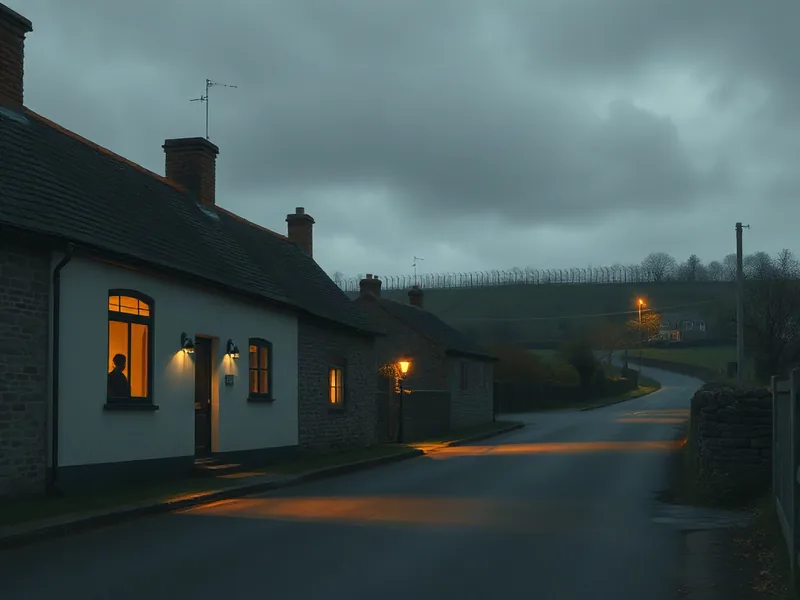
For the families living near RAF Fairford, the past week has felt like watching a slow-moving storm pass through their quiet corner of Gloucestershire. Roadblocks went up. Armed officers stood watch. And the question on everyone's mind was simple: were they safe?
British counter-terrorism police offered a partial answer on Saturday, confirming that a 25-year-old dual UK-Iranian national arrested on suspicion of preparing terrorist acts has been released on bail. He had been detained on Thursday in connection with an incident the previous weekend at the air base, which the US has used to launch bomber raids against targets in Iran. Searches at two properties in London have now concluded, police said, though the broader investigation into what happened at Fairford continues.
To understand why this matters beyond one small town, it helps to picture RAF Fairford's role. It is not just another airstrip. The base has served as a launch point for American military aircraft striking Iranian targets, making it a piece of infrastructure with direct relevance to one of the world's most volatile regional conflicts. An attack, or even a credible plot against it, would not just be a local crime story. It would be a geopolitical flashpoint.
The episode began in the early hours of last Sunday, when five British men in their 20s were arrested near three vans parked close to the base, on suspicion of terrorism and explosives offences. Those men were later released without charge, though on bail "under stringent conditions," a phrase that signals police still consider them relevant to the case even without enough evidence to press charges yet.
Here is where the story gets more complicated. Detectives said they found petrol in the vans. No improvised explosive device was present. That distinction matters enormously. Petrol alone does not prove intent to build a bomb, but combined with the location, the timing, and the base's strategic significance, it was enough to trigger a major incident declaration and a counter-terrorism response.
Police have since described the investigation as complex, a word that in this context usually means multiple threads, multiple countries, and multiple levels of uncertainty still being untangled. One of those threads: whether a foreign state had any hand in the plot. UK Prime Minister Andy Burnham said on Wednesday the case might have an Iranian link, a statement that carries real weight coming from the country's top elected official rather than from police spokespeople who typically avoid speculation.
That suspicion did not stay contained to Britain. US President Donald Trump said there was a plan to cause "big damage" at the air base. US Secretary of State Marco Rubio went further, pointing to the "hands of a foreign actor" in the incident. When two of America's most senior officials publicly frame a UK policing matter in terms of foreign state involvement, it tells you how seriously Washington is treating the threat to a base it relies on for operations against Iran.
Iran, for its part, has flatly denied any involvement, calling the accusations baseless. Tehran went a step further on Thursday, summoning the British ambassador over the matter, a diplomatic move that typically signals a government's formal objection to how it has been characterized in another nation's public discourse. It is the kind of exchange that can either simmer quietly or escalate, depending on what investigators eventually find.
This case does not exist in isolation. British counter-terrorism authorities have been unusually busy in recent days. Separately, two Iranians appeared in a UK court this week over an alleged plot to target the Jewish community, and were formally charged. In another unrelated matter, a man already accused in the murder of a former government minister was charged with preparing terrorist acts against a sitting member of parliament. None of these cases are confirmed to be connected to the Fairford investigation, but together they paint a picture of a security apparatus under sustained pressure, juggling multiple threads of alleged extremism and foreign interference at once.
For residents near the base, the practical reality has been roadblocks, uncertainty, and a steady stream of unanswered questions. For policymakers in London and Washington, the stakes are different but no less real. If a foreign state was indeed probing or testing the defenses of a base this significant, it raises uncomfortable questions about how exposed allied military infrastructure really is, even in a country as experienced in counter-terrorism as the UK.
It is worth being cautious here. Bail is not exoneration. The men released without charge last weekend remain under conditions that suggest police have not ruled them out. The 25-year-old released Saturday is in the same position. Investigations of this complexity, spanning potential state involvement, international diplomacy, and domestic criminal law, often take months to resolve, and early narratives sometimes shift considerably as more evidence comes in.
Security around military bases used in active conflicts is not an abstract policy concern. It is about whether the infrastructure that underpins international military cooperation can be trusted to remain secure, and whether the public living nearby can trust that their safety is not an afterthought. When a prime minister publicly floats a foreign state's involvement, and the US secretary of state echoes that concern, the incident stops being a local policing matter and becomes a test of how democracies respond to suspected foreign interference without overreacting or underreacting. Getting that balance right, transparently and without rushing to judgment, matters just as much as catching whoever may be responsible.
Tags
Original Sources
Man arrested in Fairford air base investigation released on bail
↗ https://www.reuters.com/world/uk/man-arrested-fairford-air-base-investigation-released-bail-2026-10-03
About the author
Amara's entry point into AI was an epidemiology role at a London research hospital, where she spent five years studying how digital health tools reached — or conspicuously failed to reach — underserved communities. Watching early algorithmic systems in healthcare quietly entrench existing inequalities, she redirected her career toward the systemic consequences of AI at scale. She covers AI through an unflinching lens: who benefits, who bears the cost, and what evidence actually says versus what the press release claims. Her writing is calm and precise, but she doesn't mistake balance for neutrality.
More from The Steward →This Week's Edition
4 October 2026
25 articles
Related Articles
Related Articles
More Stories
© 2026 Cedar & Bloom. All rights reserved.