The Drum · Weekly AI news, freeSubscribe →

Share
A planned mobile network upgrade is about to collide with Britain's already troubled smart meter rollout, leaving households to absorb billions in replacement costs just as energy bills remain under pressure.
For millions of UK households, the smart meter on the wall has quietly become a ticking clock. Between 12 and 13 million of these devices rely on 2G or 3G mobile connections to send energy usage data back to suppliers, and those networks are being switched off. The bill for replacing them is expected to land somewhere around £4 billion, roughly $5.3 billion, and much of that cost will eventually work its way back into household energy bills.
It's worth pausing on why this matters beyond the spreadsheet. Smart meters were supposed to make energy use simpler and cheaper to track, giving households real-time visibility into what they're spending. Instead, the technology has been dogged by setbacks since the government's original 2020 target for fitting 80 percent of homes fell apart under delays and technical glitches, including the now-infamous problem where meters stopped being "smart" the moment a customer switched energy supplier. Now, just as some of that frustration was fading, a new wave of forced upgrades is on the horizon, driven not by a fault in the meters themselves but by the slow retirement of the cellular networks they depend on.
Think of it like owning a car that only runs on a fuel no longer being sold. The 2G and 3G networks that early smart meters were built around are being phased out nationwide, and once they go dark, the meters riding on them simply stop communicating properly. The UK government flagged this risk back in 2021, setting 2033 as the deadline for the full 2G and 3G switch-off. Mobile carriers are moving even faster than that deadline requires. 3G service has already been pulled entirely. BT and EE plan to begin closing their 2G network from May 2029, VMO2 will follow the same summer, and Vodafone is aiming for spring 2030.
A new report from connectivity firm Wirepas, titled "The European Connectivity Trilemma," puts hard numbers on what this transition will actually cost, and the figures are sobering. The expense splits into two distinct categories, each with its own scale of disruption.
The first involves newer second-generation meters, known in industry shorthand as SMETS2. For these, only the communications module needs swapping, not the entire unit, a bit like replacing a phone's SIM card rather than buying a new handset. Even with that relatively contained fix, Wirepas estimates the cost at £1.3 to £1.4 billion, or roughly $1.7 to $1.9 billion, before factoring in the hardware cost of each new hub.
The second category is far messier. An estimated 7 million older, first-generation SMETS1 meters have their cellular connectivity hard-wired directly into the device. There's no simple module swap here: the whole meter typically has to come out. Wirepas pegs this cost at £2.1 to £2.45 billion, or $2.8 to $3.3 billion, based on an indicative replacement cost of £300 to £350 per installation. Add the two categories together and you land at that roughly £4 billion gross figure, a number that will ultimately be absorbed into consumer energy bills at a moment when the government is actively trying to bring those bills down, not push them up.
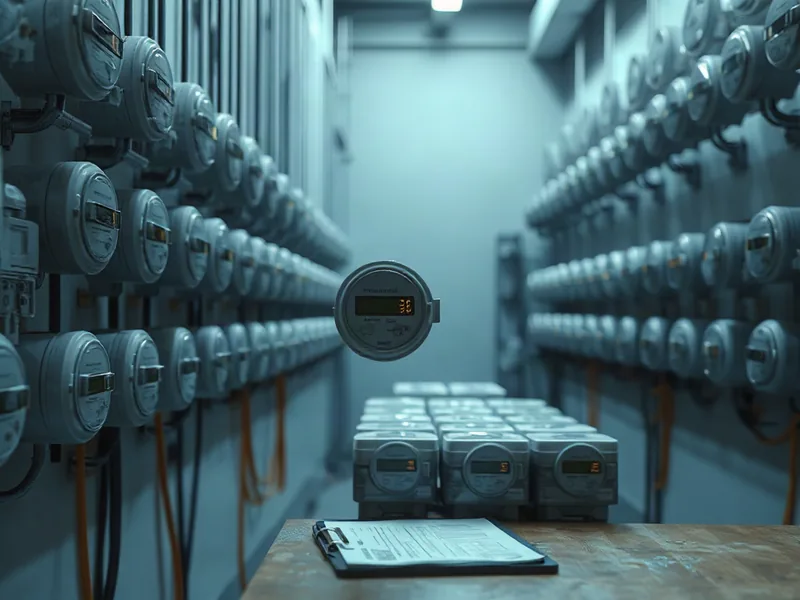
Geography plays a role too. The SMETS2 replacement issue is concentrated in central and southern Britain, because second-generation meters installed in the north of the country already use a long-range radio network that sidesteps the 2G and 3G cutoff entirely. The older SMETS1 problem, however, doesn't respect regional boundaries. It's a nationwide headache.
The Department for Energy Security and Net Zero, which oversees the smart meter program, framed the situation as business as usual rather than a crisis. A spokesperson told The Register that "smart meters are already helping millions of consumers manage their energy and save money on bills," and described the move to 4G as "a planned upgrade that will continue to deliver the benefits that smart meters already provide to households and industry." That's technically accurate, but it sidesteps the fact that much of this spending wouldn't be happening on this timeline if the network shutdown weren't forcing the industry's hand. Some of these meters would have needed replacing eventually as part of normal asset renewal anyway. The cellular shutdown doesn't just add cost, it dictates exactly when that cost has to be paid, compressing a gradual replacement cycle into a hard deadline.
Wirepas, for its part, isn't a neutral observer here. The firm specializes in Internet of Things connectivity and is actively promoting an alternative standard called NR+, built on the DECT-2020 New Radio framework developed by the European Telecommunications Standards Institute. The pitch is that NR+ operates in license-exempt, globally available spectrum around 1.9GHz, making it scalable and, crucially, not tied to the commercial fortunes of mobile carriers who might decide to retire a network generation on their own schedule. It's a reasonable technical argument, even if it comes from a company with an obvious stake in the outcome.
The UK isn't alone in facing this kind of connectivity trap, and the Wirepas report makes clear that other European countries are grappling with their own versions of the problem, each with a different patchwork of solutions. That's a useful reminder that this isn't simply a story of British bureaucratic fumbling. It's a structural risk baked into any infrastructure that depends on fast-moving telecom technology for its basic function.
And the clock doesn't stop in 2033. Once 4G eventually reaches its own end of life, likely sometime in the 2040s, the UK's smart meters will need replacing all over again. No firm date has been set for that transition yet, which means today's policymakers can reasonably leave it for tomorrow's to sort out. But the underlying lesson should stick around longer than any single network generation: building critical infrastructure on top of commercial technology that has a built-in expiration date eventually sends someone a bill. In this case, it's households already stretched thin by energy costs who will be asked to pay it.
Tags
Original Sources
Smart meters to cost the UK billions: 2G switch-off means replacing 12-13 million
↗ https://www.theregister.com/networks/2026/11/10/smart-meters-to-cost-the-uk-billions-2g-switch-off-means-replacing-12-13-million/5308728
About the author
Amara's entry point into AI was an epidemiology role at a London research hospital, where she spent five years studying how digital health tools reached — or conspicuously failed to reach — underserved communities. Watching early algorithmic systems in healthcare quietly entrench existing inequalities, she redirected her career toward the systemic consequences of AI at scale. She covers AI through an unflinching lens: who benefits, who bears the cost, and what evidence actually says versus what the press release claims. Her writing is calm and precise, but she doesn't mistake balance for neutrality.
More from The Steward →This Week's Edition
11 November 2026
14 articles
Related Articles

Europe's Digital ID Push Tests a New Privacy Tool: Zero-Knowledge Proofs
Policy & Regulation · 5 min

Why the Woman Who Fired Sam Altman Still Doesn't Trust AI's Boardrooms
Policy & Regulation · 5 min

Pakistan to Send Climate Minister to India for First High-Level Visit in Three Years
Policy & Regulation · 5 min
Related Articles
Europe's Digital ID Push Tests a New Privacy Tool: Zero-Knowledge Proofs
Policy & Regulation · 5 min
Why the Woman Who Fired Sam Altman Still Doesn't Trust AI's Boardrooms
Policy & Regulation · 5 min
Pakistan to Send Climate Minister to India for First High-Level Visit in Three Years
Policy & Regulation · 5 min
More Stories
© 2026 Cedar & Bloom. All rights reserved.
