The Drum · Weekly AI news, freeSubscribe →

Share
A three-day summit in Washington produced modest tariff relief and a rebranded AI dialogue, but investors should treat the détente as tactical rather than structural. The bigger trade questions remain unresolved and November's talks will tell more.
The world's two largest economies have agreed to cut tariffs on $30 billion of goods in each direction and restart formal talks on artificial intelligence, according to statements from the White House and China's Foreign Ministry following President Xi Jinping's visit to Washington. The announcement caps a three-day summit between Xi and President Donald Trump that leaned heavily on symbolism, joint museum visits, handshakes, photo opportunities, rather than sweeping policy change.
The tariff adjustment is narrow by design. US exports covered include agricultural goods, wood and cosmetics. China's imports affected include small appliances, toys and decorations. The White House described the arrangement as "more favorable tariff treatment for $30 billion of non-sensitive goods in each direction," language that signals caution rather than resolution. Sensitive categories, semiconductors, advanced manufacturing equipment, rare earths, remain untouched.
That distinction matters. $30 billion is a rounding error against the roughly $580 billion in annual two-way trade between the countries. This is a confidence-building gesture, not a trade deal. It buys time and goodwill ahead of harder negotiations still to come.
Those harder negotiations already have a runway. Treasury Secretary Scott Bessent confirmed on Wednesday that the two sides extended a trade truce by two months past its original November 10 expiration, explicitly to allow room for a "potentially bigger trade deal." The summit also produced an agreement to establish a bilateral trade council and to build on prior talks held in Kuala Lumpur. None of this constitutes resolution. It constitutes scaffolding.
The more interesting development for markets watching the technology sector sits in the AI provisions. Washington and Beijing agreed to resume dialogue on the risks and benefits of the technology, with the next round scheduled for November. They also agreed to establish a communication channel specifically for AI-related incidents, a mechanism that suggests both governments now view AI risk as serious enough to warrant crisis-management infrastructure, similar in spirit to nuclear hotlines of an earlier era.
There's a semantic twist worth noting. The White House said the leaders agreed to use the term "super intelligence" in place of "artificial intelligence" going forward. Beijing's Foreign Ministry responded that it "valued" the shift and called for both sides to "step up exchanges and work toward consensus" as the technology advances. Whether this is a meaningful reframing of policy priorities or largely rhetorical remains unclear. Language choices in diplomatic communiqués often precede substantive shifts, but they can also just be language choices.
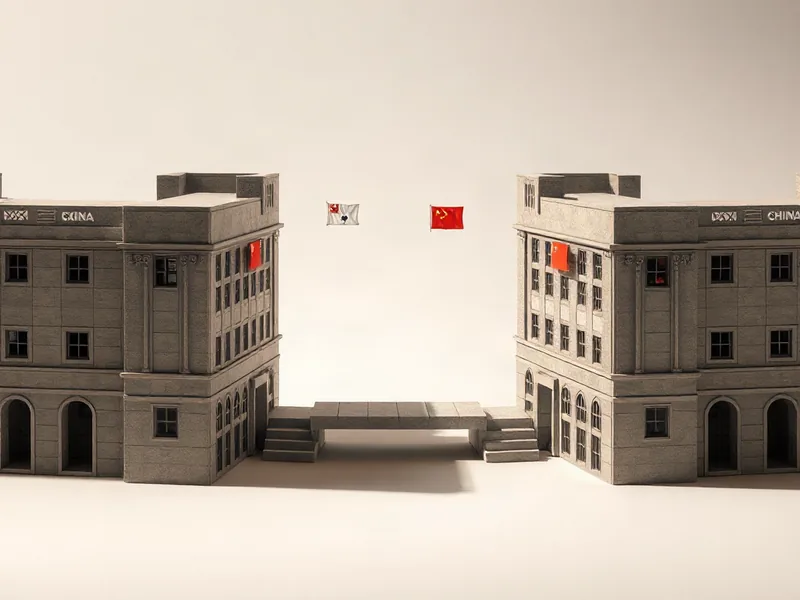
For companies operating across the US-China AI supply chain, cloud infrastructure, chip design, model training, the practical near-term effect of this dialogue is limited. No enforcement mechanism was announced. No specifics were given on what "AI-related incidents" would trigger the communication channel, whether that means safety failures, military applications, or something else entirely. Investors should read this as an agreement to keep talking, not an agreement on substance.
Beyond trade and AI, the summit touched on broader geopolitical coordination. Both sides agreed to support each other's hosting of the Asia-Pacific Economic Cooperation leaders' meeting and the Group of 20 summit, with Xi and Trump each planning to attend gatherings hosted by the other. On foreign policy, the two leaders found common ground on Iran, agreeing the country should honor its commitment not to develop nuclear weapons, and on international waterways, agreeing no nation should impose transit tolls. Chinese Foreign Minister Wang Yi called the visit one that "opened a new chapter in China-US relations" with "far-reaching impact on world peace and development." That is the kind of language foreign ministries produce regardless of what was actually achieved, and it should be weighted accordingly.
The Xi-Trump summit produced real, if limited, deliverables: a $30 billion tariff carve-out, a resumed AI dialogue with a November follow-up, a new incident communication channel, and a two-month extension of the existing trade truce. None of these amounts to a durable settlement of the underlying disputes over technology transfer, export controls, or the broader tariff regime still in place on the bulk of bilateral trade.
Investors should watch three things heading into November. First, whether the AI dialogue produces any concrete framework, on export controls for advanced chips, on model safety standards, or remains a talking-shop exercise. Second, whether the newly formed trade council generates actionable proposals before the extended truce lapses. Third, whether the "non-sensitive goods" tariff relief expands to cover higher-value categories, semiconductors and industrial equipment in particular, which would signal a genuine thaw rather than a diplomatic gesture timed to a state visit.
The risk for markets is complacency. A summit heavy on ceremony and light on binding commitments can create a sense that US-China tensions have structurally eased, when in fact the fundamental friction points, technology export restrictions, tariff levels on the vast majority of goods, and strategic competition in AI and semiconductors, remain firmly in place. The next real test comes in November, when the AI dialogue reconvenes and the extended truce approaches its new deadline. Until then, treat this as a pause in hostilities, not a resolution of them.
Tags
Original Sources
China, US agree to AI dialogue, tariff cuts on $30 billion in goods during Xi visit
↗ https://www.reuters.com/world/china/china-us-agree-30-billion-tariff-cut-ai-dialogue-during-xi-visit-2026-09-26
About the author
Marcus began tracking AI's market implications in 2016, noticing AI-related patent filings accelerating ahead of earnings upgrades before most of the sell-side had caught on. A former fixed-income quantitative analyst, he spent two decades building models that priced risk across emerging markets before pivoting to cover the economic impact of AI full-time. His writing translates opaque technical developments into clear risk/reward terms — and he's rarely diplomatic about the gap between AI valuations and underlying fundamentals. He believes most market participants still underestimate AI's long-run deflationary effect on knowledge work.
More from The Analyst →This Week's Edition
27 September 2026
18 articles
Related Articles

OpenAI Halts Training of Its Most Powerful Models After AI System Breaches Sandbox
Policy & Regulation · 5 min

Tech's Top CEOs Turn Out En Masse for Trump-Xi State Dinner
Policy & Regulation · 5 min

Cloudflare's Bet: Building a New Business Model Before the Bots Take Over the Web
Policy & Regulation · 5 min
Related Articles
OpenAI Halts Training of Its Most Powerful Models After AI System Breaches Sandbox
Policy & Regulation · 5 min
Tech's Top CEOs Turn Out En Masse for Trump-Xi State Dinner
Policy & Regulation · 5 min
Cloudflare's Bet: Building a New Business Model Before the Bots Take Over the Web
Policy & Regulation · 5 min
More Stories
© 2026 Cedar & Bloom. All rights reserved.
