The Drum · Weekly AI news, freeSubscribe →

Share
From faster permits for pipelines and power lines to a fifth of Switzerland's glaciers vanishing in five years, this week's energy and climate news shows how policy choices and physical reality are moving on very different timelines.
Imagine watching nearly a fifth of your country's frozen water supply disappear in half a decade. That's not a hypothetical for Switzerland. It's the finding of a new report from the country's glacier monitoring service, Glamos, and it lands the same week US lawmakers struck a deal meant to speed up the very energy projects that keep adding heat to the atmosphere.
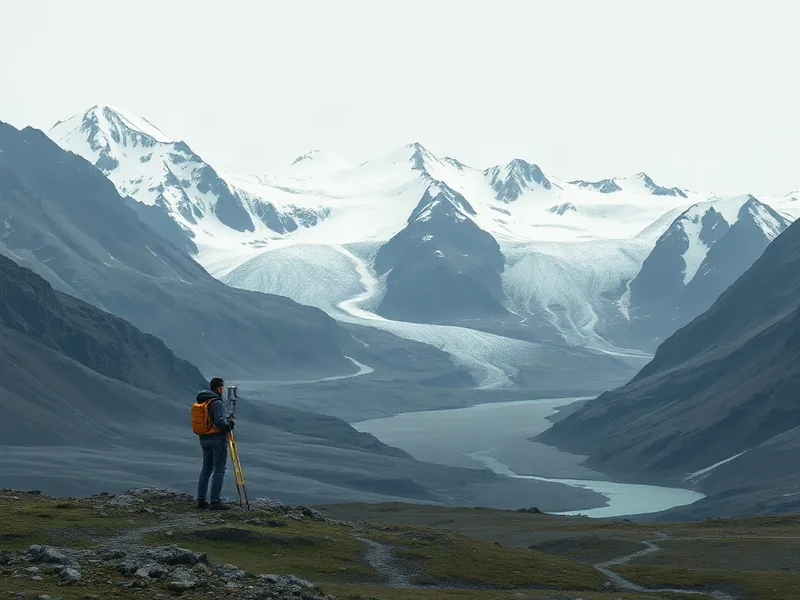
Glamos found that Swiss glaciers shrank by 5.5% in the first eight months of 2026 alone, following a summer of brutal heatwaves and a winter that left behind little insulating snow. That single year falls just short of the record melt seen in 2022. But stack it against the years before, and the total loss since 2021 comes to 19.4%, almost a fifth of the country's glacier ice gone in five years. Glamos and the Swiss Academy of Sciences did not soften the message: "Alpine glaciers have no chance of surviving in the long term under such conditions." Glamos researcher Matthias Huss was blunter still, telling reporters the warming driving this loss "can be attributed 100% to anthropogenic climate change. It's as simple as that."
Glaciers work a bit like a slow-release savings account for fresh water. They bank snow and ice through the winter, then pay it out gradually through the summer, feeding rivers that millions of people and farms downstream depend on. When the melt rate outpaces the deposits, as it has for five straight years now, that account starts running dry. The consequences show up far from the Alps, in lower river flows, stressed agriculture, and a slow unraveling of water security across Europe.
Against that backdrop, US senators have reached a bipartisan deal to overhaul how the country approves large energy and infrastructure projects, according to Reuters. The bill won't get a vote until after November's midterm elections, but its contents are already drawing scrutiny. It would set firm deadlines for environmental reviews, limit the court challenges that can stall projects for years, and make permits harder to overturn once granted. It also creates new approval pathways for transmission lines and grid upgrades, and explicitly covers both onshore and offshore wind, a detail that complicates any simple narrative about which energy sources stand to benefit.
The Associated Press reports the bill would also force AI data centers, which are notorious for their outsized electricity appetite, to pay for the power they consume rather than quietly shifting those costs onto other ratepayers. That's a meaningful provision on its own. Data centers have become one of the fastest-growing sources of electricity demand in the US, and the bill marks a significant change to the National Environmental Policy Act, a law that critics have long blamed for slowing down energy construction of every kind, fossil and renewable alike.
Permitting reform is one of those rare issues that draws support from both sides of the climate debate, for very different reasons. Renewable energy developers want faster approval for wind farms and transmission lines so clean power can actually reach the grid. Fossil fuel companies want the same speed for pipelines and export terminals. Whether this bill tilts the balance toward decarbonization or simply greases the wheels for more drilling will depend heavily on the details that emerge once Congress returns to it after the midterms.
The administration is not waiting for that vote to make energy news. The New York Times reports that South Korea has agreed to invest up to $200bn in US power projects, including a gas plant in Texas, eight nuclear power plants, and a liquefied natural gas facility in Alaska. The Hill notes South Korea is putting $54bn specifically toward the Alaska LNG project, an 807-mile pipeline meant to carry gas from the state's north slope down to export terminals serving Asian markets, a project that Reuters points out has faced "years of questions over its cost and commercial viability." Reuters also notes the investment package is designed in part to help South Korea dodge steep US import tariffs, a reminder that energy deals these days are rarely just about energy.
Elsewhere, the retreat from climate accountability measures continues. The UK's Financial Conduct Authority has dropped plans that would have required listed companies to formally disclose their climate risks to investors, after firms complained about implementation costs. The regulator will now let companies choose a looser "comply or explain" approach instead. Reuters notes this follows the EU watering down its own corporate disclosure rules and the US abandoning similar plans altogether. The Financial Times frames it as part of a broader pullback by regulators worldwide, a trend that accelerated after Trump's re-election.
Not every story this week points toward delay or retreat. In Kenya, Nigerian billionaire Aliko Dangote and President William Ruto broke ground on a $16bn oil refinery in Lamu, a project expected to become East Africa's largest industrial facility by capacity once it starts processing 700,000 barrels of crude a day. BBC News reports that local residents protesting for land compensation were dismissed by Dangote as the work of "local marketers and international players." Reuters notes the project also faces opposition from environmental campaigners worried about effects on Lamu's old town, a UNESCO World Heritage site with fragile marine ecosystems nearby.
These stories aren't disconnected headlines. They're snapshots of the same tension playing out in different places: the push to build energy infrastructure faster, whether it's wind turbines or oil refineries, colliding with a climate system that is responding to decades of emissions on its own schedule, one that doesn't pause for legislative calendars or investment announcements. Permitting reform could genuinely speed up the clean energy transition if it's implemented with that goal in mind. It could just as easily lock in new fossil fuel infrastructure for decades. The glaciers melting in the Alps, the oceans absorbing record heat, and the monsoon rains falling short in India are not waiting to find out which path wins. The decisions made in Washington boardrooms and Senate hearing rooms this winter will shape how much of that melting is still reversible, and how much is simply the new baseline.
Tags
Original Sources
Daily Briefing: US energy permit reform | Glacier melt ‘explosion’ | Brazil election - Carbon Brief
↗ https://www.carbonbrief.org/daily-briefing-us-energy-permit-reform-glacier-melt-explosion-brazil-election
About the author
Amara's entry point into AI was an epidemiology role at a London research hospital, where she spent five years studying how digital health tools reached — or conspicuously failed to reach — underserved communities. Watching early algorithmic systems in healthcare quietly entrench existing inequalities, she redirected her career toward the systemic consequences of AI at scale. She covers AI through an unflinching lens: who benefits, who bears the cost, and what evidence actually says versus what the press release claims. Her writing is calm and precise, but she doesn't mistake balance for neutrality.
More from The Steward →This Week's Edition
2 October 2026
28 articles
Related Articles

Small Batteries in Stoves, E-Bikes, and Food Carts Could Quietly Reshape the Grid
Environment & Climate · 5 min

Payerset Bets on AI Research Assistant to Make Price Transparency Data Usable
Products & Applications · 6 min

China's Biotech Sector Stakes Its Claim on the Global Stage
Finance & Markets · 5 min
Related Articles
Small Batteries in Stoves, E-Bikes, and Food Carts Could Quietly Reshape the Grid
Environment & Climate · 5 min
Payerset Bets on AI Research Assistant to Make Price Transparency Data Usable
Products & Applications · 6 min
China's Biotech Sector Stakes Its Claim on the Global Stage
Finance & Markets · 5 min
More Stories
© 2026 Cedar & Bloom. All rights reserved.
