The Drum · Weekly AI news, freeSubscribe →

Share
A $5 billion medical center in North Austin will weave sensors, robotics and supercomputing into daily patient care, testing whether a hospital built for the next 50 years can stay human at its core.
For patients in Austin facing a serious cancer diagnosis or a complicated heart condition, the path to care has often meant leaving town. That reality is what University of Texas at Austin leaders say they are trying to fix with a new academic health system unveiled this week, one built from scratch around artificial intelligence rather than retrofitted with it years down the line.
The university announced Tuesday the formation of UT Dell Medicine, a unified academic health system that brings together its clinics, Dell Medical School and the forthcoming UT Dell Medical Center under a single identity. Claudia Lucchinetti, M.D., executive vice president for Medical Affairs at UT Austin and executive leader of UT Dell Medicine, described it as the natural evolution of a decade-old medical school into something larger and more ambitious.
"We're bringing together the University of Texas at Austin and all its great capabilities across everything from AI, engineering, humanities, the sciences and discovery," Lucchinetti told Fierce Healthcare. The new system also folds in expertise from The University of Texas MD Anderson Cancer Center, pairing its cancer care strength with cardiovascular, brain and neuroscience, transplant and advanced critical care services planned for the new medical center.
Austin currently has three health systems operating hospitals: HCA Healthcare through its St. David's HealthCare partnership, Baylor Scott & White Health and Ascension Seton. UT Dell Medicine will be the city's fourth, and its only academic health system. That distinction matters because academic medical centers are often the only places equipped to coordinate the kind of multi-specialty, high-complexity care that patients with rare or advanced conditions need.
"There still remains a significant outmigration for complex care out of Austin, not because we don't already have excellent doctors and also places for care delivery, but complex care requires a level of integration and multi-specialty coordination that, frankly, is difficult to navigate in many health systems," Lucchinetti said. She pointed to a fragmented local landscape with multiple electronic health records and disconnected groups across anesthesia and radiology as part of the problem.
Mike Ryan, chief healthcare technology, digital and data strategist at UT Austin, put it more bluntly. "We studied this market deeply. We know where the gaps in care are," he said. "It's really only in an academic medical center that you can bring this level of integration and complex care together to meet the needs of those patients."
Site clearing began this month in North Austin for the UT Dell Medical Center, a roughly $5 billion project anchored by a $750 million gift from the Michael & Susan Dell Foundation, the same family whose $50 million donation launched the medical school back in 2013. The 27-acre hospital campus sits within a larger 300-plus-acre UT Dell Campus for Advanced Research and will house a 300-to-500-bed specialty hospital, an outpatient clinic and a full emergency department when it opens in 2030.
What sets this project apart from a typical hospital expansion is the decision to build technology into the bones of the facility rather than bolt it on afterward. Think of it like designing a house with the wiring for smart thermostats and security cameras already embedded in the walls, instead of drilling holes later and hoping the pieces fit.
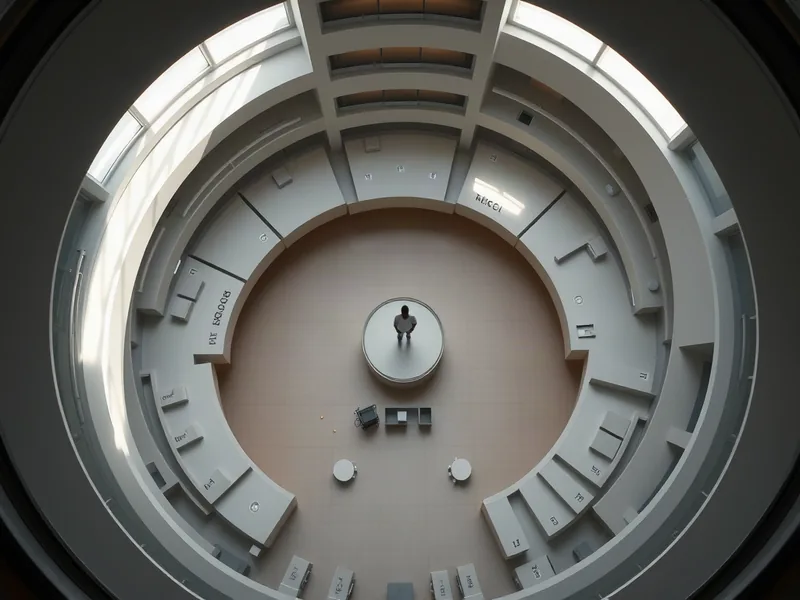
A hospital built five to seven years ago might have installed cameras in patient rooms as a modest nod to monitoring technology. UT Dell Medical Center is planning for 20,000 to 30,000 sensors throughout the building. Ryan said that data will be used "to improve experience, to make care teams more efficient, to be able to alert care teams to patient needs that we might not be able to get to otherwise."
The facility is also being designed to support robotics for routine tasks like transporting medications, supplies, linens and food, freeing up clinical staff for direct patient care. That requires practical design choices most patients will never notice: wider hallways and elevators, and decisions about whether robots and people share corridors or travel separately. Health system leaders declined to name specific technology vendors they plan to work with.
Perhaps the trickiest part of designing an AI-native hospital is building for a future nobody can fully predict yet. Ryan acknowledged that the algorithms running on the facility's data will change over time, and that some equipment and technologies will be replaced well before the building itself ages out. "We're being cognizant of the design, knowing that some of these technologies will change over time, and we're being cognizant of the infrastructure that we build directly into the facilities so that we can adapt it," he said.
The system is also exploring how to tap into UT Austin's Texas Advanced Computing Center, one of the world's leading academic supercomputing hubs, to let clinicians analyze multiple streams of patient data in real time. Combined with edge computing, automation and digital twin technology, the goal is to predict patient risks and speed up physician decision-making, all while the medical center shares a single digital infrastructure, medical records and billing system with MD Anderson for cancer patients.
Training the next generation of physicians for this environment is its own challenge. Ryan and Lucchinetti said the system plans immersive learning environments that simulate AI- and robotics-enabled care, teaching clinicians to work alongside multiple data streams and emerging tools without losing the human connection that defines good medicine.
There is a real tension sitting at the center of this project. More sensors and more automation can mean faster alerts and fewer missed warning signs, but they can also feel invasive if patients sense they are being watched rather than cared for. Lucchinetti was direct about where she believes the balance should land. "Technology is there in service of the patient, and if it's really doing its best job, it's invisible to the patient; it recedes into the background, and what comes forward is the care model, the compassion, the empathy, the connection that still is fundamental to medicine," she said.
That is the real test facing UT Dell Medicine as it moves toward a 2030 opening. Building sensors, robotics and supercomputing into a hospital is a technical and financial undertaking of enormous scale, but the harder work may be making sure patients navigating the most frightening moments of their lives feel less lost in the system, not more. If the technology succeeds, Lucchinetti said, the hospital itself becomes "an intelligent member of the care team," quietly supporting the people providing care rather than standing between them and their patients.
Tags
Original Sources
UT Austin unveils UT Dell Medicine as it bets big on new AI-native hospital
↗ https://www.fiercehealthcare.com/health-tech/university-texas-austin-unveils-new-academic-health-system-it-builds-ai-native-hospital
About the author
Amara's entry point into AI was an epidemiology role at a London research hospital, where she spent five years studying how digital health tools reached — or conspicuously failed to reach — underserved communities. Watching early algorithmic systems in healthcare quietly entrench existing inequalities, she redirected her career toward the systemic consequences of AI at scale. She covers AI through an unflinching lens: who benefits, who bears the cost, and what evidence actually says versus what the press release claims. Her writing is calm and precise, but she doesn't mistake balance for neutrality.
More from The Steward →This Week's Edition
28 October 2026
30 articles
Related Articles

GM Reverses Course, Commits $2 Billion to Hybrid Production in Michigan
Products & Applications · 5 min

Liquid I.V. Taps Former Poppi Marketer as Category Competition Heats Up
Products & Applications · 5 min

Dell Adds Conversational AI Assistant to PowerProtect, Bundles Identity and Quantum-Safe Resilience Updates
Products & Applications · 5 min
Related Articles
GM Reverses Course, Commits $2 Billion to Hybrid Production in Michigan
Products & Applications · 5 min
Liquid I.V. Taps Former Poppi Marketer as Category Competition Heats Up
Products & Applications · 5 min
Dell Adds Conversational AI Assistant to PowerProtect, Bundles Identity and Quantum-Safe Resilience Updates
Products & Applications · 5 min
More Stories
© 2026 Cedar & Bloom. All rights reserved.
