The Drum · Weekly AI news, freeSubscribe →

Share
A fresh R1 research university just flipped the switch on a flash-plus-HDD storage platform built for GPU clusters. Here's what the architecture actually looks like, and why the PQC angle matters more than it seems.
New Mexico State University has moved its research computing onto a new VDURA data platform, and the deployment is now fully in production as of August 2026. That's not a huge headline on its own, storage rollouts happen constantly, but the specifics here are worth a closer look if you care about how universities are retooling for AI-scale workloads without hyperscaler budgets.
NMSU isn't a small player anymore. The university hit Carnegie R1 status in 2025, putting it among the top-tier research institutions in the US, and it now runs more than $141 million in annual research expenditures across aerospace, agriculture, cybersecurity, water science, and biomedical fields. That kind of research portfolio generates a lot of heterogeneous data: some of it needs to be read and written at flash speeds during active experiments, and some of it just needs to sit around cheaply until someone needs it again. VDURA's pitch is that you shouldn't have to choose.
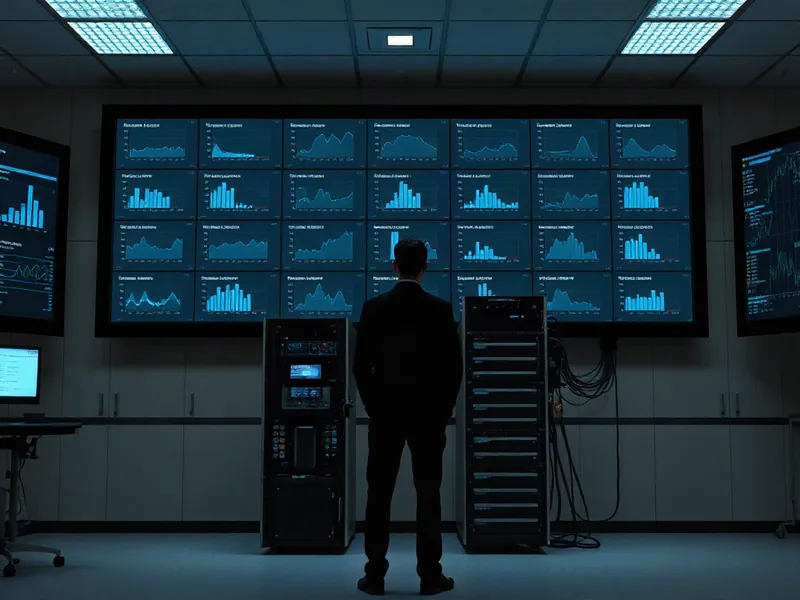
The core technical idea here is VDURA's "mixed-fleet" architecture, which combines NVMe flash and high-density HDD capacity under one unified namespace. In practice, that means researchers get flash-level responsiveness for hot, active datasets, the stuff they're actively training models on or running simulations against, while colder, bulk data lives more economically on spinning disk. Both tiers sit on the same InfiniBand fabric NMSU already uses for its research computing.
Why does this matter for practitioners? A few reasons:
VDURA's own framing leans hard into the AI infrastructure angle. Steve Lebowitz, the company's Senior Solution Engineer, described the goal as giving researchers "more results per compute hour" on a platform that's "production-hardened for environments where failure is not an option." That's standard vendor language, but the underlying claim, that storage bottlenecks are a real tax on GPU utilization, is one that shows up constantly in HPC benchmarking circles. If your storage can't keep pace with your accelerators, you're paying for idle GPU cycles. Keeping flash tiers close to active workloads is one of the more straightforward ways to avoid that.
This deployment also isn't happening in isolation. VDURA and NMSU announced a strategic partnership back in August 2025 to co-develop and commercialize post-quantum cryptographic (PQC) technology, aimed specifically at protecting petabyte-scale data pipelines used in AI and HPC. Now that the production system is live, NMSU is effectively running its day-to-day research workloads on the same platform architecture that sits at the center of that PQC collaboration. That's a notable detail: it means any cryptographic hardening work coming out of the partnership has a live, high-stakes testbed to validate against, rather than a lab environment disconnected from real usage patterns.
Post-quantum cryptography is still a niche concern for most engineering teams, but it's becoming less niche by the month. NIST finalized its PQC standards a couple years back, and organizations handling large, long-lived datasets, exactly the kind of petabyte-scale research data NMSU generates, are among the first groups who need to start thinking seriously about migration paths. Baking PQC considerations into the storage layer itself, rather than bolting it on later, is a reasonable strategy if you're trying to get ahead of that curve.
Amy Wagler, NMSU's Director of Research Computing and Data Science, framed the deployment in more practical terms: partnering with VDURA and the university's Research Cores Program lets NMSU "deliver a world-class VDURA data storage solution to campus," supporting research areas tied to New Mexico's economic growth. That's the kind of statement that sounds like boilerplate until you remember that university research computing budgets are almost always tighter than industry equivalents, and infrastructure decisions here tend to stick around for years. Getting the storage architecture right the first time isn't a small thing when you're not going to be refreshing hardware every 18 months like a hyperscaler would.
The broader pattern worth watching is universities increasingly adopting infrastructure patterns that used to be exclusive to hyperscalers and national labs: mixed-tier storage, software-defined scaling, InfiniBand fabrics, subscription-based capacity models. NMSU's setup is a fairly clean example of that trend playing out at a mid-size R1 institution rather than a flagship national lab.
For engineers evaluating similar infrastructure, the practical questions to ask are the usual ones: how transparent is the flash/HDD tiering to end users, what's the actual sustained throughput under mixed read/write research workloads, and how painful is scaling capacity later under the subscription model. VDURA hasn't published independent benchmarks from this specific deployment, so those numbers remain to be seen. But the architectural bet, that unifying fast and cheap storage under one namespace reduces both cost and operational friction for AI/HPC workloads, is a sound one, and it's one more data point in a broader shift toward treating storage as a first-class citizen in AI infrastructure planning rather than an afterthought behind the GPUs.
Tags
Original Sources
VDURA Powers AI and HPC Research at New Mexico State University with Data Platform Deployment - BigDATAwire
↗ https://www.hpcwire.com/bigdatawire/this-just-in/vdura-powers-ai-and-hpc-research-at-new-mexico-state-university-with-data-platform-deployment
About the author
Kai built ML infrastructure at a Bay Area startup before developing an obsession with transformer architectures and inference optimisation that eventually pulled him out of product work entirely. A stint at a compute research lab sharpened his instinct for what actually matters in a model release versus what is marketing. He writes from the inside — from the perspective of someone who has debugged the systems he is describing at three in the morning. He is allergic to hype and instinctively drawn to the unglamorous plumbing questions that everyone else skips over.
More from The Engineer →This Week's Edition
7 September 2026
23 articles
Related Articles

SpaceX's AI Unit Drives Return to Profitability, Overtakes Rocket Business
Finance & Markets · 5 min

A High-Profile JAMA Study on OpenEvidence Leaves Key Clinical Questions Unanswered
Health & Science · 5 min

Stanford HAI Convenes Researchers to Rethink Empirical Methods for the AI Era
Models & Research · 5 min
Related Articles
SpaceX's AI Unit Drives Return to Profitability, Overtakes Rocket Business
Finance & Markets · 5 min
A High-Profile JAMA Study on OpenEvidence Leaves Key Clinical Questions Unanswered
Health & Science · 5 min
Stanford HAI Convenes Researchers to Rethink Empirical Methods for the AI Era
Models & Research · 5 min
More Stories
© 2026 Cedar & Bloom. All rights reserved.
