The Drum · Weekly AI news, freeSubscribe →
Share
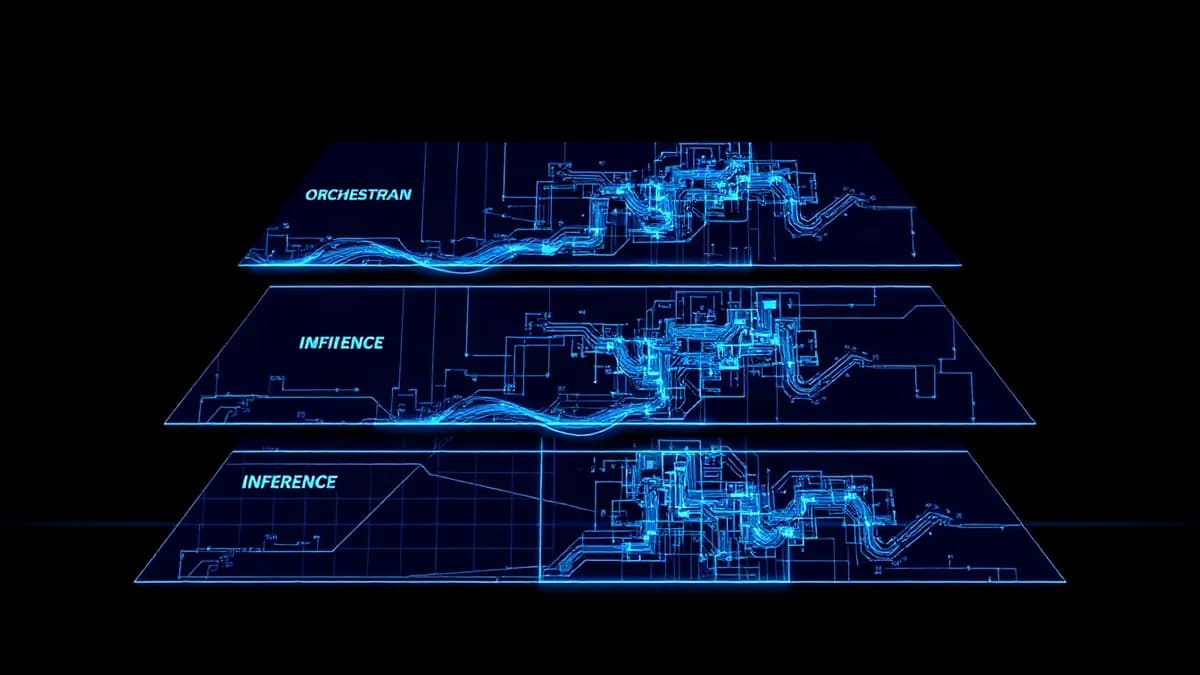
Orchestration, memory, inference economics, and AI factory design are converging into a single engineering problem. A San Francisco summit on October 28 puts practitioners from T-Mobile, Uber, Box, and Microsoft on stage to argue about it.
If you've tried to run more than a handful of agents in production, you already know the dirty secret: the hard part isn't the model, it's everything around it. Memory, context, cost accounting, GPU allocation, orchestration logic that doesn't fall over when three agents want the same resource at once. That's the actual engineering surface of agentic AI right now, and it's the subject of VentureBeat's Agentic Infrastructure Stack Summit on October 28 in San Francisco.
The format is worth noting before the content. Instead of the usual conference pattern of a vendor pitch followed by a panel, VentureBeat opens each session with proprietary research from its VB Pulse program, survey data from enterprise technology leaders who are actually deploying this stuff. A VentureBeat journalist then pushes speakers from companies like Microsoft, Uber, T-Mobile, Box, and Cisco to react to the numbers in real time: do they match what they're seeing in production, or not. Applications close October 26.
Track 1: fewer agents, better coordinated. This is the orchestration track, and the framing is blunt: enterprises aren't scaling by adding more agents, they're consolidating and coordinating the ones they have. T-Mobile CIO Jeff Simon is talking about orchestrating customer experience across AI-driven care, voice models, and agent handoffs at carrier scale. WEKA's Chief AI Officer Val Bercovici is making a sharper technical claim worth flagging for anyone doing capacity planning: orchestrating agents is fundamentally a memory problem, and the teams that treat it that way get more throughput out of every GPU they own. Box CTO Ben Kus is presenting what he's calling the "six-month AI stack," essentially a rethink of orchestration, memory, context, and data infrastructure on a timeline that keeps shrinking. PayPal's Deepika Khera also speaks in this block.
Track 2: less context, better answers. Here's a useful heuristic for anyone context-engineering their agent pipelines: more retrieved context isn't the goal, better-targeted context is. Adobe SVP of Engineering Anjul Bhambhri, who's spent thirty years in enterprise data and analytics, covers how Adobe's Customer Experience Orchestration org handles multi-agent state at scale. Databricks' Bryan Clark, who leads the Lakebase and Neon product teams, talks state management infrastructure for agents. And Cisco Outshift's Vijoy Pandey, who holds 80+ patents and leads Cisco's AGNTCY and Internet of Cognition work, is presenting a session title that's basically a thesis statement: "Context Is Not Coordination." Worth sitting with that distinction if you're building multi-agent systems, because conflating the two is a common design mistake.
Track 3 is inference economics, and it's probably the most immediately useful track for anyone with a GPU bill. The framing session title says it plainly: "nobody can tell you what an AI agent costs, and your cheapest one may be your most expensive." That's not a throwaway line, it's a real measurement problem. Per-token cost doesn't capture retries, tool calls, failed completions, or the context window bloat that comes from poor memory design.
Artificial Analysis co-founder Micah Hill-Smith, whose benchmarking data shows up in model launches from OpenAI, Anthropic, Google, and Nvidia, opens the track with metrics for decision-making across the stack. Uber Distinguished Engineer Uday Kiran Medisetty follows with a session on building cost-efficient AI that delivers ROI at Uber's scale, drawing on his work leading agentic coding, AI debugging, and large-scale refactoring initiatives internally. The track closes with a WEKA-sponsored panel featuring Upwork VP of Platform Infrastructure Sudhanshu Bist and Bercovici again, digging into model routing, caching, and GPU allocation decisions. Bist's angle is particularly relevant if you're mid-migration: he's spent the last decade rebuilding Upwork's infrastructure as the company moved from web-scale traffic patterns to production AI workloads, including the shift off on-prem data centers.
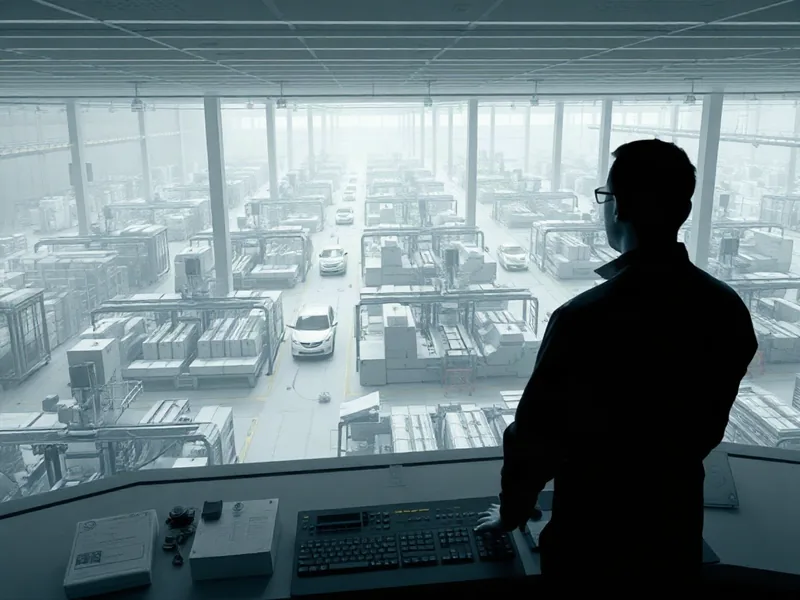
Track 4 zooms out to physical infrastructure: AI factories, the term the industry's settled on for purpose-built compute facilities for agent workloads. Microsoft's Reynold D'Sa, Corporate VP for Silicon, Cloud Hardware, and Infrastructure Engineering, presents what Microsoft is calling its blueprint for the agentic era. Omni's Anna Nicanorova and Acxiom's Anand Lakshmanan close the day with a session on open, interoperable infrastructure design, governance built in from the start rather than bolted on afterward.
There's also a hands-on workshop slotted into the lunch break: "Governing Agentic Systems at Production Speed," run by OneTrust's Shishir Agrawal and Kian Kamyab. If you're trying to figure out how to put guardrails around autonomous agents without freezing your deployment velocity, this is the session that addresses it directly rather than theoretically.
The underlying thread across all four tracks is that agentic AI has quietly become an infrastructure discipline, not a model-selection exercise. Memory architecture, context engineering, cost attribution, and physical compute design are now the levers that determine whether agent systems actually work at scale.
For engineers building or scaling agent systems, the sessions worth prioritizing are the inference economics track and the memory-as-coordination argument from WEKA and Box. Both get at the question most teams are currently answering badly: not "can this agent do the task," but "what does it actually cost to let it try."
Tags
Original Sources
Agentic Infrastructure Stack Summit | October 28, 2026
↗ https://venturebeat.com/agentic-infrastructure-stack-summit-oct-28-2026
About the author
Kai built ML infrastructure at a Bay Area startup before developing an obsession with transformer architectures and inference optimisation that eventually pulled him out of product work entirely. A stint at a compute research lab sharpened his instinct for what actually matters in a model release versus what is marketing. He writes from the inside — from the perspective of someone who has debugged the systems he is describing at three in the morning. He is allergic to hype and instinctively drawn to the unglamorous plumbing questions that everyone else skips over.
More from The Engineer →This Week's Edition
25 October 2026
18 articles
Related Articles

IEEE Expands Smart City Advisory Services as Municipal Tech Budgets Grow
Products & Applications · 5 min

Christina Applegate's MS Misdiagnosis Reveals a Painful Diagnostic Gap in Neurology
Health & Science · 5 min

Robot Infants Are Being Built to Study Human Emotion. Should They Look So Real?
Products & Applications · 5 min
Related Articles
IEEE Expands Smart City Advisory Services as Municipal Tech Budgets Grow
Products & Applications · 5 min
Christina Applegate's MS Misdiagnosis Reveals a Painful Diagnostic Gap in Neurology
Health & Science · 5 min
Robot Infants Are Being Built to Study Human Emotion. Should They Look So Real?
Products & Applications · 5 min
More Stories
© 2026 Cedar & Bloom. All rights reserved.
