The Drum · Weekly AI news, freeSubscribe →
Share
Vista revolutionizes autonomous vehicle simulation with its high-fidelity open-world model, offering unparalleled realism and control for more effective AV training and testing.
Vista, a new driving world model developed by researchers from the Hong Kong University of Science and Technology, OpenDriveLab at Shanghai AI Lab, University of Tübingen, Tübingen AI Center, and the University of Hong Kong, is making waves in the autonomous driving community. This model offers high-fidelity simulations with versatile controllability, making it a significant step forward in training and testing autonomous vehicles (AVs).
One of the key challenges in autonomous driving is creating realistic environments that accurately simulate real-world conditions. Vista addresses this by generating highly detailed and realistic drive views. The model can produce 5-second videos at 10 Hz with a resolution of 576×1024, providing a level of detail that closely mimics actual driving scenarios.
Beyond short-term predictions, Vista can also simulate longer sequences, which are essential for testing long-horizon decision-making in autonomous systems. The model supports 16-second videos at the same 10 Hz and 576×1024 resolution, allowing researchers to evaluate how AVs perform over extended periods.
One of the most innovative aspects of Vista is its zero-shot action controllability. The model can control the ego-vehicle using either trajectory-based or angle+speed inputs, providing researchers with flexible options to test different driving scenarios without extensive retraining.
To demonstrate this controllability, the researchers have provided several examples:
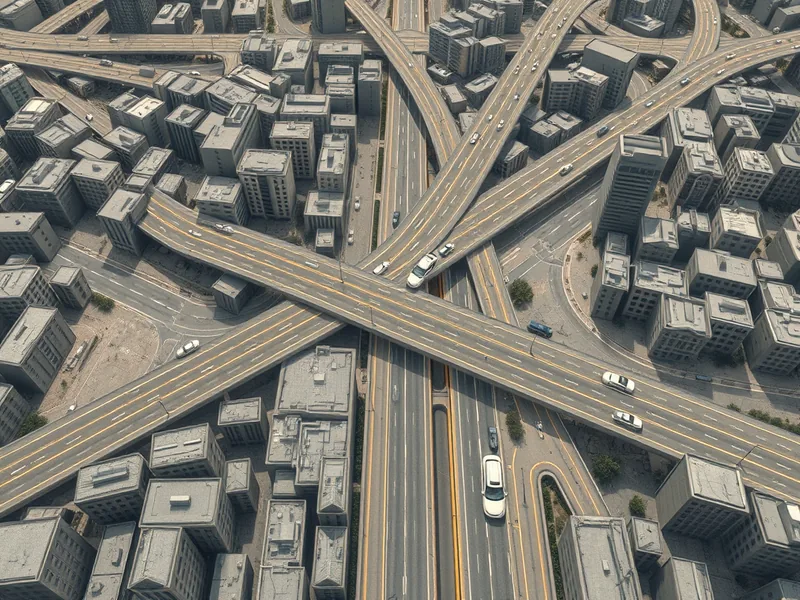
These actions can be easily derived from either trajectory or angle+speed inputs, making it straightforward to test a wide range of driving behaviors.
Vista's architecture is designed to balance computational efficiency with high fidelity. The model uses a combination of deep learning techniques and physics-based simulations to achieve realistic results.
The researchers have benchmarked Vista against existing models and found it to outperform them in terms of both fidelity and controllability. The model's ability to handle complex scenarios with high accuracy makes it a valuable tool for advancing autonomous driving research.
Vista represents a significant advancement in the field of autonomous driving. Its high-fidelity simulations and versatile controllability make it an invaluable tool for researchers and developers working on next-generation AVs. By providing realistic and flexible testing environments, Vista helps bridge the gap between simulation and real-world deployment, ultimately contributing to safer and more reliable autonomous vehicles.
Tags
Original Sources
↗ https://vista-demo.github.io/?utm_source=tldrai
About the author
Kai built ML infrastructure at a Bay Area startup before developing an obsession with transformer architectures and inference optimisation that eventually pulled him out of product work entirely. A stint at a compute research lab sharpened his instinct for what actually matters in a model release versus what is marketing. He writes from the inside — from the perspective of someone who has debugged the systems he is describing at three in the morning. He is allergic to hype and instinctively drawn to the unglamorous plumbing questions that everyone else skips over.
More from The Engineer →This Week's Edition
29 May 2024
29 articles
Related Articles

Wharton's Fourth Annual AI Survey: Most Companies See Returns, Few See Big Ones
Models & Research · 6 min

Tensormesh Launches Enterprise KV Cache Platform to Cut Redundant LLM Compute
Models & Research · 6 min

Iambic Therapeutics Raises $150 Million in IPO to Fund AI-Designed Cancer Drugs
Finance & Markets · 5 min
Related Articles
Wharton's Fourth Annual AI Survey: Most Companies See Returns, Few See Big Ones
Models & Research · 6 min
Tensormesh Launches Enterprise KV Cache Platform to Cut Redundant LLM Compute
Models & Research · 6 min
Iambic Therapeutics Raises $150 Million in IPO to Fund AI-Designed Cancer Drugs
Finance & Markets · 5 min
More Stories
© 2026 Cedar & Bloom. All rights reserved.
