The Drum · Weekly AI news, freeSubscribe →
Share
Exploring the intricate world of neural networks, this article delves into how piecewise-linearity allows us to dissect and visualize these complex systems as interconnected linear segments, offering new insights into their functionality.
Neural networks are often perceived as opaque, black-box function approximators. However, recent theoretical tools have provided ways to describe and visualize their behavior more clearly. One such property is piecewise-linearity, which many neural networks exhibit. In this article, we’ll explore how piecewise-linear functions can be visualized in detail, building on previous research.
Piecewise-linearity means that a function can be broken down into linear segments, even if the overall function isn’t linear. This property is particularly relevant to neural networks because many common activation functions, like ReLU (Rectified Linear Unit), are piecewise-linear. The ReLU activation function, defined as ( \text{ReLU}(x) = \max(0, x) ), can be visualized as two linear sections: one where the output is zero for negative inputs and another where the output is equal to the input for positive inputs.
A typical neural network architecture that leverages piecewise-linearity interleaves linear layers with ReLU activations. Let’s consider a simple single-layer neural network with two inputs (x and y) and one output neuron with a ReLU activation. The x and y inputs are plotted on the horizontal axes, while the output is on the vertical z-axis.
Neural networks can only learn continuous piecewise-linear functions. For example, consider a discontinuous function with two pieces that don’t align at the boundary. A neural network would struggle to approximate this because it cannot handle such discontinuities.
To illustrate the complexity of piecewise-linearity in neural networks, let’s increase the number of output neurons to 8. This increases the number of divisions in the input space, creating more regions where the function behaves linearly.
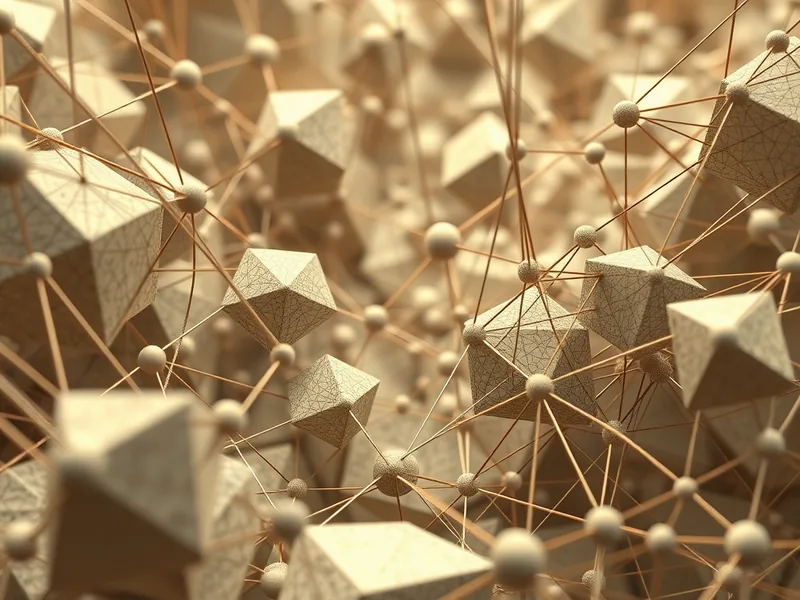
Each polygon in the input space represents a region where the function behaves linearly. The boundaries between these regions are defined by the points where the ReLU activations switch from zero to non-zero values.
Understanding the piecewise-linear behavior of neural networks has several practical implications:
Piecewise-linearity is a fundamental property of many neural networks, and visualizing it can provide valuable insights into their behavior. By breaking down complex functions into simpler linear segments, we can better understand how these models approximate real-world data. This deeper understanding can lead to more effective model design, training, and optimization.
Tags
Original Sources
About the author
Kai built ML infrastructure at a Bay Area startup before developing an obsession with transformer architectures and inference optimisation that eventually pulled him out of product work entirely. A stint at a compute research lab sharpened his instinct for what actually matters in a model release versus what is marketing. He writes from the inside — from the perspective of someone who has debugged the systems he is describing at three in the morning. He is allergic to hype and instinctively drawn to the unglamorous plumbing questions that everyone else skips over.
More from The Engineer →This Week's Edition
25 September 2024
29 articles
Related Articles
Wharton's Fourth Annual AI Survey: Most Companies See Returns, Few See Big Ones
Models & Research · 6 min
Tensormesh Launches Enterprise KV Cache Platform to Cut Redundant LLM Compute
Models & Research · 6 min

Iambic Therapeutics Raises $150 Million in IPO to Fund AI-Designed Cancer Drugs
Finance & Markets · 5 min
Related Articles
Wharton's Fourth Annual AI Survey: Most Companies See Returns, Few See Big Ones
Models & Research · 6 min
Tensormesh Launches Enterprise KV Cache Platform to Cut Redundant LLM Compute
Models & Research · 6 min
Iambic Therapeutics Raises $150 Million in IPO to Fund AI-Designed Cancer Drugs
Finance & Markets · 5 min
More Stories
© 2026 Cedar & Bloom. All rights reserved.
