The Drum · Weekly AI news, freeSubscribe →

Share
Waymo ushers in a new era of autonomous travel by removing human backup drivers from vehicles during tests in Austin, marking a bold move towards fully driverless commercial services.
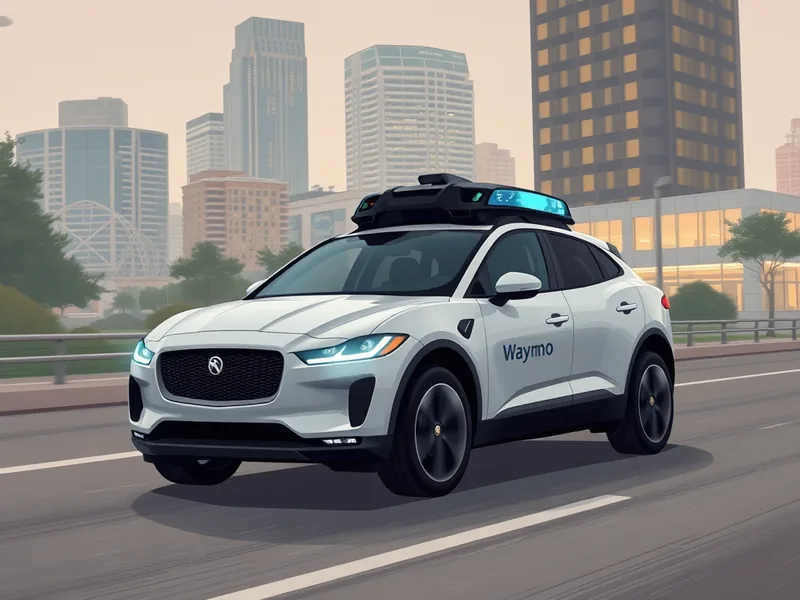
Waymo, a leader in autonomous vehicle technology, has announced the expansion of its self-driving vehicle tests to include rides without human safety drivers in Austin, Texas. This marks a significant step forward in the company's efforts to commercialize fully autonomous ride-hail services. The vehicles being used for these tests are Waymo’s customized Jaguar I-PACE electric SUVs.
Waymo has been testing its self-driving technology in various cities for years, but this is the first time they are conducting rides without a human safety driver outside of Phoenix, Arizona. This expansion to Austin is crucial because it demonstrates Waymo's confidence in their technology and paves the way for broader commercial deployment.
Waymo's autonomous driving system (ADS) has undergone rigorous testing and development. The Jaguar I-PACE vehicles used in these tests are equipped with a suite of sensors, including lidar, radar, and cameras, which work together to create a detailed 3D map of the vehicle’s surroundings. This data is processed by Waymo's onboard computer system to make real-time driving decisions.
Sensor Suite:
Onboard Computer System:
Despite the absence of a human safety driver, Waymo has implemented several safety measures to ensure the reliability and security of its autonomous vehicles. These include:
For practitioners in the autonomous vehicle (AV) industry, this expansion represents a significant milestone. It provides valuable insights into how AV technology can be deployed at scale and the challenges that need to be addressed for broader adoption. Key takeaways include:
Waymo’s decision to test self-driving vehicles without human drivers in Austin is a bold move that underscores the company's commitment to advancing autonomous vehicle technology. As these tests continue, they will provide critical data and insights that can help shape the future of transportation.
Tags
Original Sources
About the author
Kai built ML infrastructure at a Bay Area startup before developing an obsession with transformer architectures and inference optimisation that eventually pulled him out of product work entirely. A stint at a compute research lab sharpened his instinct for what actually matters in a model release versus what is marketing. He writes from the inside — from the perspective of someone who has debugged the systems he is describing at three in the morning. He is allergic to hype and instinctively drawn to the unglamorous plumbing questions that everyone else skips over.
More from The Engineer →This Week's Edition
7 March 2024
24 articles
Related Articles

xAI Launches Grok Bot, an Autonomous Agent That Logs Into Your Tools and Does the Work
Products & Applications · 5 min

Robotics Experts Pour Cold Water on Tesla's Optimus Debut
Products & Applications · 5 min

Replit Swaps Anthropic for OpenAI as Default Model, Muddying a Lucrative Partnership
Products & Applications · 5 min
Related Articles
xAI Launches Grok Bot, an Autonomous Agent That Logs Into Your Tools and Does the Work
Products & Applications · 5 min
Robotics Experts Pour Cold Water on Tesla's Optimus Debut
Products & Applications · 5 min
Replit Swaps Anthropic for OpenAI as Default Model, Muddying a Lucrative Partnership
Products & Applications · 5 min
More Stories
© 2026 Cedar & Bloom. All rights reserved.
