The Drum · Weekly AI news, freeSubscribe →

Share
Hundreds of French supermarkets lost millions in spoiled food after hackers hijacked connected refrigeration units. The incident is a warning sign about how everyday smart devices can become entry points for serious harm.
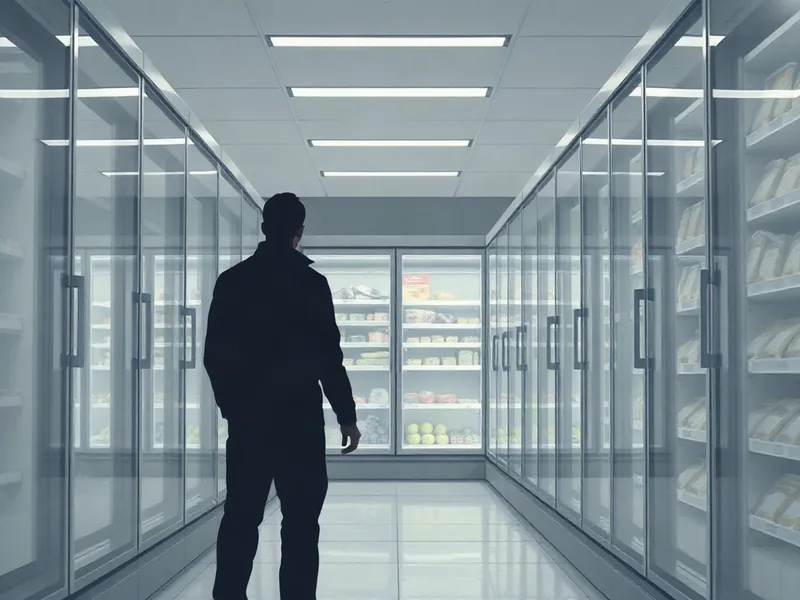
Picture walking into a grocery store and finding every refrigerator aisle warm to the touch, the meat and dairy quietly spoiling behind the glass. That is roughly what happened across hundreds of supermarkets in France, where cybercriminals broke into networked refrigeration systems and cranked up the temperature, putting millions of euros' worth of food at risk. Reuters reporters Peter Devlin and Adam Jourdan examined the breach and what it reveals about the vulnerability of the connected devices now humming quietly in our homes, offices and store aisles.
The attack sounds almost mundane at first. A fridge is a fridge, after all. But modern commercial refrigeration units are rarely simple boxes that keep things cold. They are networked machines, often monitored and adjusted remotely so store managers can track temperatures, get alerts, and cut energy costs. That connectivity is the whole point of the "internet of things," the term for everyday objects, from thermostats to doorbells to industrial freezers, that are wired into the internet so they can be monitored or controlled from afar.
It is also the weak point. Every device added to a network is another possible doorway in. Think of a building with a hundred doors instead of one. You can install the strongest lock imaginable on the front entrance, but if door ninety-seven has a cheap latch nobody remembered to check, that is the door a burglar will find. Security researchers have warned for years that IoT devices, often built cheaply and rushed to market, tend to be exactly those overlooked side doors.
What makes the French case notable is not just the financial damage, though spoiled inventory across hundreds of locations adds up fast. It is the demonstration that an attack on supposedly minor infrastructure, a refrigeration control system, can ripple outward into real economic loss and food waste at scale. Nobody was physically harmed in this incident, but it is not hard to imagine variations where the stakes are higher: hospital refrigeration units storing vaccines or insulin, water treatment sensors, or the climate controls in a data center.
Cybersecurity professionals use the phrase "attack surface" to describe the total number of points where an intruder could potentially break in. A decade ago, that surface for most businesses meant computers, servers and maybe a handful of networked printers. Today it includes smart lighting, security cameras, HVAC systems, vending machines and, yes, refrigerators. Each one runs its own small piece of software, and each piece of software can carry its own flaws.
The trouble is that these devices rarely get the same security attention as a laptop or a company's main servers. Many ship with default passwords that are never changed. Others run outdated software because updating a refrigerator's firmware is nobody's top priority until something goes wrong. Manufacturers, racing to add "smart" features and undercut competitors on price, have historically treated security as an afterthought rather than a core design requirement.
That pattern has consequences well beyond France. Security researchers have documented botnets built entirely from hijacked security cameras and routers, armies of compromised devices used to knock websites offline or extort companies. The same logic applies to refrigeration systems: once an attacker finds a foothold in one unpatched device, they can often move laterally across a network, probing for more valuable targets like payment systems or customer data.
For consumers, the lesson lands closer to home than a supermarket chain's backend network. The smart thermostat, the connected doorbell camera, the voice assistant sitting on the kitchen counter, these are all nodes on a network too, usually the home Wi-Fi network that also handles banking and personal email. A compromised smart plug might seem trivial on its own. But it can serve as a stepping stone into a home network, the same way that French refrigeration system became a foothold for attackers targeting a retailer's broader infrastructure.
None of this means smart devices are inherently dangerous or that households should rip out their connected gadgets in a panic. The convenience and efficiency gains are real, and many manufacturers do take security seriously. But the incident is a useful reminder that convenience and risk tend to travel together. Basic precautions, changing default passwords, keeping device software updated, and segmenting smart devices onto a separate network from sensitive data, go a long way toward closing the gaps that attackers rely on.
Regulators have started to catch up, if slowly. The European Union's Cyber Resilience Act, for instance, aims to impose baseline security requirements on connected products sold in the bloc, shifting some of the burden from individual consumers back onto manufacturers. Similar efforts are underway in the United States and elsewhere, though enforcement and adoption remain uneven. The French supermarket breach is likely to become one more data point cited in those policy debates, evidence that the stakes of lax IoT security are not abstract.
Food spoiled in a warehouse might seem like a minor story next to ransomware attacks on hospitals or power grids, but the underlying mechanism is identical. Attackers look for the easiest point of entry, and connected everyday objects, cheap, numerous, and often poorly secured, are increasingly that point. As more of daily life gets wired into networks, from refrigerators to cars to medical devices, the line between a nuisance hack and a genuine public safety risk keeps getting thinner. Treating IoT security as a secondary concern, rather than a frontline defense, leaves millions of ordinary devices, and the people who rely on them, exposed.
Tags
Original Sources
France's fridges hacked - when cyberattacks hit home
↗ https://www.reuters.com/video/watch/idRW051815102026RP1?chan=hp-us-2024-01-04
About the author
Amara's entry point into AI was an epidemiology role at a London research hospital, where she spent five years studying how digital health tools reached — or conspicuously failed to reach — underserved communities. Watching early algorithmic systems in healthcare quietly entrench existing inequalities, she redirected her career toward the systemic consequences of AI at scale. She covers AI through an unflinching lens: who benefits, who bears the cost, and what evidence actually says versus what the press release claims. Her writing is calm and precise, but she doesn't mistake balance for neutrality.
More from The Steward →This Week's Edition
18 October 2026
24 articles
Related Articles

xAI Launches Grok Bot, an Autonomous Agent That Logs Into Your Tools and Does the Work
Products & Applications · 5 min

German Bishops Back Child-Friendly AI Standards, Citing Papal Call on Human Dignity
Policy & Regulation · 5 min

New AI Tool Gives Forecasters an Earlier Warning on Rapidly Strengthening Hurricanes
Environment & Climate · 5 min
Related Articles
xAI Launches Grok Bot, an Autonomous Agent That Logs Into Your Tools and Does the Work
Products & Applications · 5 min
German Bishops Back Child-Friendly AI Standards, Citing Papal Call on Human Dignity
Policy & Regulation · 5 min
New AI Tool Gives Forecasters an Earlier Warning on Rapidly Strengthening Hurricanes
Environment & Climate · 5 min
More Stories
© 2026 Cedar & Bloom. All rights reserved.
