The Drum · Weekly AI news, freeSubscribe →

Share
"The Pitt" may be fiction, but it starkly illustrates how hospitals crippled by digital failures could face life-threatening consequences, highlighting the urgent need for robust backup systems.
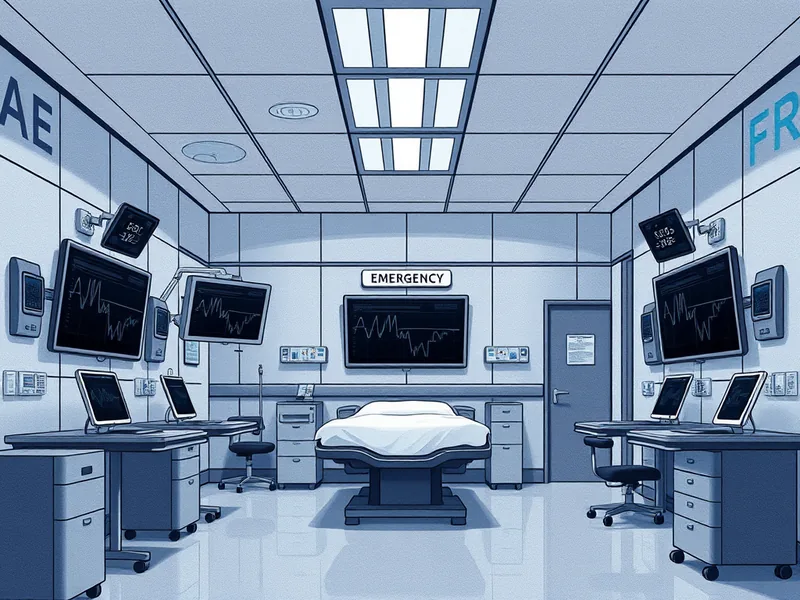
In a world where healthcare is increasingly dependent on digital systems, the television show “The Pitt” offers a sobering glimpse into what could happen if those systems fail. Set in the fictional Pittsburgh Trauma Medical Center, the series portrays the chaos that ensues when doctors and staff are suddenly cut off from their electronic networks. The screen reads "network offline," and the frenzied emergency department grinds to a halt. While “The Pitt” is a dramatization, the risks of digital darkness in real hospitals are all too real.
Digital darkness refers to situations where healthcare providers lose access to their electronic systems and patient information. This can be caused by cyberattacks, vendor outages, or natural disasters. In such scenarios, critical functions like patient monitoring, medical record access, and communication systems go offline, leading to significant disruptions in care.
The consequences of digital darkness are not just technical; they are deeply human. When electronic health records (EHRs) are inaccessible, doctors and nurses must rely on paper charts, which can be incomplete or lost. This increases the risk of medical errors, delays in treatment, and even patient deaths.
For example, consider the emergency room board-a digital interface that displays each patient’s name, room, condition, and status. In “The Pitt,” when this system goes down, doctors must scramble to recreate it manually. Despite their best efforts, several patients are overlooked or have their care delayed in the chaos. This is not just a fictional scenario; real hospitals have faced similar issues during outages.
As healthcare systems become more integrated and move online, the potential for digital darkness events grows. According to Marcus Schabacker, M.D., Ph.D., of the ECRI Institute, these events are becoming more frequent due to several factors:
The key to mitigating the risks of digital darkness lies in preparedness. Hospitals must develop robust contingency plans that include:
While technology is a double-edged sword in this context, it can also be part of the solution. Advanced cybersecurity measures, such as multi-factor authentication and intrusion detection systems, can help prevent cyberattacks. Additionally, cloud-based services with robust disaster recovery options can provide a layer of redundancy and ensure that critical data remains accessible even during outages.
The risks of digital darkness extend beyond individual hospitals. As healthcare becomes more interconnected, disruptions in one system can have ripple effects across the entire network. For instance, if a regional EHR vendor experiences an outage, multiple hospitals and clinics could be affected simultaneously, exacerbating the impact on patient care.
Moreover, the increasing use of remote monitoring technologies for home care adds another layer of complexity. When networks go down, these vital tools become useless, potentially leaving vulnerable patients without necessary support.
The scenario depicted in “The Pitt” serves as a stark reminder of the critical importance of digital resilience in healthcare. While technology has revolutionized patient care, it also introduces new vulnerabilities that must be addressed. By investing in robust contingency plans and advanced cybersecurity measures, hospitals can better prepare for and mitigate the risks of digital darkness, ensuring that they remain capable of providing high-quality care even when faced with technological challenges.
Tags
Original Sources
About the author
Amara's entry point into AI was an epidemiology role at a London research hospital, where she spent five years studying how digital health tools reached — or conspicuously failed to reach — underserved communities. Watching early algorithmic systems in healthcare quietly entrench existing inequalities, she redirected her career toward the systemic consequences of AI at scale. She covers AI through an unflinching lens: who benefits, who bears the cost, and what evidence actually says versus what the press release claims. Her writing is calm and precise, but she doesn't mistake balance for neutrality.
More from The Steward →This Week's Edition
30 April 2026
29 articles
Related Articles
Ottawa Expands AI Funding for Northern Ontario Businesses, Aims to Close the Regional Tech Gap
Job Market & Society · 6 min

AI Is Lowering the Cost of Starting a Business. It's Not Lowering the Cost of Running One.
Job Market & Society · 6 min

Iambic Therapeutics Raises $150 Million in IPO to Fund AI-Designed Cancer Drugs
Finance & Markets · 5 min
Related Articles
Ottawa Expands AI Funding for Northern Ontario Businesses, Aims to Close the Regional Tech Gap
Job Market & Society · 6 min
AI Is Lowering the Cost of Starting a Business. It's Not Lowering the Cost of Running One.
Job Market & Society · 6 min
Iambic Therapeutics Raises $150 Million in IPO to Fund AI-Designed Cancer Drugs
Finance & Markets · 5 min
More Stories
© 2026 Cedar & Bloom. All rights reserved.
