The Drum · Weekly AI news, freeSubscribe →

Share
From iPhones to tractors, manufacturers are locking consumers out of their own devices. A conversation with repair advocate Louis Rossmann reveals how a niche frustration became a national movement, and why AI could accelerate it.
Think about the last time something you owned stopped working the way it used to, not because it broke, but because a company decided it should. Maybe it was a smart thermostat that suddenly needed a subscription for features you already paid for. Maybe it was a phone screen that worked fine until the manufacturer's software decided it didn't recognize the part. This is the quiet erosion at the heart of the right-to-repair movement, and it affects far more people than most of us realize.
The frustration is deeply personal for anyone watching a beloved device slide toward obsolescence. An aging iPhone with a failing battery is a familiar story: Apple does offer self-repair kits, but they require renting nearly 80 pounds of equipment and using official parts, and the savings compared to a trip to the Apple Store are often minimal. Install a third-party screen or camera, and the phone may lock out certain features entirely. It's a small, maddening reminder that ownership, in the traditional sense, has become conditional.
That conditionality is exactly what Louis Rossmann has spent over a decade fighting. Rossmann, a YouTuber and longtime repair technician, recently organized the Own Your Shit tour, a cross-country campaign calling for the repeal of Section 1201 of the Digital Millennium Copyright Act. That provision prohibits consumers from bypassing the digital locks manufacturers place on their own devices, locks that often have nothing to do with piracy and everything to do with controlling repair markets.
Rossmann's approach to building the movement has never been about lecturing people into caring. "Instead of telling people, 'Here's why you should care about this issue,' which sounds like lecturing, what I'll do is if I'm done fixing something for a customer... I'll say, 'Here's how close you were to this never happening,'" he explained. He shows customers the documentation he used to complete a repair, then tells them, plainly, that the chip manufacturer was instructed not to sell that part to independent shops like his. If everyone in that supply chain had listened, the repair simply wouldn't have happened.
That strategy has scaled well. Rossmann has posted more than 1,000 repair videos on YouTube, and some viewers have turned that knowledge into careers. He described people who went "from working at Walmart for seven bucks an hour" to tripling their income by learning to solder and repair circuit boards. Others just save money fixing their own gear. Either way, the movement grows one fixed device at a time rather than through top-down persuasion.
Rossmann didn't always see the full scope of the problem. For years, his view was limited to the Apple repair world his shop operated in. That changed in 2017 at a legislative hearing in Nebraska, where he found himself surrounded by farmers describing nearly identical complaints about their tractors.
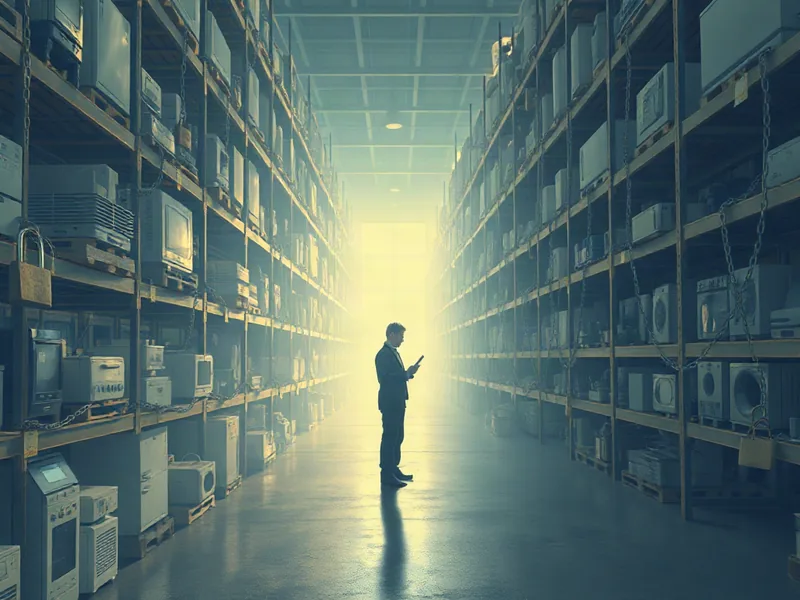
"I was in a room filled with farmers that were talking about all the problems they were having with their tractors, and I remember going, 'Where's the right-to-repair?' And someone says, 'This is the right-to-repair room. Everybody has this problem now,'" Rossmann recalled. That moment reframed his entire approach. Right to repair wasn't a niche electronics issue. It was a symptom of something much larger: the slow transfer of control from owners to manufacturers.
Farmers have since become some of the movement's most visible advocates, locked in a years-long dispute with John Deere over access to diagnostic tools and repair parts for their own equipment. There have been concessions along the way, including a Federal Trade Commission settlement that advocates viewed as a meaningful win. But Rossmann is skeptical of how much has actually changed on the ground. He pointed to Samsung's independent repair program as a cautionary example: the company made batteries and screens available to consumers, but glued the battery to the screen, forcing customers to buy both together at a combined cost exceeding $200, often more than the phone itself was worth once broken.
Farmers, he said, are still stuck using unauthorized, workaround software just to perform basic maintenance on machinery they technically own. The headlines announcing corporate cooperation rarely match the fine print.
What's striking is how gradually this erosion happened. Over the past decade or two, Rossmann argues, everything shifted toward subscription models and server dependency, meaning a company can disable a product remotely whenever it chooses. The thermostat example is particularly telling: one manufacturer, after going bankrupt, pushed a firmware update requiring a $117 annual fee just to restore functionality customers already had. That's not a device reaching the end of its life. That's a business model extracting more money after the sale is already final.
The movement's visibility has grown substantially in the past year, but Rossmann sees it as the product of a twelve-year slow burn rather than a sudden spark. He traces it back to a 2018 CBC News segment where he suggested the producers skip the editorializing and just document reality: take a broken device to Apple, record the response, then bring it to him. Apple's technicians diagnosed a need for a full motherboard replacement. Rossmann found a bent pin shorting against ground, fixed it with tweezers, and the device worked again. The contrast spoke for itself, and it aired on national television.
The stakes here go beyond convenience or nostalgia for an old phone. Every device locked out of independent repair is one more piece of electronic waste headed for a landfill sooner than necessary, one more consumer forced into an unnecessary upgrade cycle, one more small business denied access to parts it should be able to buy. As artificial intelligence makes it easier to understand and modify the software inside our devices, the tension between manufacturers' control and consumers' ownership is only going to intensify. The question isn't whether people will keep demanding the right to fix what they buy. It's whether lawmakers and companies will catch up before that right disappears entirely.
Tags
Original Sources
Louis Rossmann Wants More People to Care About the Right to Repair
↗ https://www.wired.com/story/the-big-interview-podcast-louis-rossmann-right-to-repair
About the author
Amara's entry point into AI was an epidemiology role at a London research hospital, where she spent five years studying how digital health tools reached — or conspicuously failed to reach — underserved communities. Watching early algorithmic systems in healthcare quietly entrench existing inequalities, she redirected her career toward the systemic consequences of AI at scale. She covers AI through an unflinching lens: who benefits, who bears the cost, and what evidence actually says versus what the press release claims. Her writing is calm and precise, but she doesn't mistake balance for neutrality.
More from The Steward →This Week's Edition
11 November 2026
14 articles
Related Articles

Europe's Digital ID Push Tests a New Privacy Tool: Zero-Knowledge Proofs
Policy & Regulation · 5 min

Why the Woman Who Fired Sam Altman Still Doesn't Trust AI's Boardrooms
Policy & Regulation · 5 min

Pakistan to Send Climate Minister to India for First High-Level Visit in Three Years
Policy & Regulation · 5 min
Related Articles
Europe's Digital ID Push Tests a New Privacy Tool: Zero-Knowledge Proofs
Policy & Regulation · 5 min
Why the Woman Who Fired Sam Altman Still Doesn't Trust AI's Boardrooms
Policy & Regulation · 5 min
Pakistan to Send Climate Minister to India for First High-Level Visit in Three Years
Policy & Regulation · 5 min
More Stories
© 2026 Cedar & Bloom. All rights reserved.
