The Drum · Weekly AI news, freeSubscribe →

Share
Nearly a third of CT-guided lung biopsies end in a collapsed lung, a costly, painful complication that current treatments only address after the fact. Selio Medical's hydrogel plug aims to prevent it entirely.
Every two minutes, someone in the United States hears the words no one wants to hear: you have lung cancer. For many of them, the path to a diagnosis or treatment plan runs through a biopsy, a routine-sounding procedure that most patients assume carries minimal risk. That assumption is often wrong.
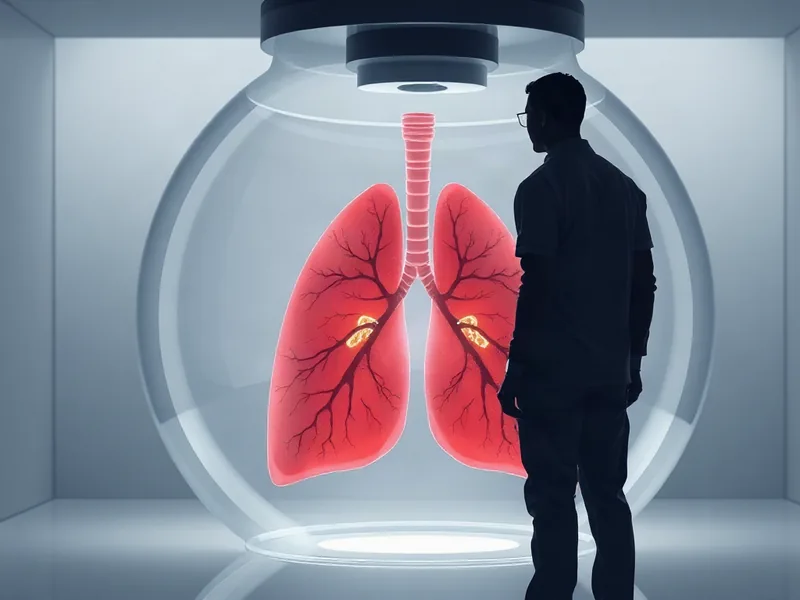
CT-guided lung biopsies, where a doctor guides a needle through the chest wall into the lung using real-time imaging, are performed more than 800,000 times a year in the U.S. Up to a third of them result in pneumothorax, a collapsed lung caused when air escapes through the puncture site and gets trapped between the lung and chest wall. Think of it like a small leak in a bicycle tire. The lung, deprived of the pressure it needs to stay inflated, partially or fully collapses.
For patients, that often means an unplanned hospital stay lasting several days, sometimes with a chest tube to reinflate the lung. For hospitals, it means a financial hit. A single pneumothorax case can wipe out the profit margin of 20 to 30 uncomplicated biopsies, according to figures cited in a peer-reviewed analysis. Multiply that across hundreds of thousands of procedures annually, and the collective cost to the U.S. healthcare system runs into the hundreds of millions of dollars.
The tools clinicians currently use to manage pneumothorax share a fundamental limitation. They only work after the lung has already started leaking.
One common method, known as the blood patch technique, involves drawing a small amount of the patient's own blood and injecting it into the needle tract in hopes of sealing it from the inside. Another approach is almost disarmingly simple: roll the patient onto the puncture site and let body weight press the wound closed. Neither method prevents the collapse. Both are damage control.
"Because pneumothorax is so common, there have been many mitigation approaches for it, but they've all been post-biopsy, and that has lacked efficacy for that very reason," said Colm McGarvey, CEO of Selio Medical, during a presentation last week at the Guinness Enterprise Centre in Dublin.
Selio, an Irish medical device startup, has taken a different route. Rather than treating a collapsed lung after the fact, the company's FDA-cleared device seals the puncture site before the biopsy needle even collects its tissue sample. The mechanism is a biodegradable hydrogel plug, delivered through a pre-filled syringe that attaches to the same introducer tool clinicians already use in a standard biopsy procedure.
Here's how it works in practice: the clinician advances the needle to the lung as usual, then pauses to deliver the hydrogel plug before continuing with the biopsy. McGarvey said the added step takes about two minutes, a modest workflow change given the potential payoff. The gel forms a seal roughly 8 to 10 millimeters wide around the puncture site, visible under CT imaging so clinicians can confirm placement. Over the following two months, it biodegrades naturally, leaving nothing behind.
It's a bit like patching a hole in a garden hose with something that dissolves once the hose no longer needs it. The seal only has to hold long enough for the body's own healing to catch up, then it disappears.
Selio isn't the first company to attempt a preventive approach. Biosentry, made by Merit Medical, is the only other FDA-cleared device for this specific indication. McGarvey pointed to a head-to-head preclinical study comparing the two products, which found Selio's device reduced pneumothorax cases by 70% compared to Biosentry, with no clinically significant complications reported in the process. That kind of comparative data, tested against an existing cleared device rather than against no intervention at all, is the sort of evidence hospitals and clinicians tend to weigh heavily when deciding whether to change an established procedure.
The company is now raising a €5 million Series A round ahead of a U.S. commercial launch this fall. Two New York medical centers are set to be the first sites where the device sees real-world use outside of clinical trials, giving Selio an early test of how the technology performs when placed in the hands of a broader range of clinicians and patient populations.
Lung cancer remains the leading cause of cancer death in the United States, and early, accurate diagnosis through biopsy is central to catching it in time to matter. But when the diagnostic tool itself carries a one-in-three chance of a painful, costly complication, it creates a quiet deterrent. Patients may hesitate. Physicians may second-guess ordering a biopsy for a borderline case. Health systems absorb costs that, over time, ripple into higher prices and constrained resources elsewhere in patient care.
A device that prevents pneumothorax rather than merely reacting to it addresses more than a clinical inconvenience. It touches the calculus that goes into every decision about whether to pursue a diagnostic procedure in the first place. Fewer complications mean shorter hospital stays, lower costs, and less physical suffering for people already navigating one of the most frightening diagnoses in medicine.
Selio's early data is promising, but it's still preclinical and limited to a comparison against one competitor product. Real-world performance across diverse hospitals, patient anatomies, and clinician skill levels will tell a fuller story. Still, the underlying idea, that we should design medical tools to prevent harm rather than just manage it after it occurs, is one worth watching closely as it moves from a Dublin lab toward hospital floors in New York this fall.
Tags
Original Sources
This Device Could Prevent Lung Biopsy's Most Common — and Costly — Complication - MedCity News
↗ https://medcitynews.com/2026/09/lung-biopsy-pneumothorax
About the author
Amara's entry point into AI was an epidemiology role at a London research hospital, where she spent five years studying how digital health tools reached — or conspicuously failed to reach — underserved communities. Watching early algorithmic systems in healthcare quietly entrench existing inequalities, she redirected her career toward the systemic consequences of AI at scale. She covers AI through an unflinching lens: who benefits, who bears the cost, and what evidence actually says versus what the press release claims. Her writing is calm and precise, but she doesn't mistake balance for neutrality.
More from The Steward →This Week's Edition
4 September 2026
24 articles
Related Articles

A Heart Without Friction: Maglev Technology Moves Into Cardiac Care
Health & Science · 6 min

How a Stubborn Hiss of Radio Noise Helped Confirm the Big Bang
Health & Science · 5 min

AI Can Predict Chemotherapy Response in Aggressive Breast Cancer, But Not Yet Reliably Enough for the Clinic
Health & Science · 5 min
Related Articles
A Heart Without Friction: Maglev Technology Moves Into Cardiac Care
Health & Science · 6 min
How a Stubborn Hiss of Radio Noise Helped Confirm the Big Bang
Health & Science · 5 min
AI Can Predict Chemotherapy Response in Aggressive Breast Cancer, But Not Yet Reliably Enough for the Clinic
Health & Science · 5 min
More Stories
© 2026 Cedar & Bloom. All rights reserved.
