The Drum · Weekly AI news, freeSubscribe →
Share
While AI excels at pattern recognition, human expertise is still essential for accurately translating and contextualizing ancient texts.
Artificial intelligence has made significant strides in various fields, including natural language processing (NLP). One of the most intriguing applications of AI is its use in deciphering lost languages. The potential to unlock historical secrets hidden in ancient texts is immense, but it's not a straightforward process. Despite AI's ability to spot patterns and make predictions, human insight remains crucial for accurate translation and contextual understanding.
The challenge of deciphering lost languages lies in the lack of context and the often limited corpus of available texts. Traditional methods rely heavily on linguistic expertise and historical knowledge. However, these methods can be time-consuming and may not always yield results, especially when dealing with incomplete or damaged texts.
AI brings a new dimension to this field by leveraging machine learning algorithms that can process vast amounts of data and identify patterns that might elude human analysts. For instance, neural networks can be trained on known languages to recognize structural similarities in unknown scripts. This approach has been particularly useful in the study of Etruscan, an ancient language spoken in what is now Italy before the rise of Rome.
The Etruscan language presents a unique challenge due to its limited corpus and lack of a continuous historical record. Despite this, researchers have made significant progress by combining AI techniques with traditional methods.
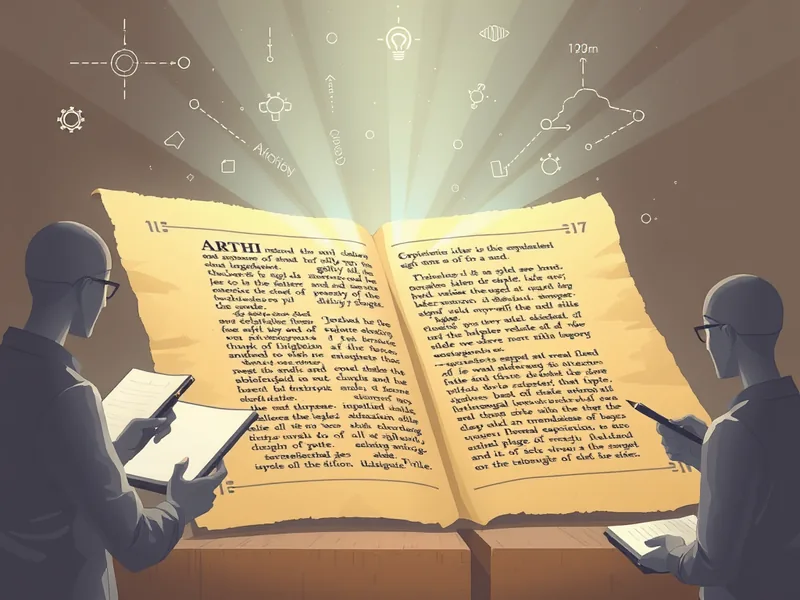
The technical implementation of AI in language decipherment involves several steps:
While AI has made significant progress in deciphering lost languages, there are several challenges and opportunities to watch:
While AI has revolutionized the field of language decipherment, human insight remains indispensable. By combining the strengths of both approaches, researchers can unlock the secrets of ancient texts and gain a deeper understanding of our shared history.
Tags
Original Sources
What happens when you put AI to work deciphering lost languages?
↗ https://arstechnica.com/civis/threads/what-happens-when-you-put-ai-to-work-deciphering-lost-languages.1514148/latest
About the author
Kai built ML infrastructure at a Bay Area startup before developing an obsession with transformer architectures and inference optimisation that eventually pulled him out of product work entirely. A stint at a compute research lab sharpened his instinct for what actually matters in a model release versus what is marketing. He writes from the inside — from the perspective of someone who has debugged the systems he is describing at three in the morning. He is allergic to hype and instinctively drawn to the unglamorous plumbing questions that everyone else skips over.
More from The Engineer →This Week's Edition
6 August 2026
25 articles
Related Articles

Stanford's CORES Symposium Puts AI's Role in Scientific Reproducibility Under the Microscope
Models & Research · 5 min

Stanford HAI Talk Puts Arena's Human-Feedback Approach to AI Evaluation Under the Microscope
Models & Research · 5 min

Medicare's AI Push Meets a Discovery Problem for Health Chatbots
Products & Applications · 5 min
Related Articles
Stanford's CORES Symposium Puts AI's Role in Scientific Reproducibility Under the Microscope
Models & Research · 5 min
Stanford HAI Talk Puts Arena's Human-Feedback Approach to AI Evaluation Under the Microscope
Models & Research · 5 min
Medicare's AI Push Meets a Discovery Problem for Health Chatbots
Products & Applications · 5 min
More Stories
© 2026 Cedar & Bloom. All rights reserved.
