The Drum · Weekly AI news, freeSubscribe →

Share
As cyber threats escalate and workforce shortages persist, new AI tools are stepping up to protect medical data and streamline radiology workflows.
The healthcare industry is under constant threat from sophisticated cyber attacks, and the shortage of skilled professionals only exacerbates the problem. In response, technology vendors are developing advanced artificial intelligence (AI) solutions to secure medical imaging data and automate critical workflows. One such innovation comes from Varist, a cybersecurity vendor based in Reykjavik, Iceland.
Varist has launched a Hybrid Detection Engine designed to safeguard medical imaging files against both known and zero-day threats. The platform aims to protect electronic health records (EHRs) and Picture Archiving and Communication Systems (PACS), which are essential for storing and transmitting X-rays, CT scans, MRIs, and ultrasounds.
Medical imaging data is particularly vulnerable due to its high value and the increasing sophistication of cybercriminals. For instance, SimonMed Imaging suffered a significant breach when the Medusa ransomware group stole 200GB of data, including medical scans, affecting over 1.2 million patients. The attackers used radiological files as leverage for double-extortion attacks, where they threatened to release sensitive information if their demands were not met.
To combat these threats, Varist's Hybrid Detection Engine employs a multi-layered approach:
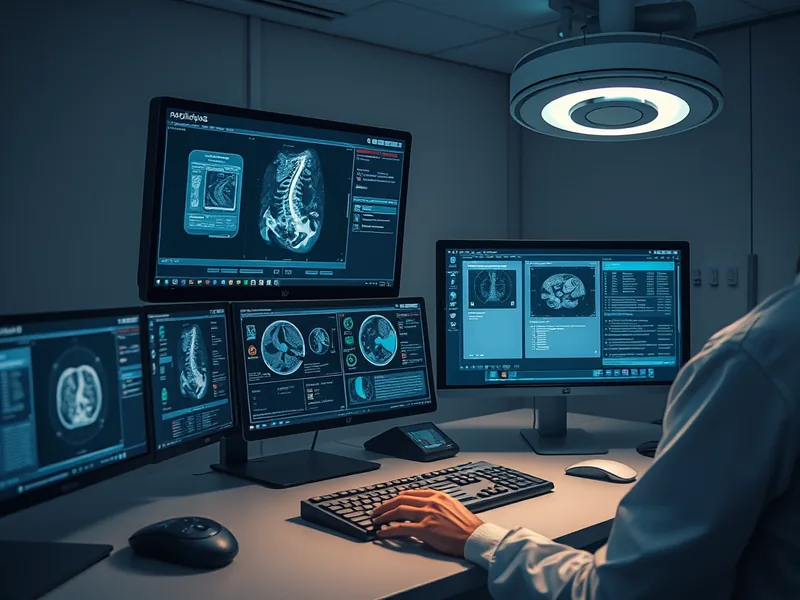
In addition to security, AI is also revolutionizing radiology workflows. One notable application is the automation of chest X-ray reports for healthy patients. By leveraging deep learning models, these systems can generate accurate reports when highly confident in the findings, significantly reducing the workload on radiologists.
For example, a recent development by Philips aims to automate (no findings) chest X-ray reports for healthy patients. This solution not only speeds up the reporting process but also allows radiologists to focus on more complex cases that require human expertise.
As the healthcare industry continues to evolve, the integration of AI in both security and workflow optimization is becoming increasingly essential. These innovations not only protect sensitive data but also improve the overall quality and efficiency of healthcare delivery.
Tags
Original Sources
Imaging roundup: AI that protects medical data, automates reports and more
↗ https://www.healthcareitnews.com/news/imaging-roundup-ai-protects-medical-data-automates-reports-and-more
About the author
Kai built ML infrastructure at a Bay Area startup before developing an obsession with transformer architectures and inference optimisation that eventually pulled him out of product work entirely. A stint at a compute research lab sharpened his instinct for what actually matters in a model release versus what is marketing. He writes from the inside — from the perspective of someone who has debugged the systems he is describing at three in the morning. He is allergic to hype and instinctively drawn to the unglamorous plumbing questions that everyone else skips over.
More from The Engineer →This Week's Edition
23 June 2026
25 articles
Related Articles

Medicare's AI Push Meets a Discovery Problem for Health Chatbots
Products & Applications · 5 min

Google's Gemini 3.8 Flash Targets the Value Segment of the AI Market
Products & Applications · 5 min

Intermountain Health Closes $795M Deal for Idaho Hospitals, Ending Surgery Partners' Joint Ownership
Products & Applications · 5 min
Related Articles
Medicare's AI Push Meets a Discovery Problem for Health Chatbots
Products & Applications · 5 min
Google's Gemini 3.8 Flash Targets the Value Segment of the AI Market
Products & Applications · 5 min
Intermountain Health Closes $795M Deal for Idaho Hospitals, Ending Surgery Partners' Joint Ownership
Products & Applications · 5 min
More Stories
© 2026 Cedar & Bloom. All rights reserved.
