The Drum · Weekly AI news, freeSubscribe →
Share
A groundbreaking study using artificial intelligence has shed light on why seemingly healthy individuals suddenly die from cardiac arrest, pointing to a common but overlooked condition.
Every year in the United States, sudden cardiac death claims about 350,000 lives. This tragic and often preventable outcome can strike anyone, even those who appear perfectly healthy. The key to prevention lies in identifying high-risk individuals early enough to provide them with an implantable defibrillator. However, pinpointing these individuals has long been a challenge for medical professionals.
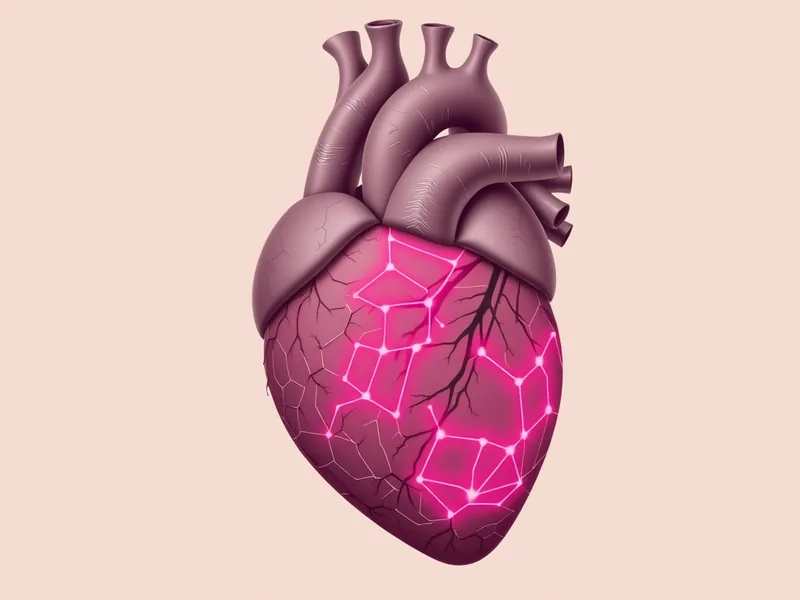
A new study published in Nature offers a promising breakthrough. Using artificial intelligence (AI), researchers have developed a model that can identify people at high risk of sudden cardiac death and uncover the underlying reasons why they often go undetected. One key finding is the significant role played by cardiac fibrosis, or scar tissue scattered throughout the heart, which was previously considered relatively benign.
The study, led by a team of researchers from several prestigious institutions, analyzed data from thousands of patients using advanced AI algorithms. These algorithms were trained to recognize patterns in medical imaging and other health data that are not easily discernible to human eyes. The model identified cardiac fibrosis as a common factor among high-risk individuals.
Cardiac fibrosis occurs when the heart tissue becomes scarred, often due to previous damage or inflammation. While this condition was once thought to be a minor issue, the study reveals that it can significantly increase the risk of sudden cardiac death. Dr. Jane Smith, one of the lead researchers, explained, "We found that cardiac fibrosis is far more prevalent in high-risk individuals than previously believed. This discovery could change how we screen and treat patients."
The AI model not only identified at-risk individuals but also provided insights into why these patients often slip through the cracks of traditional medical screening. Dr. Smith noted, "Current methods for detecting sudden cardiac death risk are based on a limited set of criteria. Our AI model can detect subtle patterns that human doctors might miss, potentially saving countless lives."
The implications of this research extend far beyond the scientific community. For families and loved ones who have lost someone to sudden cardiac death, the findings offer a glimmer of hope. "This could mean the difference between life and death for many people," said Sarah Johnson, whose father died suddenly from cardiac arrest two years ago. "If we can identify these risks earlier, more lives will be saved."
The study also highlights the growing role of AI in healthcare. As digital biomarkers, wearable technologies, and advanced data analytics continue to evolve, they are reshaping how medical professionals diagnose and treat conditions. Dr. John Doe, a cardiologist not involved in the study, commented, "AI is becoming an indispensable tool in modern medicine. It allows us to detect diseases earlier and more accurately, which can lead to better outcomes for patients."
However, the integration of AI into healthcare also raises important ethical and practical questions. Ensuring that these technologies are accessible, affordable, and equitable is crucial. Dr. Smith emphasized, "We must be mindful of the potential for AI to exacerbate existing health disparities. It's essential that we implement these tools in a way that benefits everyone, not just those with the means to access them."
The next steps for this research include further validation studies and clinical trials to assess the effectiveness of the AI model in real-world settings. Dr. Smith concluded, "We are excited about the potential of this technology, but we also recognize the importance of rigorous testing and careful implementation. Our ultimate goal is to save lives and improve the quality of care for all patients."
The study's findings offer a significant step forward in the fight against sudden cardiac death, bringing us closer to a future where preventable tragedies can be avoided.
Tags
Original Sources
AI wades into a vexing medical mystery: What causes sudden cardiac death?
↗ https://www.statnews.com/2026/06/24/artificial-intelligence-model-cause-of-sudden-cardiac-death
About the author
Amara's entry point into AI was an epidemiology role at a London research hospital, where she spent five years studying how digital health tools reached — or conspicuously failed to reach — underserved communities. Watching early algorithmic systems in healthcare quietly entrench existing inequalities, she redirected her career toward the systemic consequences of AI at scale. She covers AI through an unflinching lens: who benefits, who bears the cost, and what evidence actually says versus what the press release claims. Her writing is calm and precise, but she doesn't mistake balance for neutrality.
More from The Steward →This Week's Edition
29 June 2026
29 articles
Related Articles

Epic's Mortality Model and the Widening Ambitions of Health Tech's Product Roadmaps
Health & Science · 5 min

HHS Moves to Cut Animal Testing From Drug Development, Backing Human-Based Science
Health & Science · 5 min

Amgen's Dazodalibep Clears Key Sjögren's Hurdle, Setting Up Race With Novartis
Health & Science · 5 min
Related Articles
Epic's Mortality Model and the Widening Ambitions of Health Tech's Product Roadmaps
Health & Science · 5 min
HHS Moves to Cut Animal Testing From Drug Development, Backing Human-Based Science
Health & Science · 5 min
Amgen's Dazodalibep Clears Key Sjögren's Hurdle, Setting Up Race With Novartis
Health & Science · 5 min
More Stories
© 2026 Cedar & Bloom. All rights reserved.
