The Drum · Weekly AI news, freeSubscribe →
Share
This AI-driven microscope scans blood vessels for early signs of clot formation, potentially saving lives by intervening before symptoms appear and reducing risks associated with blood clots.
In the world of medical diagnostics, early detection can be the difference between life and death. A groundbreaking new tool is making waves in this field by using artificial intelligence (AI) to identify potential blood clots before they become a threat. Developed by researchers at the University of California, Los Angeles (UCLA), this AI-powered microscope can spot "traffic jams" in veins that could lead to deadly clots.
Blood clots are a serious health concern, affecting millions of people worldwide. They can form in any part of the body but are particularly dangerous when they occur in the lungs (pulmonary embolism) or brain (ischemic stroke). These conditions can be fatal if not treated promptly. The ability to detect these clots early could save countless lives and improve patient outcomes.
Imagine your veins as a network of roads, where blood cells are like cars. In a healthy body, traffic flows smoothly. However, when a clot starts to form, it's like a traffic jam on the highway. The AI-powered microscope works by analyzing images of blood vessels at a microscopic level, much like a traffic camera monitoring road conditions.
The microscope captures high-resolution images and feeds them into an AI algorithm. This algorithm is trained to recognize patterns that indicate the early stages of clot formation. By spotting these "traffic jams" before they become visible to the human eye, the system can alert medical professionals to potential risks.
The technology relies on a combination of advanced imaging techniques and machine learning. The microscope uses a technique called optical coherence tomography (OCT), which is similar to ultrasound but uses light instead of sound waves. OCT provides detailed images of blood vessels, allowing the AI to analyze them with unprecedented precision.
The AI component is where the real magic happens. It uses deep learning algorithms, which are a type of machine learning that can identify complex patterns in data. These algorithms are trained on large datasets of blood vessel images, both healthy and those showing early signs of clotting. Over time, the AI becomes more accurate at detecting these subtle changes.
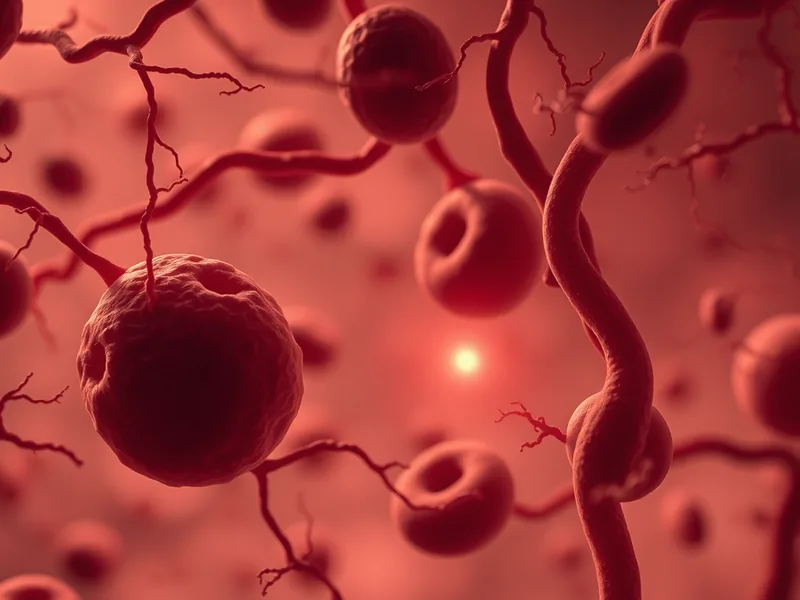
The benefits of this technology are significant. Early detection means patients can receive treatment before symptoms even appear, potentially preventing life-threatening complications. For example, if a blood clot is detected in the lungs, doctors can administer anticoagulants to dissolve it before it causes a pulmonary embolism.
However, like any new medical technology, there are risks and challenges to consider. One potential issue is the accuracy of the AI system. While machine learning algorithms have shown great promise, they can sometimes produce false positives or negatives. This means that some patients might be unnecessarily treated, while others might not receive the care they need.
Another challenge is the cost and accessibility of the technology. Advanced microscopes and AI systems can be expensive, which may limit their availability in resource-poor settings. However, as the technology advances and becomes more widespread, these costs are likely to decrease.
The long-term impact of this technology could be profound. By improving early detection rates, it has the potential to reduce the number of deaths and disabilities caused by blood clots. This could lead to significant savings in healthcare costs, as treating advanced stages of clotting is often more expensive and complex.
Moreover, the use of AI in medical diagnostics is part of a broader trend towards personalized medicine. As these technologies become more refined, they could help tailor treatments to individual patients based on their unique health profiles.
The development of an AI-powered microscope that can detect early signs of blood clots is a significant step forward in medical diagnostics. By spotting potential threats before symptoms arise, this technology has the potential to save lives and improve patient outcomes. While there are challenges to overcome, the benefits make it a promising tool in the fight against one of the world's leading health concerns.
Tags
Original Sources
About the author
Amara's entry point into AI was an epidemiology role at a London research hospital, where she spent five years studying how digital health tools reached — or conspicuously failed to reach — underserved communities. Watching early algorithmic systems in healthcare quietly entrench existing inequalities, she redirected her career toward the systemic consequences of AI at scale. She covers AI through an unflinching lens: who benefits, who bears the cost, and what evidence actually says versus what the press release claims. Her writing is calm and precise, but she doesn't mistake balance for neutrality.
More from The Steward →This Week's Edition
29 April 2026
29 articles
Related Articles
Related Articles
More Stories
© 2026 Cedar & Bloom. All rights reserved.