The Drum · Weekly AI news, freeSubscribe →
Share
Oncologists say artificial intelligence has quietly shifted from a punchline to a working partner in cancer care, reshaping how scans are read, trials are matched, and drugs are discovered, while questions about bias and validation remain unresolved.
A cancer diagnosis upends a person's life in an instant. Anything that shortens the wait for answers, or gets a patient into the right clinical trial a few weeks sooner, matters in ways that go far beyond a hospital's efficiency metrics. That is the human backdrop against which artificial intelligence is quietly remaking oncology, not through dramatic breakthroughs announced at press conferences, but through a steady accumulation of small, practical gains.
Matthew Matasar, MD, chief of the Division of Blood Disorders at Rutgers Cancer Institute, put it plainly: AI in medicine started out as a "hallucination-prone punch line." Early chatbots made things up. They could not be trusted with anything as high-stakes as a treatment decision. That reputation has not entirely disappeared, but Matasar says the technology has become "increasingly serious," with real applications now embedded in how oncologists work day to day.
The National Cancer Institute frames this moment as an "unprecedented opportunity." Three things converged to make it possible: better-trained AI models, upgraded computing hardware, and access to enormous data sets spanning imaging and genomics. Put together, these ingredients have produced what the NCI calls "promising new applications" in cancer research. But the agency is careful to pair that optimism with a warning. AI models trained on incomplete or non-diverse data can misrepresent the broader patient population and quietly bake in medical bias. The NCI is pushing for development standards and "explainable" AI, meaning systems whose reasoning clinicians can actually inspect, rather than black boxes that spit out answers no one can question.
For its 40th anniversary, the journal ONCOLOGY asked three physicians steeped in this technology, Matasar, Arturo Loaiza-Bonilla, MD, of St Luke's University Health Network, and Patrick Borgen, MD, of Maimonides Medical Center, to describe where things actually stand. Their answers sketch a field moving well past the chatbot stage.
One of the least glamorous uses of AI may end up mattering the most: documentation. Clinical charting eats into the hours doctors could otherwise spend with patients. Matasar points to specialized large language models, tools trained specifically for medical use, as a genuine turning point. He singled out OpenEvidence, which draws on journals like the New England Journal of Medicine and JAMA, plus NCCN treatment guidelines, to give clinicians AI-generated answers at the point of care. The company says it has supported more than 100 million clinical consultations from US clinicians and meets federal health privacy standards. "The last year has seen a tremendous acceleration of early adoption," Matasar said, "and yet we have only scratched the surface."
Loaiza-Bonilla describes AI's growing role as "connective tissue" running through cancer care. The question for practicing oncologists, he says, has stopped being whether to adopt these tools. It is now about how to fold them into daily workflow without losing the human judgment that medicine still depends on. He points to agentic AI, a newer category of system that does not just generate text but can call on other tools to complete multi-step tasks on its own, as already supporting tumor boards, matching patients to clinical trials, and checking that treatment plans follow ASCO and NCCN guidelines.
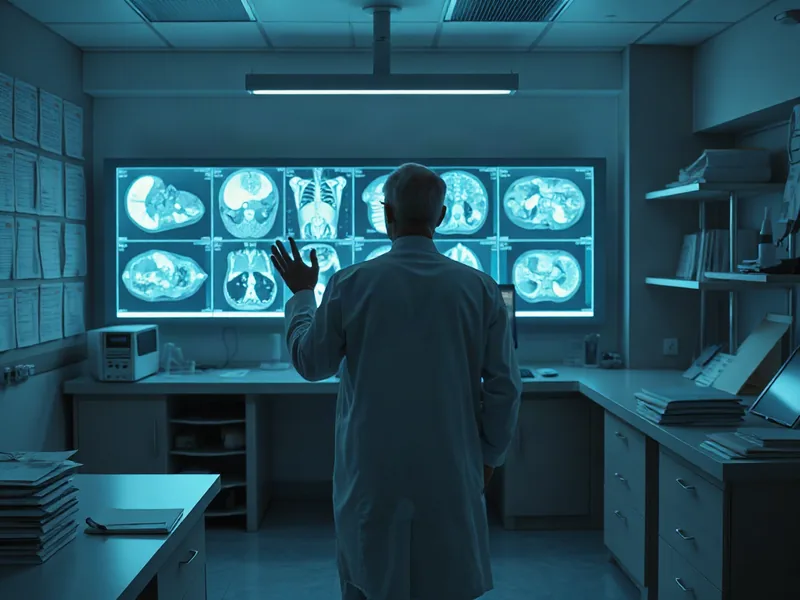
Screening is where some of the clearest gains are showing up. In mammography, AI is being used to cut down on the need for two radiologists to independently review every scan, a practice called double review. Loaiza-Bonilla notes that US trials are underway to confirm results already seen in Europe, since American patients have different breast density patterns that could affect how well the algorithms perform. Beyond breast cancer, Friends of Cancer Research is working to set standards for using AI in RECIST assessments, the criteria doctors use to measure whether tumors are shrinking or growing on a scan. The PANORAMA trial, published in The Lancet Oncology, found that AI-assisted CT scans could catch pancreatic cancer earlier than usual, a disease notoriously hard to detect before it has advanced.
Loaiza-Bonilla also sees promise in cardio-oncology, the branch of medicine that watches for heart damage caused by cancer treatments. Foundational models, built from data sets containing millions of labeled tests, could flag dangerous heart rhythm changes or a heart-rhythm abnormality called QT prolongation in patients on certain targeted drugs. Because electrocardiograms are cheap and already routine, he expects the FDA to move relatively quickly on approving these tools as risk-screening aids.
New data presented at the 2025 San Antonio Breast Cancer Symposium showed a transformer-based AI model, the same underlying architecture that powers modern chatbots, predicting recurrence risk in previously treated breast cancer patients. In head-to-head comparisons drawing on the phase 3 TAILORx trial, a multimodal model that combined imaging, clinical data, and expanded genetic information outperformed the widely used Oncotype DX 21-gene test alone at predicting late recurrence.
Borgen sees a similar trajectory in radiology more broadly. "We've already seen data that AI does as good or better a job at reading breast imaging studies," he said, noting that these systems can now handle 3D tomosynthesis mammograms, something they could not do before. Still, he is careful not to overstate where things stand. "It's not ready for prime time, not ready to invest in a company, but the preliminary data are compelling."
Perhaps the most consequential use case involves pathology, and the shortage behind it. Loaiza-Bonilla describes "deserts of cancer care" in rural America and chronic pathologist shortages in low- and middle-income countries, places where a biopsy can sit for days waiting for someone qualified to read it. Foundational models trained on millions of whole-slide images could offer a preliminary read on a basic hematoxylin-eosin stain, flagging likely EGFR mutations or hormone receptor status before a human pathologist even looks at the sample. The image can be uploaded to the cloud and analyzed remotely, potentially compressing a wait that once took days into something closer to real time.
None of this replaces the physicians and pathologists making the final calls, and both Loaiza-Bonilla and Borgen are careful to say so. But 2026, in Loaiza-Bonilla's telling, marks a shift toward "industrialization," with drug companies training AI on their own proprietary data to compress discovery timelines "from years to sometimes months." The real test, he argues, is not whether the technology sounds impressive. It is whether it gets therapies to patients faster, widens access to clinical trials, and frees clinical teams to spend more time with patients instead of fighting administrative systems. "If AI helped us do those things," he said, "it has earned its place in oncology." That standard, measurable, patient-centered, and skeptical of hype, is exactly the kind of scrutiny this technology needs as it moves deeper into the exam room.
Tags
Original Sources
The Evolution of Artificial Intelligence in Oncology: Impact on Trials, Workflows, and Outcomes | CancerNetwork
↗ https://www.cancernetwork.com/view/the-evolution-of-artificial-intelligence-in-oncology-impact-on-trials-workflows-and-outcomes
About the author
Amara's entry point into AI was an epidemiology role at a London research hospital, where she spent five years studying how digital health tools reached — or conspicuously failed to reach — underserved communities. Watching early algorithmic systems in healthcare quietly entrench existing inequalities, she redirected her career toward the systemic consequences of AI at scale. She covers AI through an unflinching lens: who benefits, who bears the cost, and what evidence actually says versus what the press release claims. Her writing is calm and precise, but she doesn't mistake balance for neutrality.
More from The Steward →This Week's Edition
20 September 2026
20 articles
Related Articles

A Tiny World's Rings Are Changing, and Astronomers Don't Know Why
Health & Science · 7 min
AI Tools Are Learning to Read Kidney Transplant Biopsies, and Pathologists Are Taking Notice
Health & Science · 6 min
Stanford HAI's Fall 2026 Seminar Lineup Zeroes In On World Models, AI Measurement, and Workforce Anxiety
Models & Research · 5 min
Related Articles
A Tiny World's Rings Are Changing, and Astronomers Don't Know Why
Health & Science · 7 min
AI Tools Are Learning to Read Kidney Transplant Biopsies, and Pathologists Are Taking Notice
Health & Science · 6 min
Stanford HAI's Fall 2026 Seminar Lineup Zeroes In On World Models, AI Measurement, and Workforce Anxiety
Models & Research · 5 min
More Stories
© 2026 Cedar & Bloom. All rights reserved.
