The Drum · Weekly AI news, freeSubscribe →

Share
Imagine a digital twin of a human cell, where scientists can simulate changes and predict outcomes with unprecedented precision. This is the promise of AIDO Cell, a groundbreaking new tool from GenBio AI.
In the world of biotechnology, advancements often come in small steps. But every once in a while, a leap forward transforms the field. Such a moment has arrived with the unveiling of AIDO Cell, a virtual cell model created by GenBio AI, a startup based in Palo Alto, California. This innovative tool aims to predict how the intricate molecular machinery of an entire cell behaves, offering researchers a powerful new way to study and manipulate cellular processes.
To understand the significance of AIDO Cell, it helps to draw an analogy with something more familiar: Google Earth. Just as Google Earth allows you to zoom in on any part of the planet, from continents down to individual streets, AIDO Cell lets scientists explore the inner workings of a cell at an unprecedented level of detail. Instead of seeing buildings and roads, researchers can observe proteins, RNA strands, and DNA.
But AIDO Cell goes beyond mere observation. It allows scientists to simulate changes in the cellular environment. For example, they can knock out specific genes or introduce new drugs and see how these actions affect the cell's behavior. This level of control is revolutionary because it provides a dynamic, predictive model that can accelerate drug discovery and deepen our understanding of cellular biology.
AIDO Cell builds on the success of AlphaFold, the groundbreaking AI developed by Google DeepMind to predict protein structures. While AlphaFold focuses on individual proteins, AIDO Cell takes a broader approach by modeling entire cells. David Baker, a University of Washington scientist and co-founder of GenBio AI, explained the difference: "With AlphaFold, you're predicting the structure of one house or learning about one person in that city, whereas in AIDO Cell, you're predicting how that whole city works."
The implications of this are vast. By simulating entire cells, researchers can gain insights into complex biological processes that were previously difficult to study. For example, they can model how a cell responds to different environmental conditions or how it might react to potential therapies. This could lead to the development of more effective drugs and treatments for a wide range of diseases.
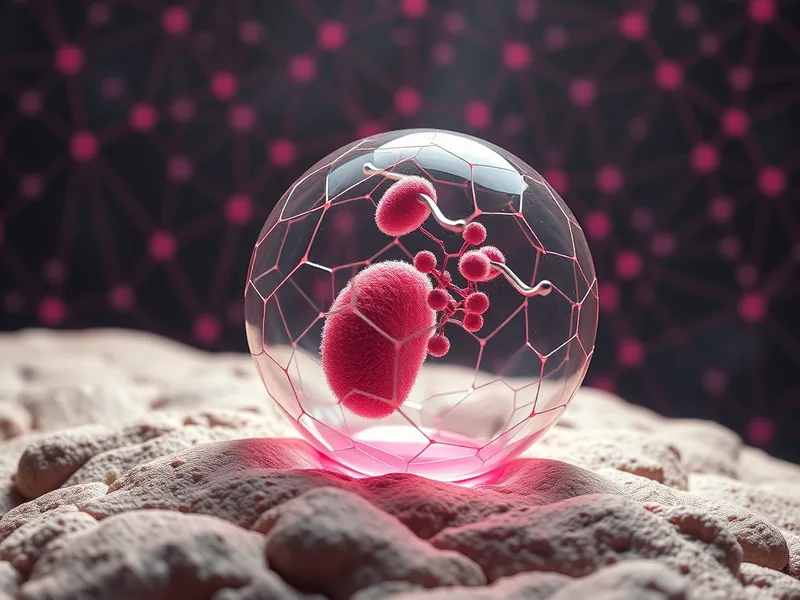
AIDO Cell's ability to predict cellular behavior also has significant implications for personalized medicine. By creating virtual models of individual patient cells, doctors could tailor treatments to specific genetic profiles, potentially improving outcomes and reducing side effects. This personalized approach is particularly important in fields like oncology, where the effectiveness of a treatment can vary greatly from one patient to another.
The introduction of AIDO Cell marks a significant step forward in our ability to understand and manipulate cellular biology. For researchers, this tool offers a powerful new way to explore the complexities of cell function, accelerating both basic research and applied science. For patients, it holds the promise of more effective, personalized treatments.
However, with great power comes great responsibility. As AIDO Cell becomes more widely used, ethical considerations will need to be addressed. Ensuring that this technology is used for the benefit of all, without exacerbating existing health disparities, will be crucial. The data generated by AIDO Cell must be handled with care to protect patient privacy and prevent misuse.
In the coming years, AIDO Cell is likely to play a pivotal role in shaping the future of biotechnology. By providing researchers with a comprehensive, dynamic model of cellular behavior, it has the potential to unlock new discoveries and drive innovation across multiple fields. As we continue to explore this exciting new tool, the possibilities for advancing human health are vast and promising.
Tags
Original Sources
Prominent AI startup rolls out virtual cell model in race to speed up science
↗ https://www.statnews.com/2026/08/18/david-baker-genbio-ai-new-virtual-model-unveiled-aido-cell
About the author
Amara's entry point into AI was an epidemiology role at a London research hospital, where she spent five years studying how digital health tools reached — or conspicuously failed to reach — underserved communities. Watching early algorithmic systems in healthcare quietly entrench existing inequalities, she redirected her career toward the systemic consequences of AI at scale. She covers AI through an unflinching lens: who benefits, who bears the cost, and what evidence actually says versus what the press release claims. Her writing is calm and precise, but she doesn't mistake balance for neutrality.
More from The Steward →This Week's Edition
24 August 2026
25 articles
Related Articles
Related Articles
More Stories
© 2026 Cedar & Bloom. All rights reserved.