The Drum · Weekly AI news, freeSubscribe →

Share
The U.S. Department of War’s unprecedented move against Anthropic signals a new era of regulatory oversight for AI firms, raising questions about the future relationship between tech innovators and national security agencies.
The U.S. Department of War has designated AI company Anthropic as a "supply chain risk," marking the first time this classification has been applied to a domestic entity. The decision, announced last Friday by Secretary of War Pete Hegseth, stems from Anthropic's refusal to allow the Department of War to use its artificial intelligence models for mass surveillance and autonomous weapons.
This development highlights the growing tension between private AI companies and government entities over the ethical and legal boundaries of AI usage. The designation could have significant implications for Anthropic’s business operations, potentially limiting its access to government contracts and affecting investor confidence. Moreover, it sets a precedent that may influence how other tech firms navigate similar requests from federal agencies.
The primary risk lies in the broad interpretation of "all lawful use" as stipulated by the Department of War. Anthropic's concerns are well-founded, given that current laws against domestic mass surveillance and autonomous weapons have significant loopholes. Additionally, many existing regulations can be altered at any time by the Department of War, further eroding the protections initially promised.
Sam Altman, CEO of OpenAI, quickly stepped in to fill the gap left by Anthropic's refusal. In a statement, Altman indicated that he had received assurances from the Department of War that OpenAI’s models would not be used for mass surveillance or autonomous weapons. However, these guarantees are subject to scrutiny. Observers have noted that the safeguards outlined in Altman's agreement appear weaker than those requested by Anthropic, and some speculate they may be entirely ineffective.
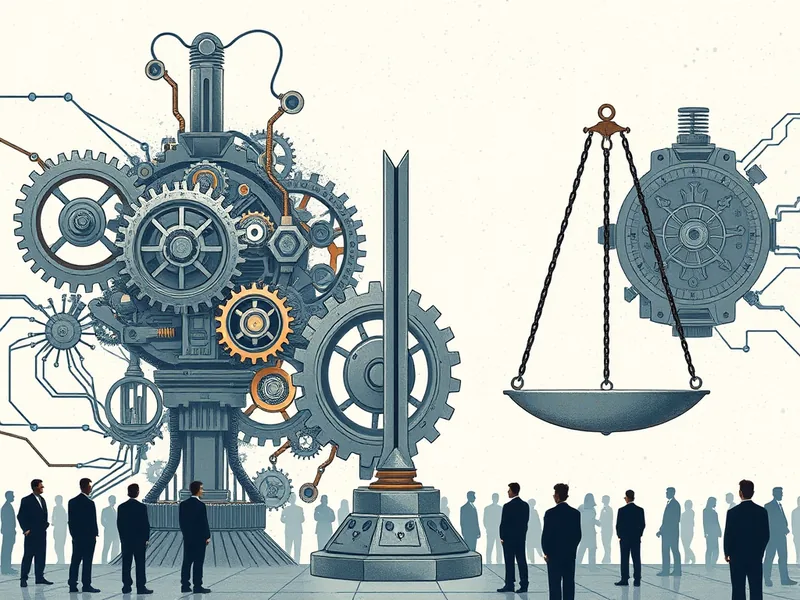
For OpenAI, this presents a significant opportunity to strengthen its relationship with the Department of War and potentially secure lucrative government contracts. However, this comes at a cost. If the public perceives that OpenAI is compromising on ethical standards, it could damage the company's reputation and lead to backlash from both consumers and investors.
A deep dive into national security law by alert readers of Astral Codex Ten reveals that the phrase "all lawful use" is problematic. While OpenAI’s national security lead has stated that they intended this phrase to mean "according to the law at the time the contract is signed," this interpretation does not align with standard contract law practices. The Department of War retains the ability to change its policies, and these changes could potentially override the initial guarantees.
The designation of Anthropic as a supply chain risk underscores the complex interplay between technological innovation and regulatory oversight. As AI continues to evolve, it is crucial for both private companies and government agencies to establish clear, enforceable guidelines that balance national security needs with ethical considerations. The outcome of this situation will likely serve as a bellwether for future interactions between tech firms and federal entities.
Tags
Original Sources
About the author
Marcus began tracking AI's market implications in 2016, noticing AI-related patent filings accelerating ahead of earnings upgrades before most of the sell-side had caught on. A former fixed-income quantitative analyst, he spent two decades building models that priced risk across emerging markets before pivoting to cover the economic impact of AI full-time. His writing translates opaque technical developments into clear risk/reward terms — and he's rarely diplomatic about the gap between AI valuations and underlying fundamentals. He believes most market participants still underestimate AI's long-run deflationary effect on knowledge work.
More from The Analyst →This Week's Edition
2 March 2026
29 articles
Related Articles
States Race to Write the Rules for AI Sandboxes in Health Care, and Lobbyists Are Racing Right Alongside Them
Policy & Regulation · 5 min
DOJ Moves to Reward Health Care Companies That Report Their Own Fraud
Policy & Regulation · 5 min

As US Intelligence Sharing Wavers, Ukrainians Lose Precious Minutes Against Russian Missiles
Policy & Regulation · 6 min
Related Articles
States Race to Write the Rules for AI Sandboxes in Health Care, and Lobbyists Are Racing Right Alongside Them
Policy & Regulation · 5 min
DOJ Moves to Reward Health Care Companies That Report Their Own Fraud
Policy & Regulation · 5 min
As US Intelligence Sharing Wavers, Ukrainians Lose Precious Minutes Against Russian Missiles
Policy & Regulation · 6 min
More Stories
© 2026 Cedar & Bloom. All rights reserved.
