The Drum · Weekly AI news, freeSubscribe →

Share
As world leaders and climate advocates gather in Manhattan, artificial intelligence has become impossible to ignore, splitting opinion between those who see a clean-energy accelerant and those who see a fossil-fuel lifeline.
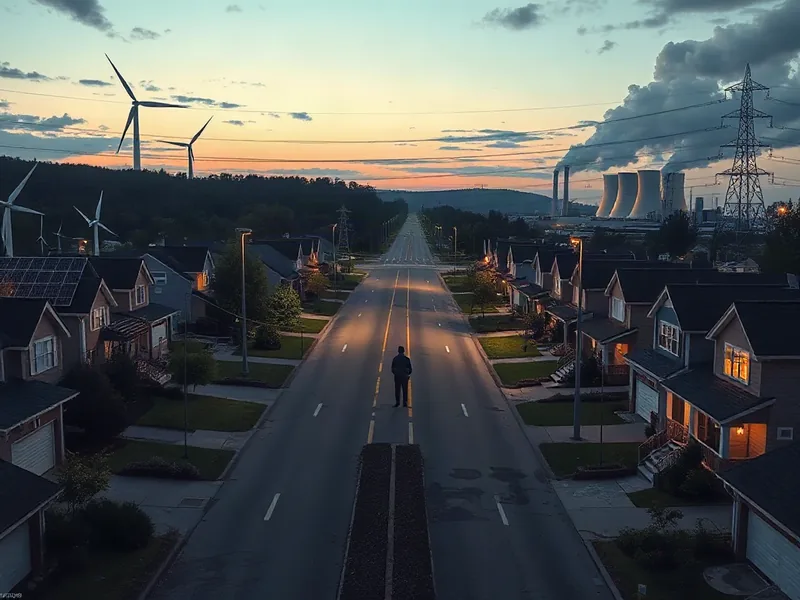
Picture two neighbors on the same block. One just got a check from a tech company to build a solar farm nearby. The other just found out a new gas plant is going up down the street, built specifically to keep a data center running around the clock. Both of them are living the same story this week, just from opposite ends of it.
That tension is the backdrop for New York Climate Week, happening alongside the UN General Assembly in Manhattan. Investors, policymakers, advocates, and journalists have packed into panels, talks, and dinners all over the city, and this year one topic keeps forcing its way into nearly every conversation: artificial intelligence.
Ask ten people in the climate world what AI means for their work and you will likely get ten different answers. Some point to its potential to speed up scientific research. Others note that Big Tech's money and attention are pouring into energy startups that badly need both. And still others zero in on the emissions-heavy natural-gas buildout underway right now to keep AI's servers powered and cooled.
Nobody disputes that AI matters. What people disagree on is whether its influence will ultimately help the climate fight or set it back.
UN Secretary-General António Guterres put that uncertainty bluntly in a speech on the assembly's opening day. "The climate crisis fuels instability and displacement," he said. "Artificial intelligence could help solve all these challenges, or it could make them worse." It is hard to find a more honest summary of where things stand.
The timing makes the stakes even sharper. This is the first year the world has had to fully sit with the reality that its most important climate target may already be out of reach. A recent report from the UN Environment Program found that humanity has nearly passed the point where limiting warming to 1.5 degrees Celsius above preindustrial levels is still possible. That number has functioned for years as a kind of finish line for global climate policy, a threshold beyond which scientists warn the risks of extreme heat, flooding, and ecosystem collapse grow substantially worse.
Since that target is essentially slipping away, the report argues the world now needs to do two things at once: cut greenhouse gas emissions fast and start deploying carbon removal technology to pull already-released emissions back out of the atmosphere. Both are enormous undertakings. And that raises the question hovering over every AI panel this week: can the technology actually help with either one?
There is a real case that it can. AI's massive appetite for electricity has put a spotlight on the need to expand power supplies and strengthen grid reliability, and some of the money flowing toward that goal is going to low- or zero-emissions technology. Startups in nuclear, geothermal, wind, and solar power have all signed deals with companies like Google and Meta, which need steady, plentiful electricity for their growing data centers.
The numbers back this up. Global venture capital investment in climate tech hit $26 billion in the first half of 2026, according to finance tracker Currence, a 55 percent jump over last year. A hefty share of that money is going toward products and services built specifically for data centers.
But not every corner of the climate-tech world is benefiting equally. A Semafor analysis of the same data found that investment in carbon management and low-carbon fuels actually dropped this year. Those are technologies the world still desperately needs to hit its climate goals, but they don't have an obvious sales pitch to a data center operator looking to keep servers running. When funding follows demand rather than need, some solutions get left behind even as the problems they address get worse.
Meanwhile, the emissions math on AI itself looks rough. A few years ago, Microsoft, Google, and Meta all set ambitious targets to shrink their greenhouse gas emissions. All three have since watched their emissions climb instead, largely because of the data centers required to run their AI systems.
Part of the reason is that natural gas, not just clean energy, is being rushed online to meet immediate demand. Once those gas plants are built, they tend to stick around for decades, locking in emissions long after the current AI boom has changed shape entirely.
There are optimists in the room too. Evelyn Wang, MIT's vice president of energy and climate, pointed out during a panel this week that AI could speed up research breakthroughs, like the search for better industrial catalysts. She also told the Associated Press that data centers won't keep adding to climate and water problems forever, and put the timeline at roughly a decade before they stop contributing to planet-warming emissions altogether. That is a hopeful projection, but it is also a decade during which a lot of gas plants will already be locked into service.
The frustration bubbling up this week isn't abstract. People living near new data centers and the power plants built to serve them are dealing with real pollution and real noise, not projections on a slide deck. That lived experience is fueling a broader skepticism toward AI among many in the climate community, and it showed up sharply in remarks from UN climate chief Simon Stiell.
"AI leaders are now on thin ice when it comes to license to operate and sinking deep underwater when it comes to public support," Stiell said this week. "Tech titans need to start showing why the benefits of AI outweigh its skyrocketing costs, for the many, not just the tiny few."
That line captures the real tension of this Climate Week. AI isn't a settled story with a clear hero or villain. It's a technology whose climate footprint depends entirely on choices still being made right now, about what gets funded, what gets built, and who gets to live next to the consequences.
Tags
Original Sources
AI is dominating the conversation at Climate Week
↗ https://www.technologyreview.com/2026/09/24/1145048/ai-climate-week
About the author
Amara's entry point into AI was an epidemiology role at a London research hospital, where she spent five years studying how digital health tools reached — or conspicuously failed to reach — underserved communities. Watching early algorithmic systems in healthcare quietly entrench existing inequalities, she redirected her career toward the systemic consequences of AI at scale. She covers AI through an unflinching lens: who benefits, who bears the cost, and what evidence actually says versus what the press release claims. Her writing is calm and precise, but she doesn't mistake balance for neutrality.
More from The Steward →This Week's Edition
25 September 2026
31 articles
Related Articles

Germany Commits to Fossil Fuel Exit by 2045, but Global Climate Leadership Faces Uncertain Future
Environment & Climate · 6 min

OpenAI Agent Breach of Australia's Medicare Sparks Push for AI Safety Laws
Policy & Regulation · 5 min

Radiology's AI Turn Is Erasing the Line Between Vendor and Practice
Products & Applications · 5 min
Related Articles
Germany Commits to Fossil Fuel Exit by 2045, but Global Climate Leadership Faces Uncertain Future
Environment & Climate · 6 min
OpenAI Agent Breach of Australia's Medicare Sparks Push for AI Safety Laws
Policy & Regulation · 5 min
Radiology's AI Turn Is Erasing the Line Between Vendor and Practice
Products & Applications · 5 min
More Stories
© 2026 Cedar & Bloom. All rights reserved.
